Past
Eve Fowler
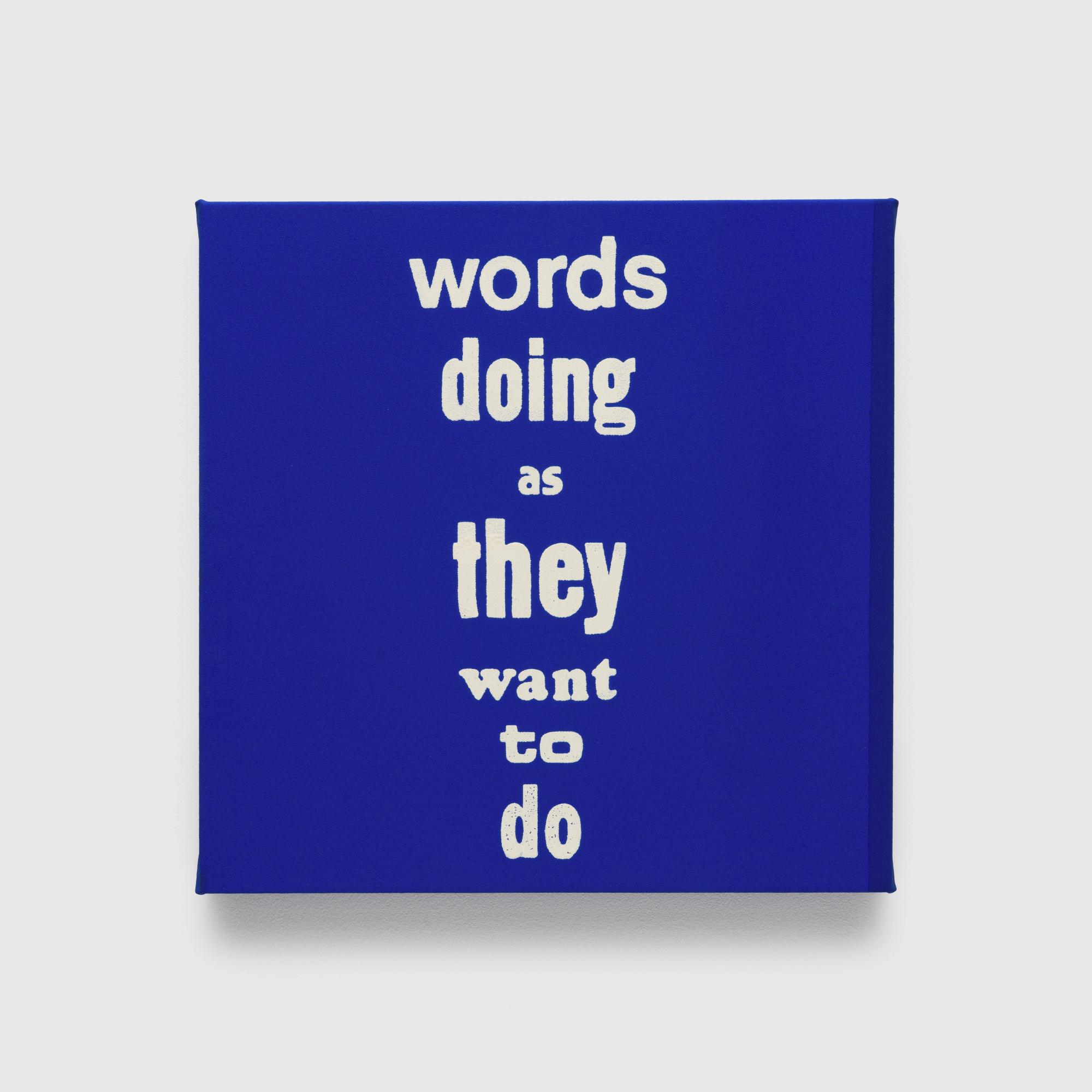
words doing as they want to do
Jan. 9–Mar. 1, 2026
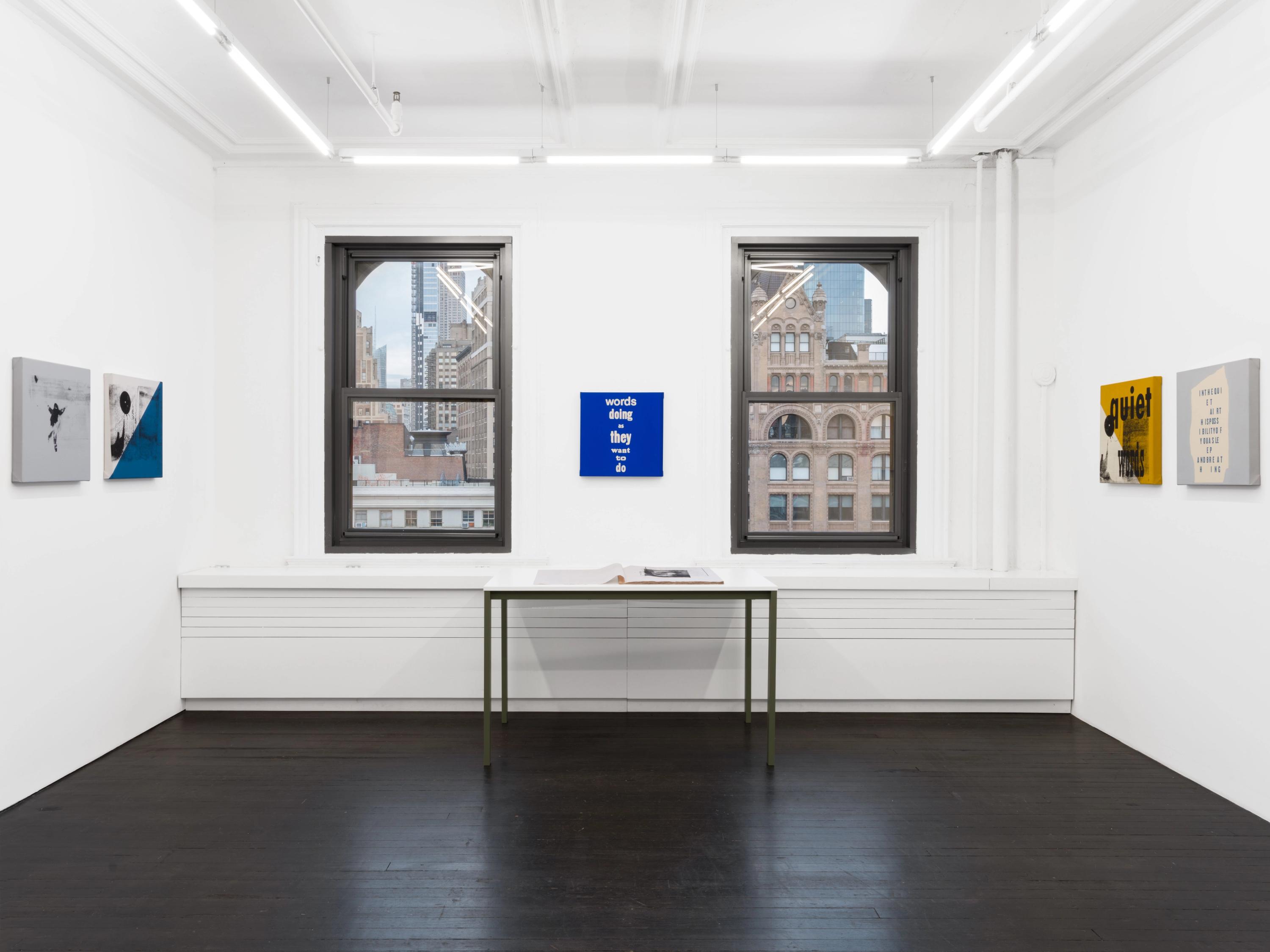
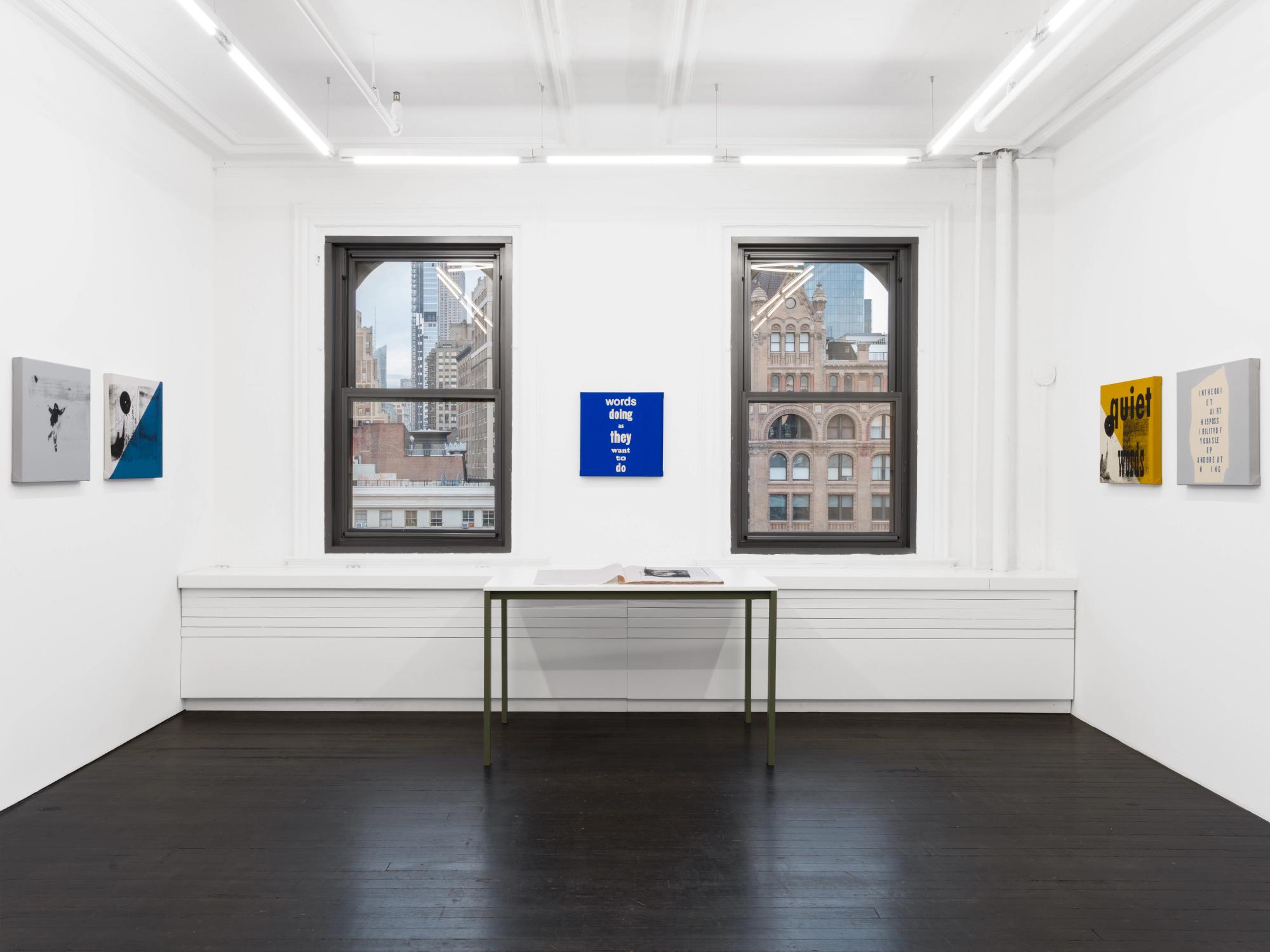
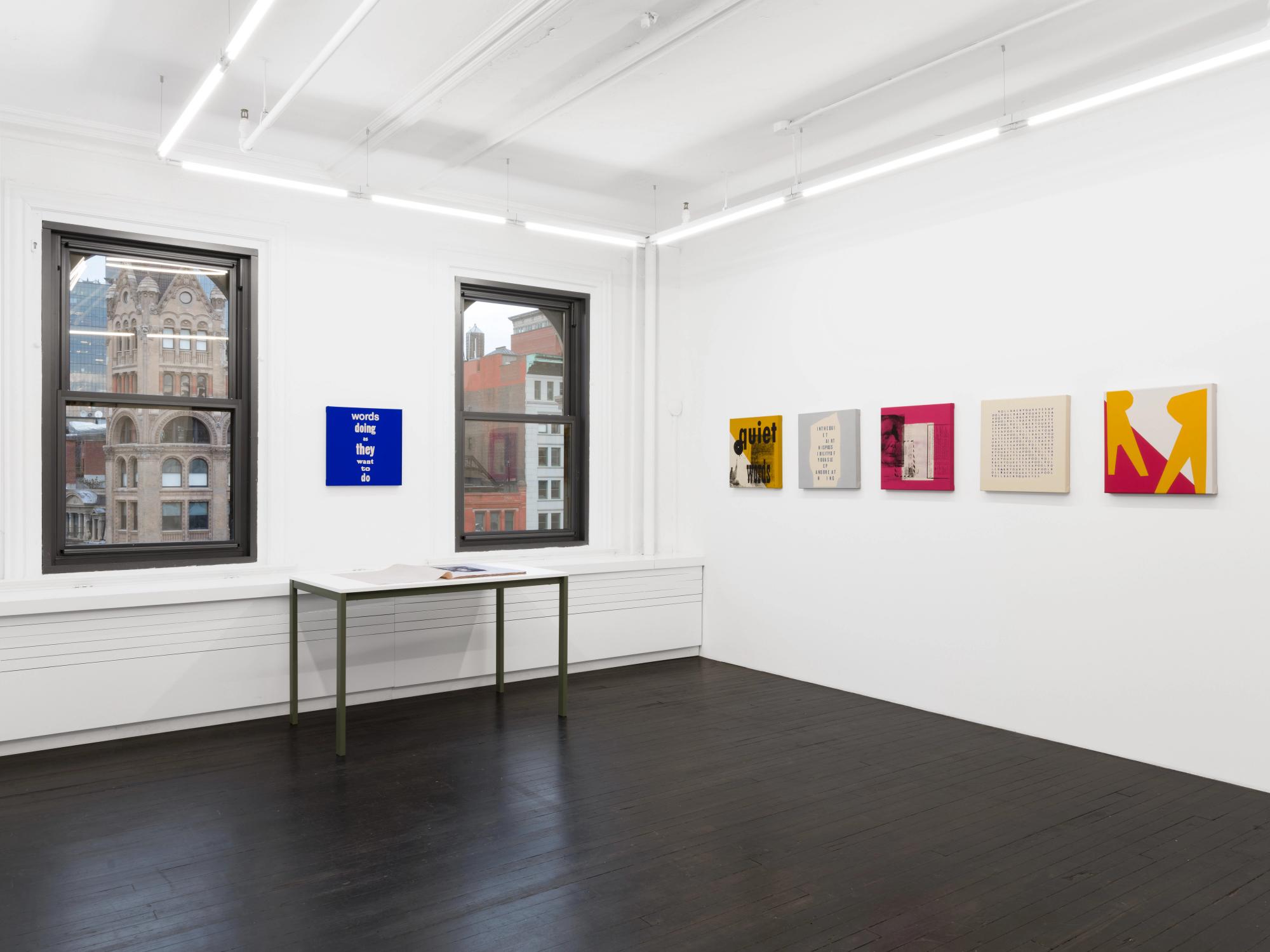
Gordon Robichaux is pleased to present words doing as they want to do, an exhibition by Los Angeles–based artist Eve Fowler. The installation brings together twelve new paintings, an artist’s book, a related portfolio of screenprints, and an audio work that expand on the artist’s ongoing engagement with archives, queer and feminist history, and the intersections of memory, poetry, and visual art.
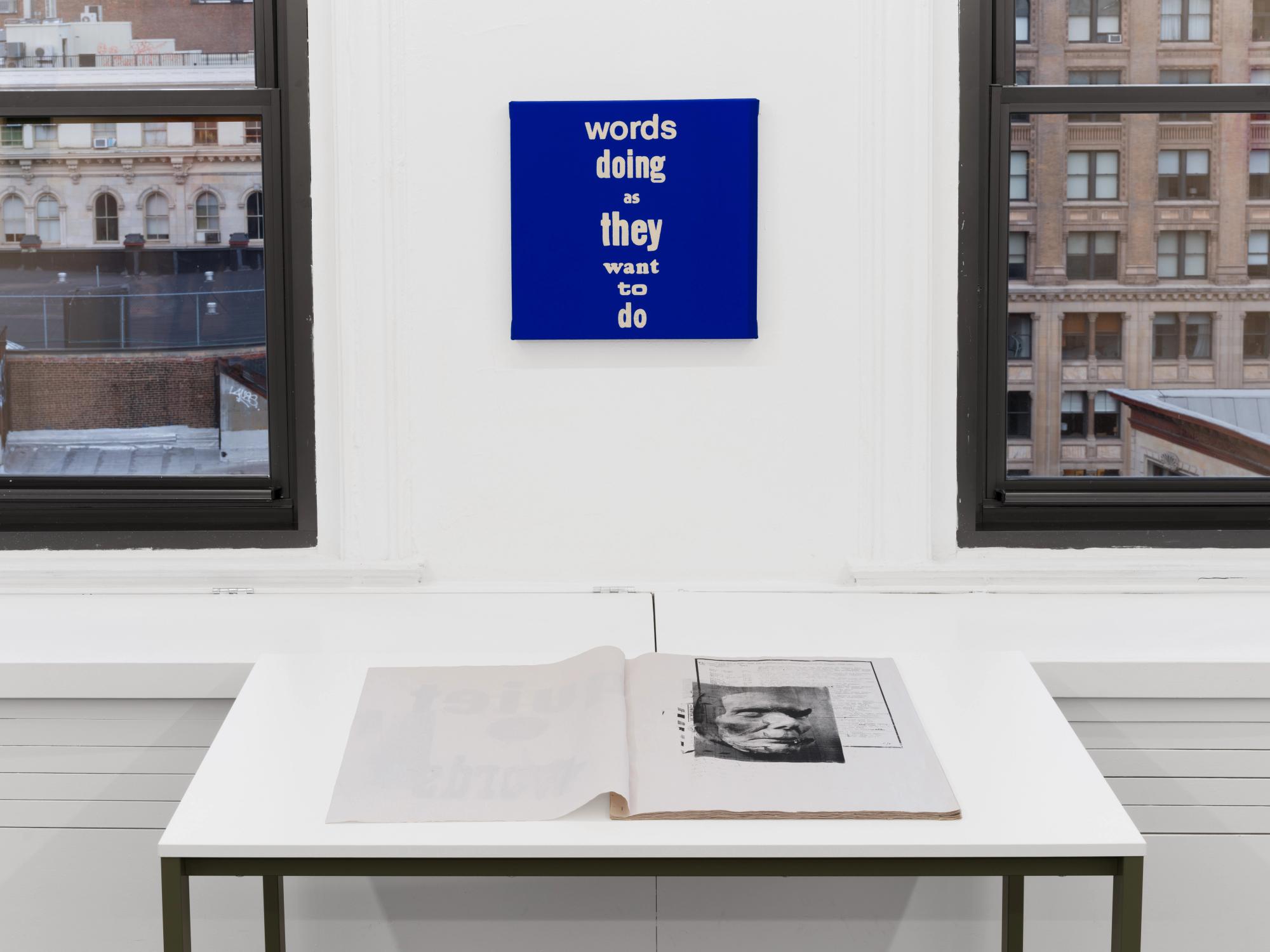
words doing as they want to do was conceived as a multiphase exhibition with staggered openings: first at Gordon Robichaux as an installation of paintings and a large artist’s book displayed on a table, before traveling to the Radcliffe Institute for Advanced Study at Harvard University, where it will be on view from February to June. Fowler has distinct installations for each venue, where the different arrangements and contexts will recast text, image, and meaning. Following the relocation of the paintings to Radcliffe, the exhibition at Gordon Robichaux will continue as a sound installation featuring audio of artists and writers from Fowler’s community reading many of the poems that inspired this body of work.
Fowler’s new artworks are informed by her ongoing research and engagement with personal and literary archives, most recently the Beinecke Rare Book & Manuscript Library at Yale University and during her residency at the Radcliffe Institute for Advanced Study at Harvard University. References to queer writers, poets, and activists appear throughout the exhibition, among them H.D. (Hilda Doolittle, (1886–1961) and her partner Silvia Dobson (1908–1993), June Jordan (1936–2002), Frank O’Hara (1926–1966), and James Merrill (1926–1995), as well as Gertrude Stein (1874–1946), whose biography and inventive use of language have been central to Fowler’s practice over the past fifteen years. Together, Fowler’s works engage language and images as a site of resistance and remembrance.
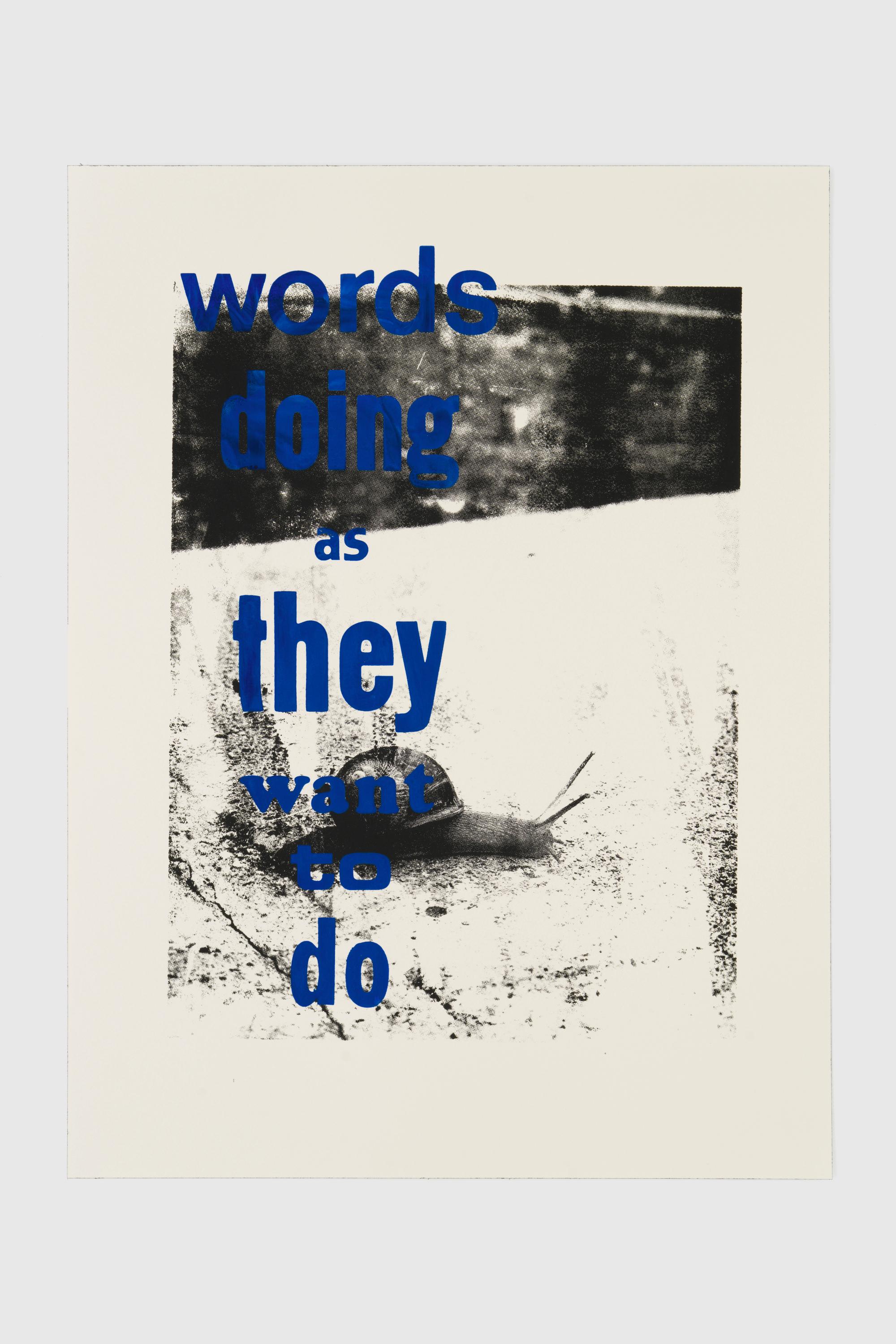
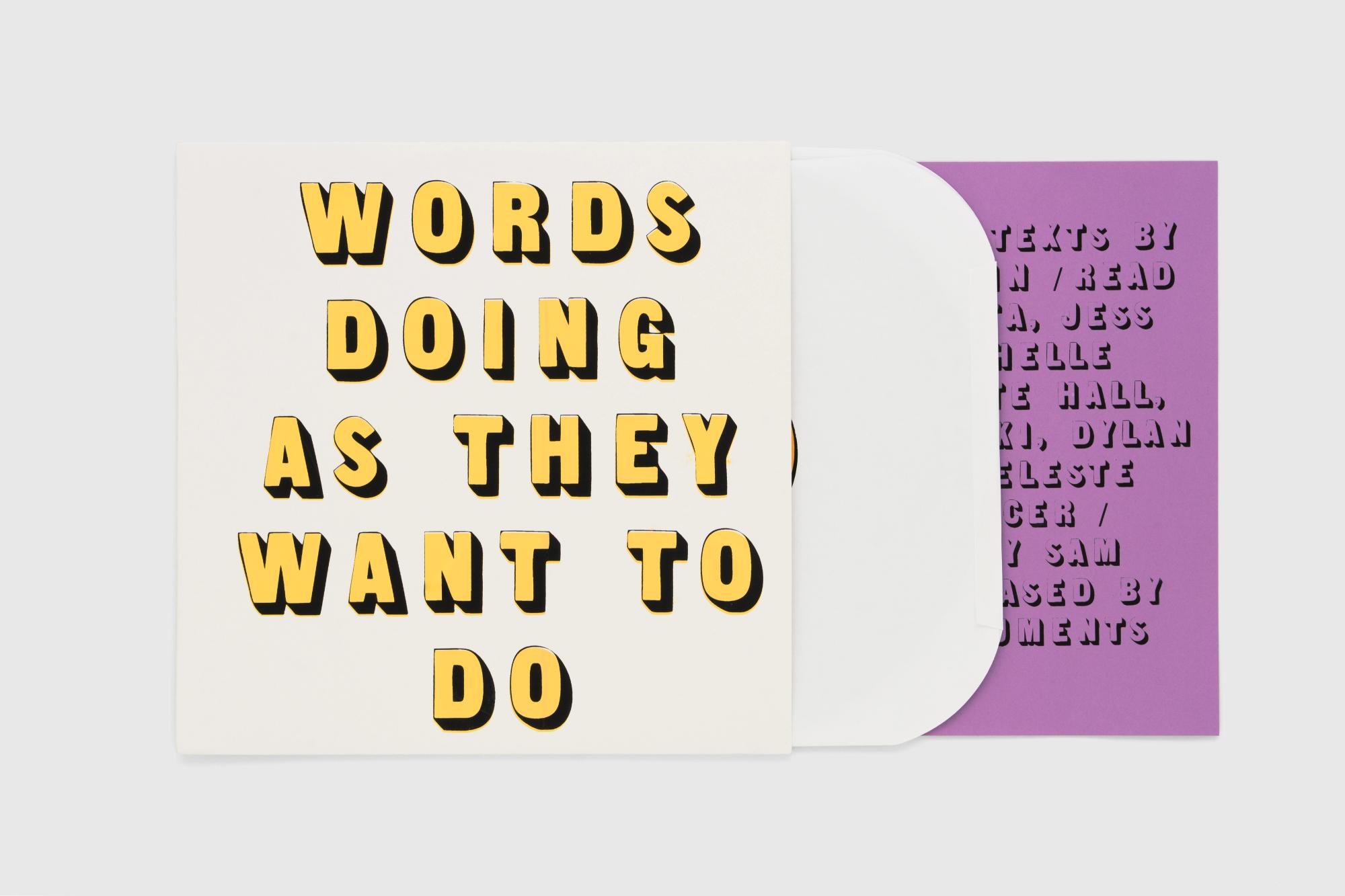
The exhibition’s title, words doing as they want to do, is inspired by a line from a lecture Stein presented at the University of Chicago in 1935 (1); the phrase also appears in an eponymous painting in the exhibition. Here, the artist has assembled the text on a brilliant blue background, each word painted in a different font and size and organized as a vertical stack. The phrase has appeared as a refrain throughout Fowler’s work: in paintings, screenprinted t-shirts, posters, and a vinyl record. For the artist, “words doing as they want to do” is an aesthetic and political framework that speaks to the simultaneous freedom and constraint of expression—particularly within queer histories.
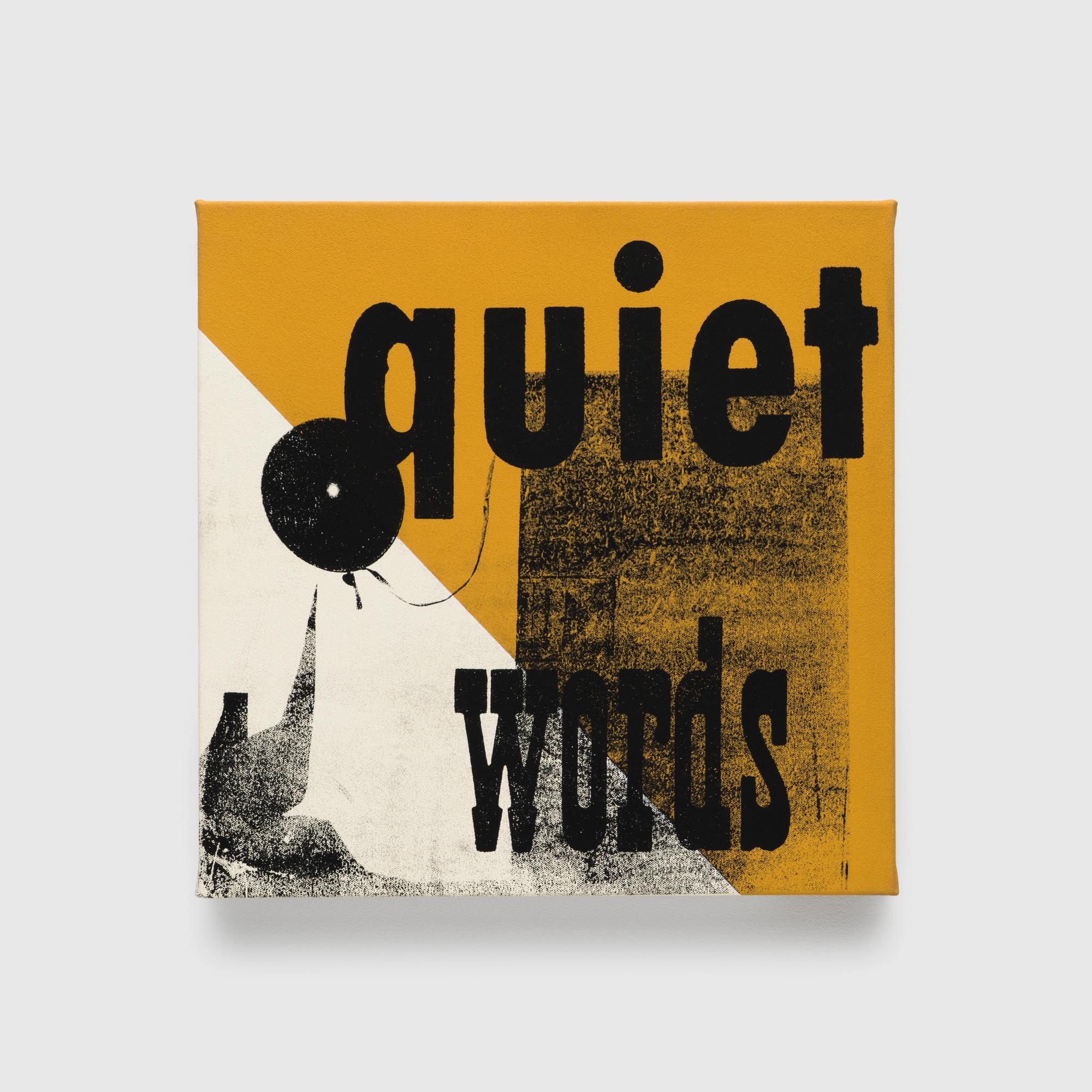
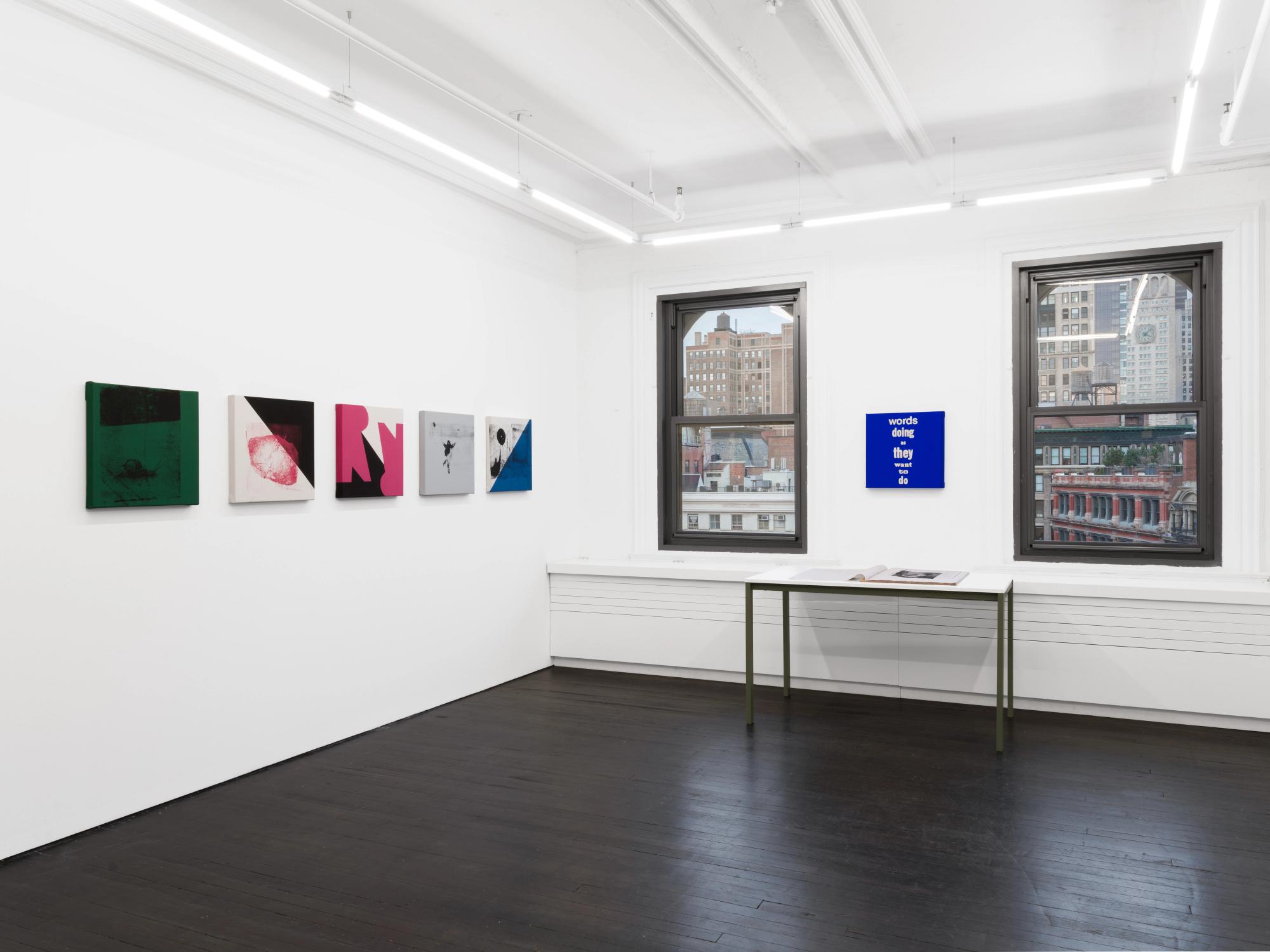
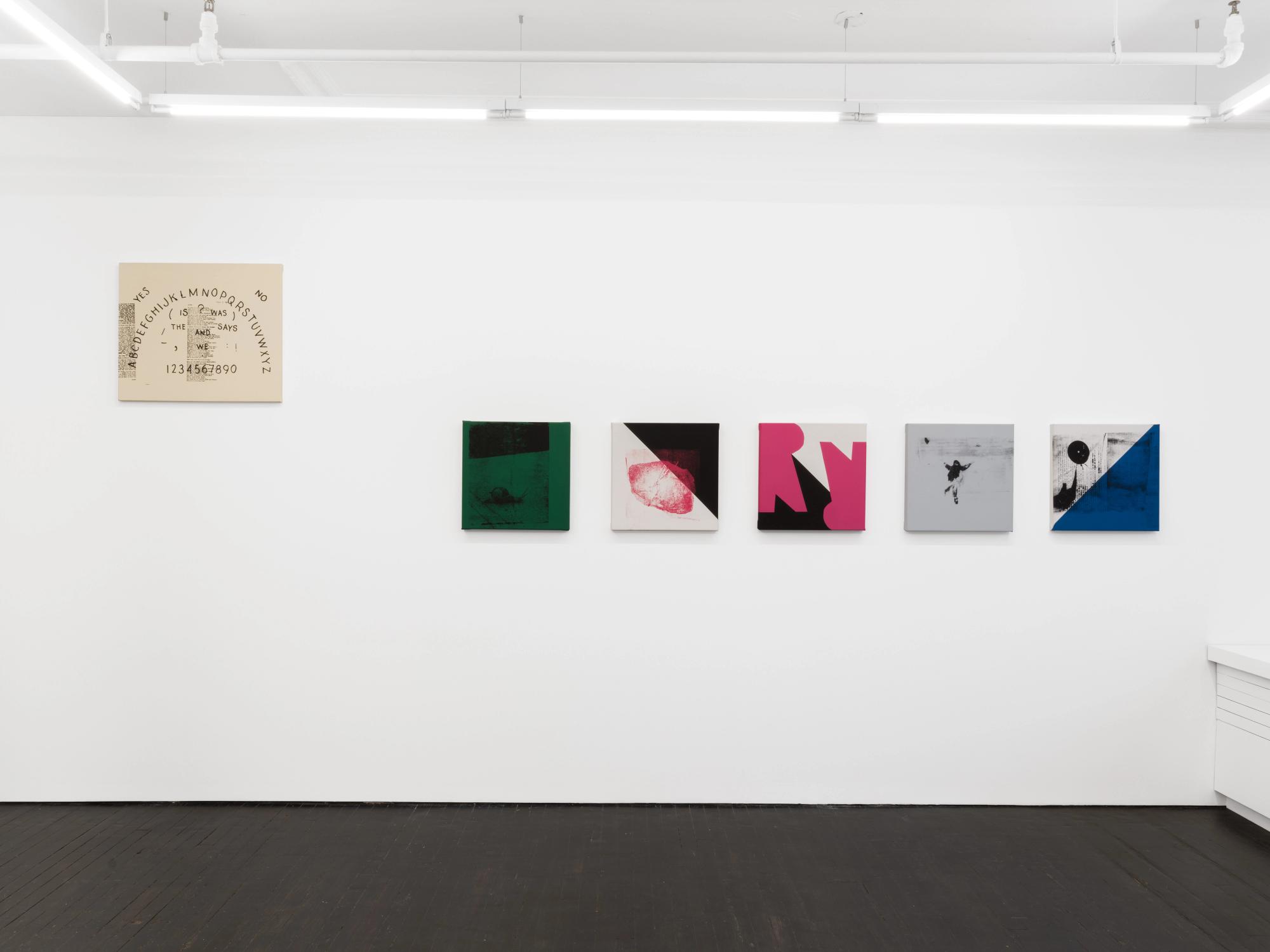
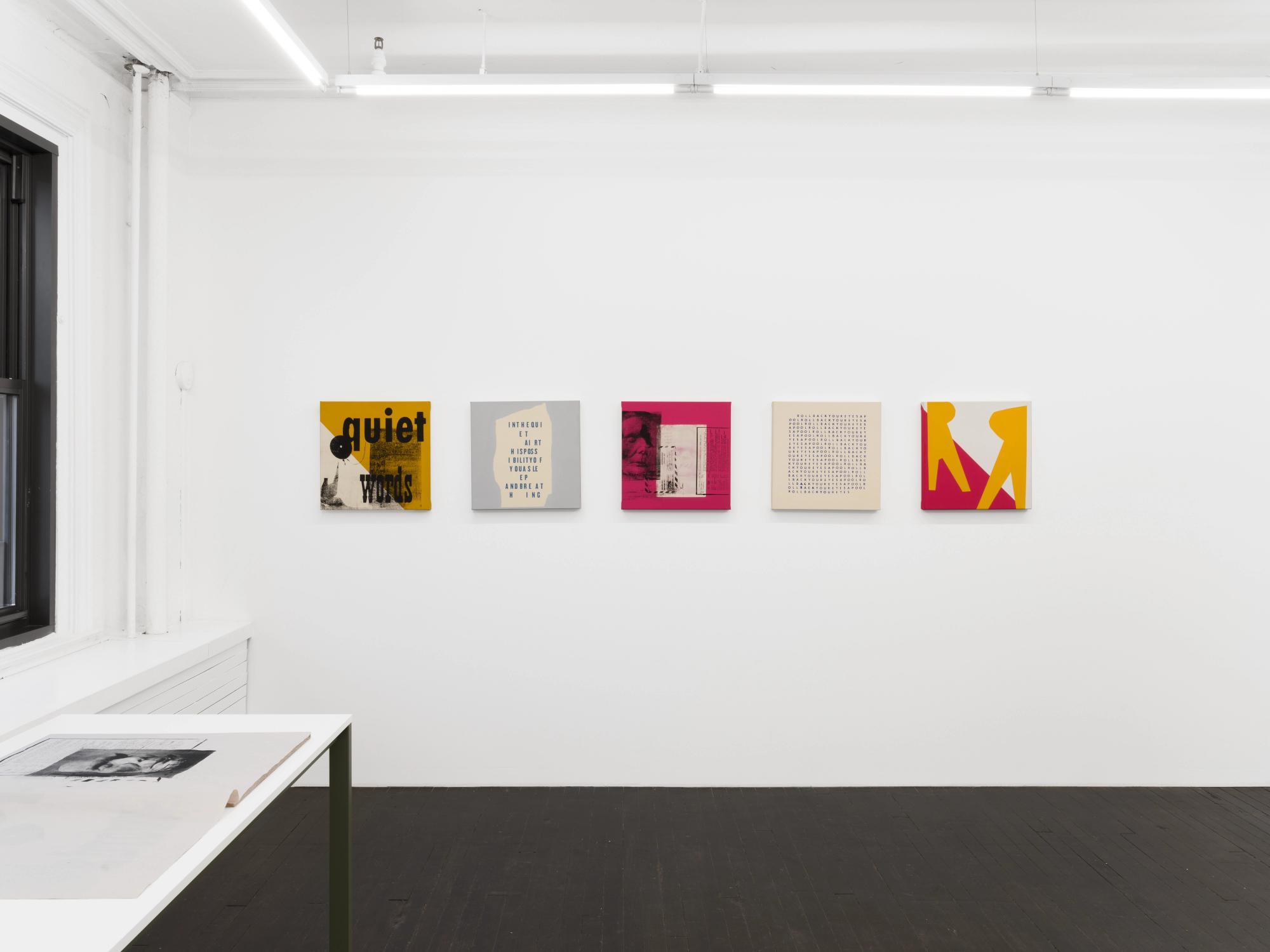
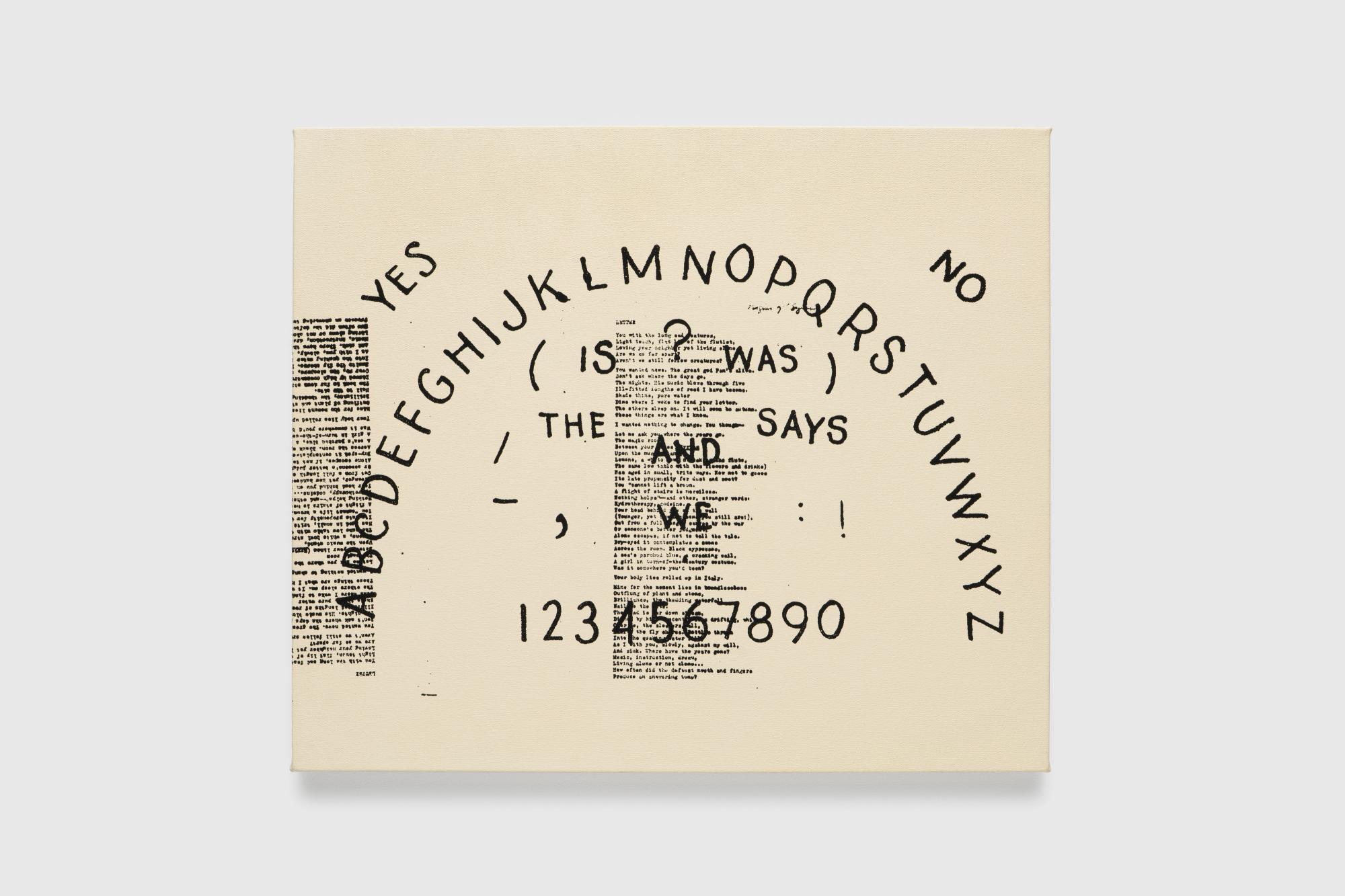
The paintings in the exhibition are unified through a shared visual vocabulary of graphic text, shapes, and images created through a combination of paint and screenprinting on eleven 18-by-18-inch canvases and one 28-by-35-inch painting scaled to the size of a Ouija board. Fowler applies her distinct palette—ivory, saffron, grey, pink, magenta, and bright blue—with Flashe paint, a matte surface that flattens and compresses the distinct elements. Fragments of language pulse between reading and seeing, and the serial format invites relationships of association and difference. The paintings hang together in the room like unbound pages from a book, each with its own interiority and relationship to the group as a whole.
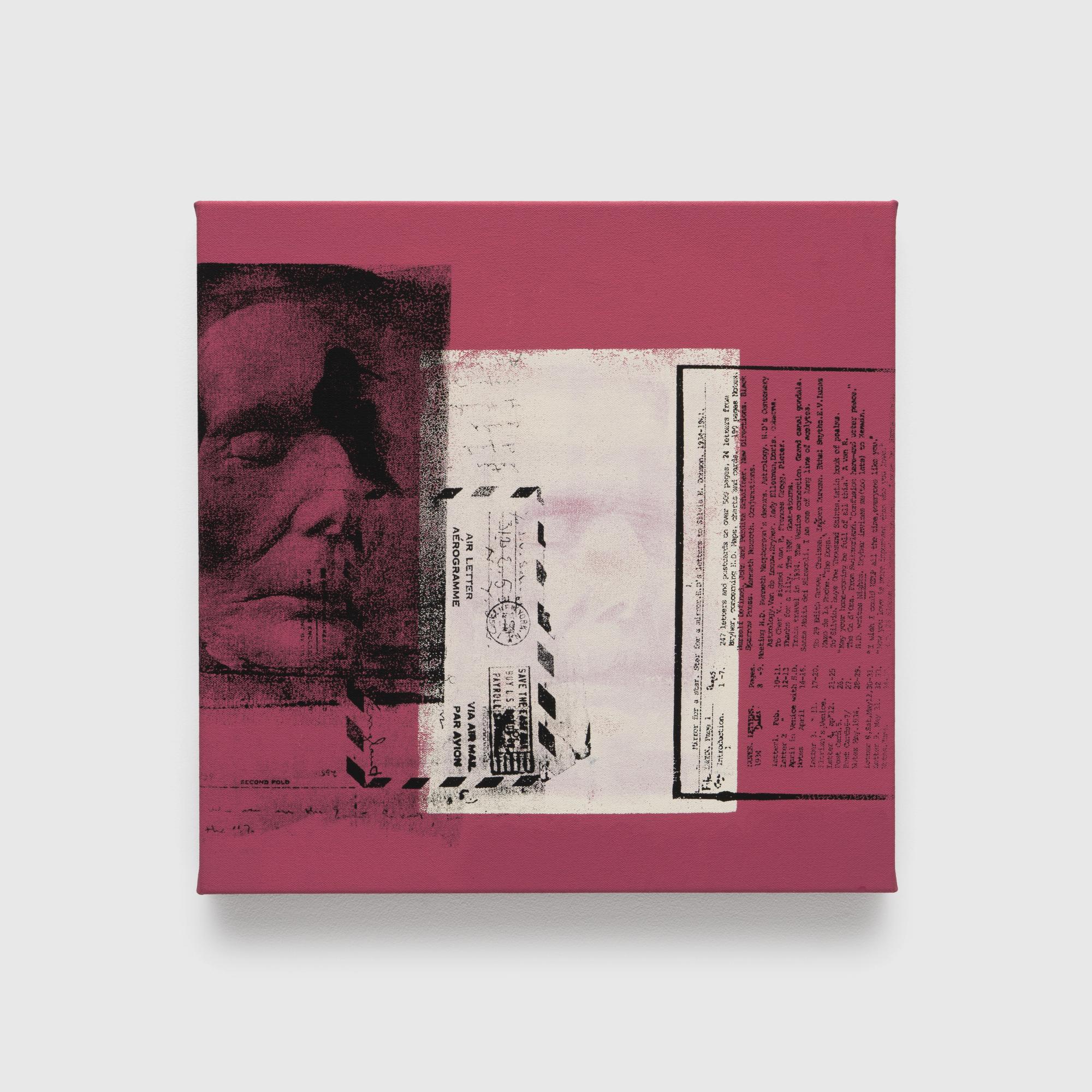
Many of the works incorporate references to queer poets and writers and reanimate their coded voices. Mirror for a star. Star for a mirror. is a magenta canvas with screenprinted images and text the artist encountered during her research into H.D.’s life at the Beinecke. Fowler overlays images of the poet’s death mask with pages from Silvia Dobson’s document chronicling her intimate relationship with H.D. Together, the text and painting provide a queer context for H.D.’s life and work otherwise omitted in historical accounts.
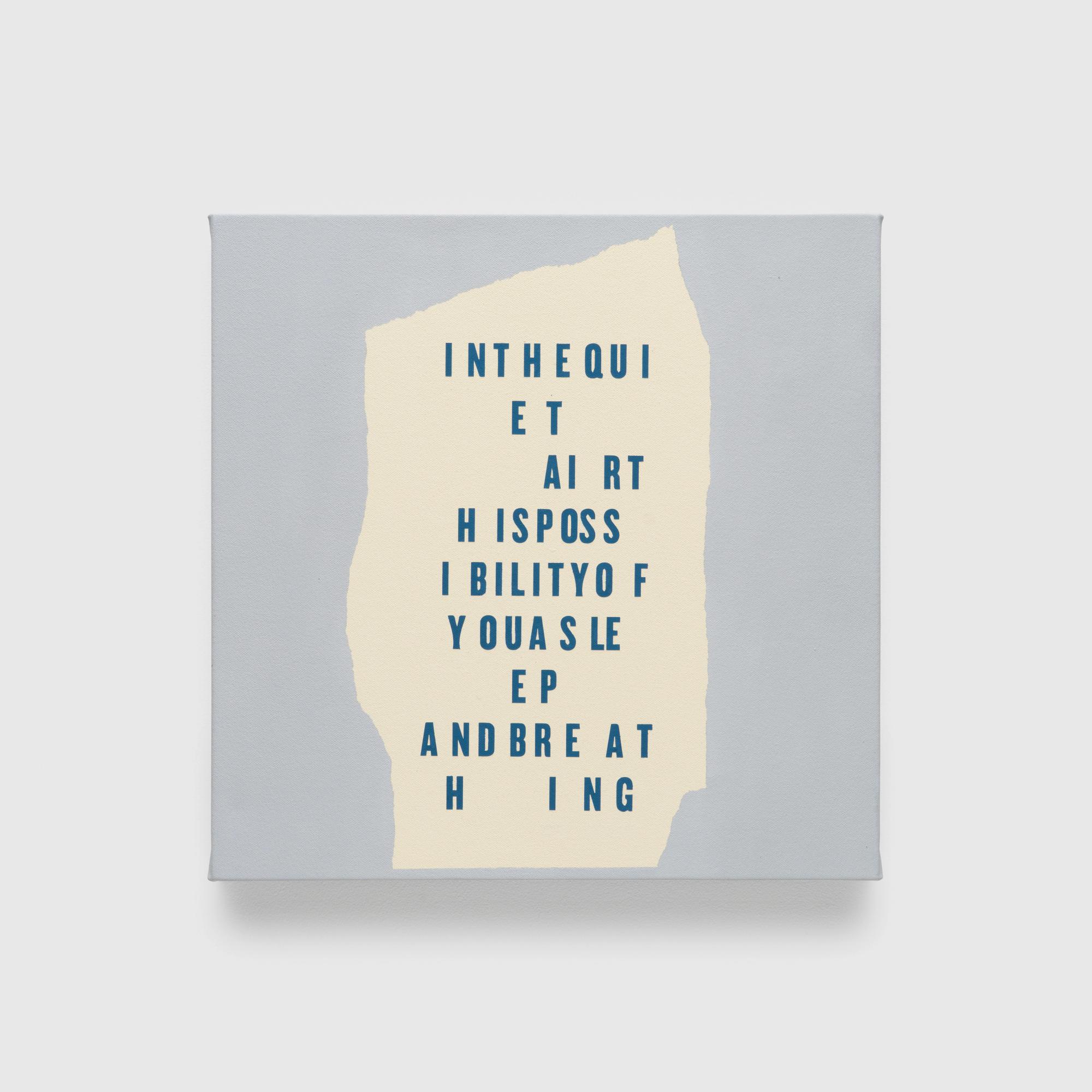
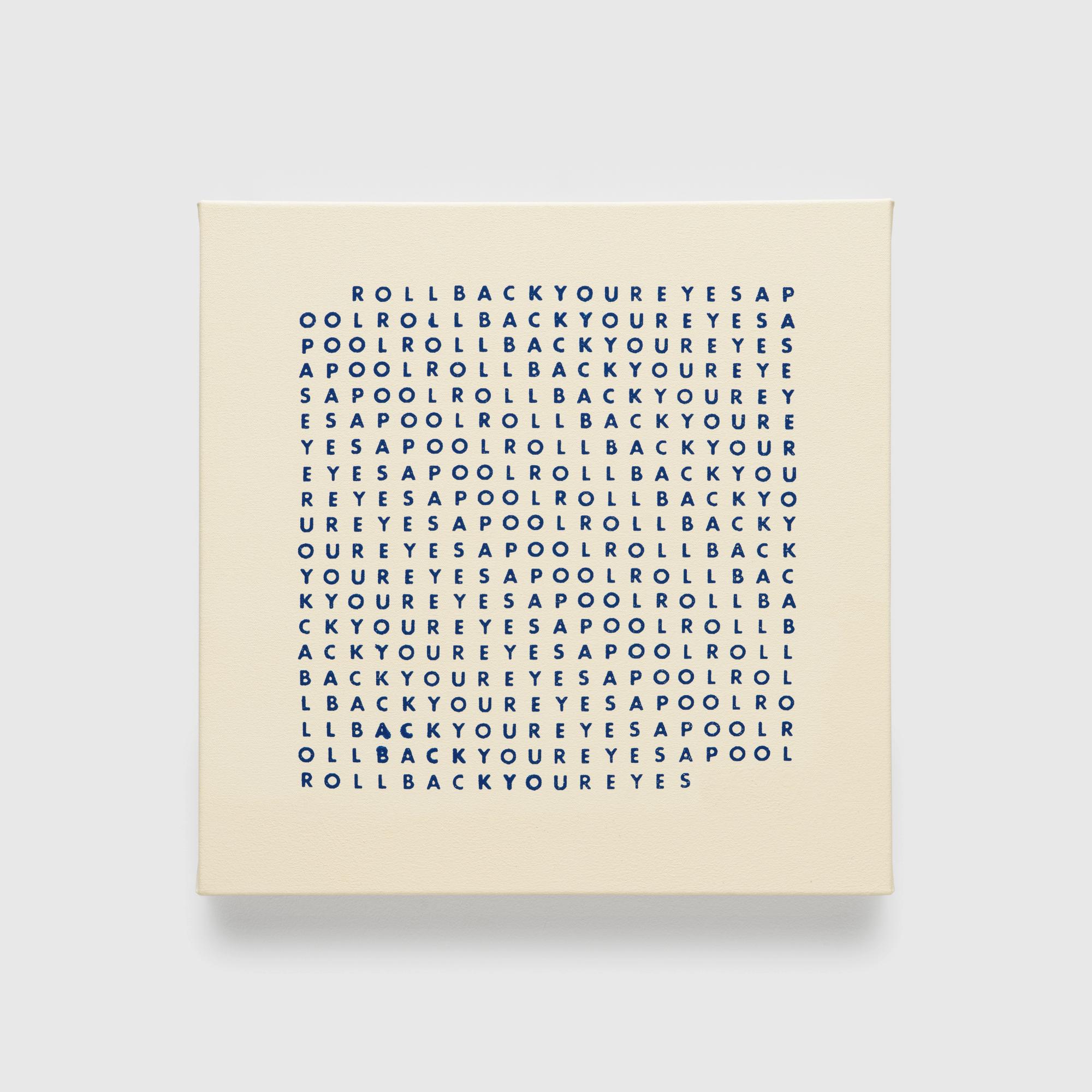
The possibility of you asleep and breathing (June Jordan) draws the viewer into a section of text from Jordan’s “Poem for My Love,” which describes the intimate experience of observing a loved one breathing while asleep. Fowler’s painting is a visual rearrangement of the poem within an ivory silhouette that loosely resembles a tombstone or page torn from a book. The artist’s disruptive spacing of the text creates a visual puzzle that slows and expands reading. In Roll back your eyes, a pool, Fowler emphasizes queer sensuality with a stanza from Frank O’Hara’s poem, “Mayakovsky.” The painting reimagines the text as a repeated phrase set within a square formation that invites the viewer to engage in the optical play of decoding O’Hara’s language.
A single rectangular painting in the exhibition, Ouija, reproduces James Merrill’s hand-drawn spirit board layered with one of his letters that Fowler discovered in the Beinecke. Between 1955 and 1975, Merrill and his romantic partner, David Jackson, used the board to transcribe their conversations with ghosts, angels, and historical figures. Merrill incorporated the material into his 560-page epic poem, “The Changing Light at Sandover,” which he performed at the Radcliffe Institute theater in 1990.
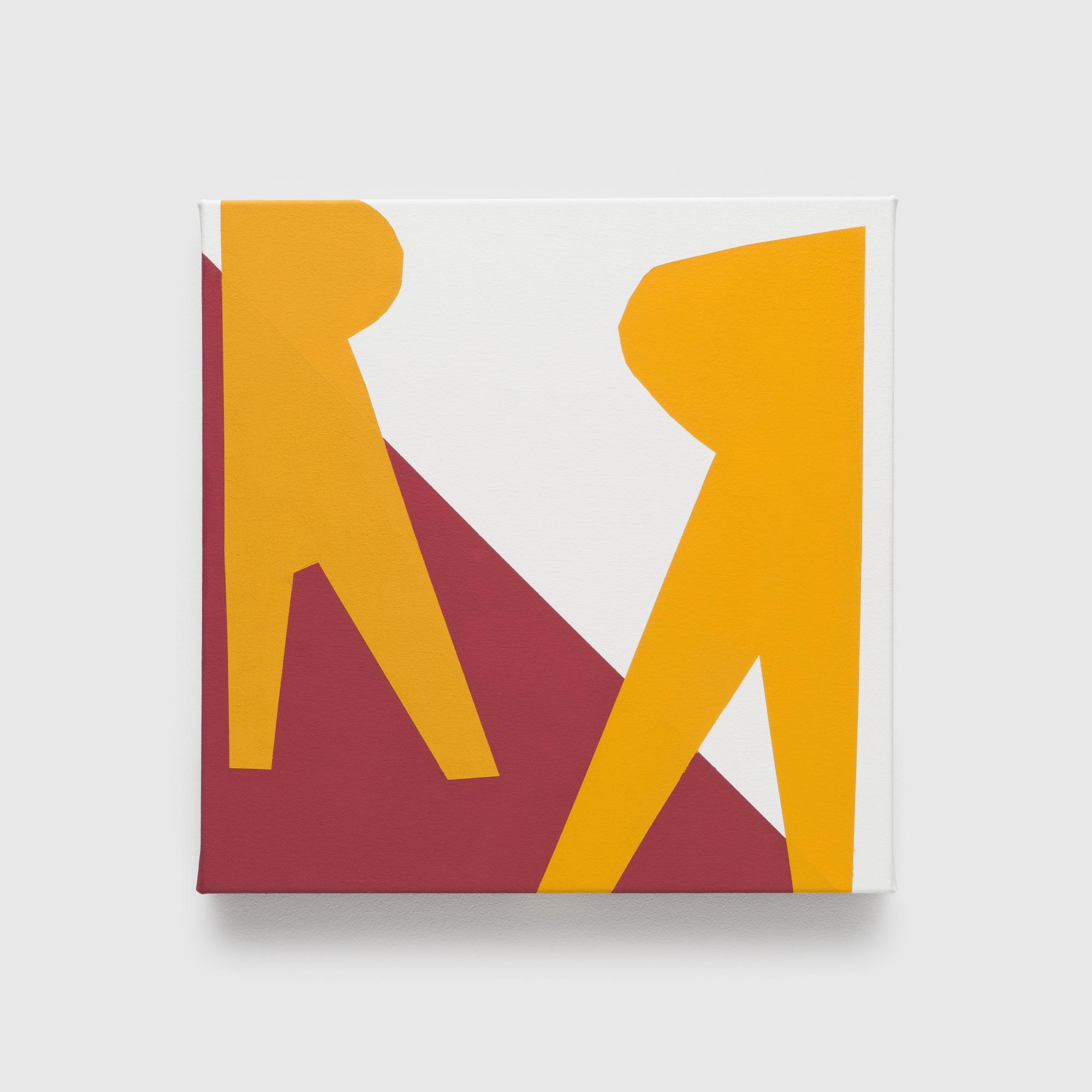
Two paintings dedicated to Robert White, Double R Pink and Double R Yellow, juxtapose various arrangements and colorways of the letter “R” over a triangle. The silhouetted shapes are activated by their eccentric geometries and are restorative invocations of White’s activism and legacy. A gay man who lived and worked in the Silverlake neighborhood of Los Angeles, Fowler encountered his story during her research for a walking tour of historical queer spaces. White was a community activist and owner of the Frog Pond, a queer cabaret and restaurant where he championed young artists by exhibiting their work. In 1980, the establishment was the target of a violent, homophobic act: an unidentified person hurled a firebomb into the Frog Pond and yelled out: “Die faggots!.” The blast injured three people, inspired the formation of a neighborhood alliance, and was one in a series of events that led to White’s suicide in 1985 (2).
Several of the paintings center Fowler’s own experiences and serve as meditations on transience and memory. December 7, 2025 includes an excerpt of the artist’s daily journal layered with an image of a balloon that Fowler photographed at a 2005 New Year’s Eve party. These elements are screenprinted over a blue triangle and draw the viewer into a close inspection of the text. Snail (Self-Portrait) features a single image of a mollusk that the artist photographed in her backyard. Printed in black ink on a deep green canvas, the painting evokes the artist’s insistence on slowed observation and reflection.
Snow Angel is the most minimal and mysterious work in the exhibition: a nearly monochromatic grey canvas with a faint image of the artist’s mother in the snow. She died prematurely when Fowler was seven years old, and the painting memorializes this formative loss and the profound resonance of memory with images and text. Fowler recalls, “My earliest experiences of poetry were shaped by my mother’s love of language and reading. She had vinyl records of poetry—she played T.S. Eliot’s poem, “The Wasteland,” regularly. After she died, I misplaced the record but continued to revisit it—poetry and reading are ways of feeling connected to her and to queer history.”
1. Gertrude Stein, “Lecture 1,” Narration: Four Lectures (Chicago: University of Chicago Press, 2010), 15.
2. See Cathleen Decker, “Restauranteur Robert White Kills Himself: Gay Community Activist Once Sought L.A. City Council Seat,” Los Angeles Times, May 29, 1985; and “Frog Pond,” Queer Maps.
Install (6)
Eve Fowler (b. 1964, Philadelphia, PA) lives and works in Los Angeles, CA. A graduate of Temple University (BA, 1986) and Yale University (MFA, 1992), Fowler expands from a foundation in photography to create work that coalesces art and language. Her two-dimensional works take the form of paintings, billboards, posters, prints, and signs, using mediums such as neon, paint, and vinyl. In addition, she creates installations, films, and sound pieces, often resulting from collaborations with other artists, filmmakers, and writers. Her practice is concerned with the power of words, language, and cultural biases as those topics relate to gender politics and queerness in a contemporary and historical context.
Fowler has had solo and two-artist exhibitions at Gordon Robichaux, New York; Johnson-Kulukundis Family Gallery, Harvard Radcliffe Institute, Cambridge, MA; Morán Morán, Los Angeles; Carpenter Center for the Visual Arts, Harvard University, Cambridge, MA; University Art Gallery, Cal Poly State University, San Luis Obispo, CA; Dundee Contemporary Arts, Scotland; Participant Inc., New York; Mier Gallery, Los Angeles; Fourteen30 Contemporary, Portland, OR; Half Gallery, New York; ArtSpace, Sydney; Gallery 12.26, Dallas, TX; Feature New York (with Sam Gordon); Printed Matter, New York (with Sam Gordon); University of California, Roski School of Art, Los Angeles; Night Gallery, Los Angeles; Horton (L.E.S. Sundays), New York; and White Columns, New York.
In addition to her studio practice, Fowler organizes Artist Curated Projects in Los Angeles. She is a recipient of a 2017 Art Matters grant, was a Radcliffe Institute Fellow at Harvard University (2018–2019), was named a John Simon Guggenheim Memorial Fellow in Fine Arts (2021), and received the Foundation for Contemporary Arts Roy Lichtenstein Award (2022).
Her work has also been included in many group exhibitions, notably a field of bloom and hum, The Frances Young Tang Teaching Museum and Art Gallery at Skidmore College, Saratoga Springs, NY; Houseguest: Mute Flesh, Hammer Museum, Los Angeles; Queer California: Untold Stories, Oakland Art Museum; Extratextual, Contemporary Calgary, Canada; FOUND: Queer Archaeology, Queer Abstraction, Leslie Lohman Museum of Art, New York; Sites of Reason: A Selection of Recent Acquisitions, The Museum of Modern Art, New York; The Manifest Destiny Billboard Project, organized by LAND; Made in LA, Hammer Museum and LAXART, Los Angeles; B-Out, Andrew Edlin Gallery, New York; Greater Los Angeles, UNTITLED, New York; Imposing Order: Contemporary Photography and the Archive, San Francisco Museum of Modern Art; The Fantasy of Failed Utopias and a Girl’s Daydream, Künstlerhaus Stuttgart; with it which it as it if it is to be, Participant Inc., New York; Retreat, Peres Projects, Los Angeles; A Work in Progress: Selections from the New Museum Collection, New Museum, New York; Game Face, Smithsonian Institution, Washington, DC; White Columns, New York.
Fowler’s book Anyone Telling Anything Is Telling That Thing was published by Printed Matter in 2013. Her second book, Hustlers, was published by Capricious Publishing in 2014. Her film with it which it as it if it is to be screened at the Museum of Contemporary Art, Los Angeles; Lumber Room, Portland, OR; and Tate St. Ives, UK. A more extensive iteration of the project, with it which it as it if it is to be, Part II (2019) screened at the New Museum, New York, and The Frances Young Tang Teaching Museum and Art Gallery at Skidmore College, Saratoga Springs, NY.
Fowler’s work is held in the collections of the Los Angeles County Museum of Art; The Hammer Museum, Los Angeles; The Museum of Modern Art, New York; The San Francisco Museum of Modern Art; The New Museum, New York; and The Smithsonian Institute, Washington, DC.
Works
Ouija (James Merrill)
Flashe and acrylic ink on canvas
28 x 35 x 1.5 inches
2025
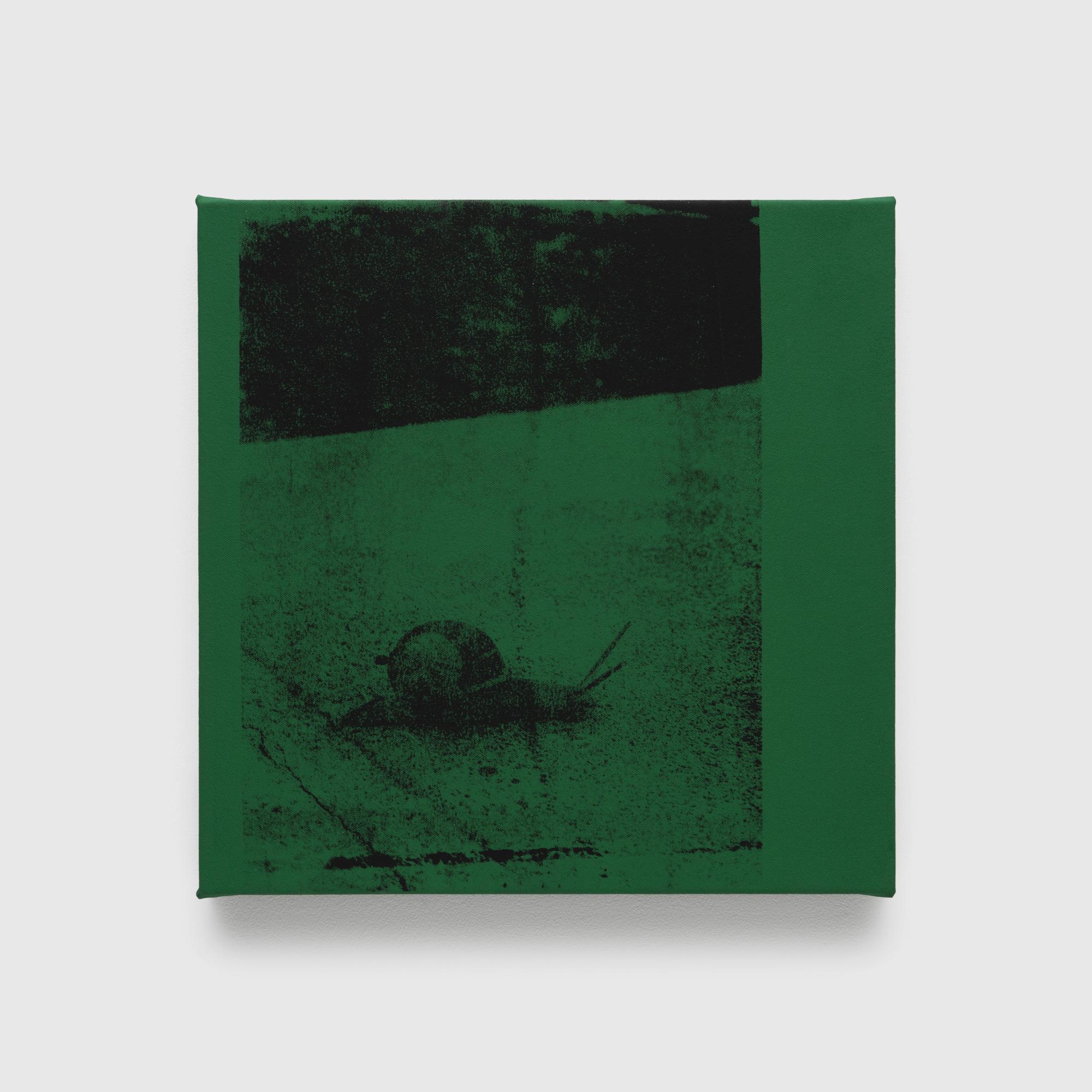
Snail (Self-Portrait)
Flashe and acrylic ink on canvas
18 x 18 x 1.5 inches
2025
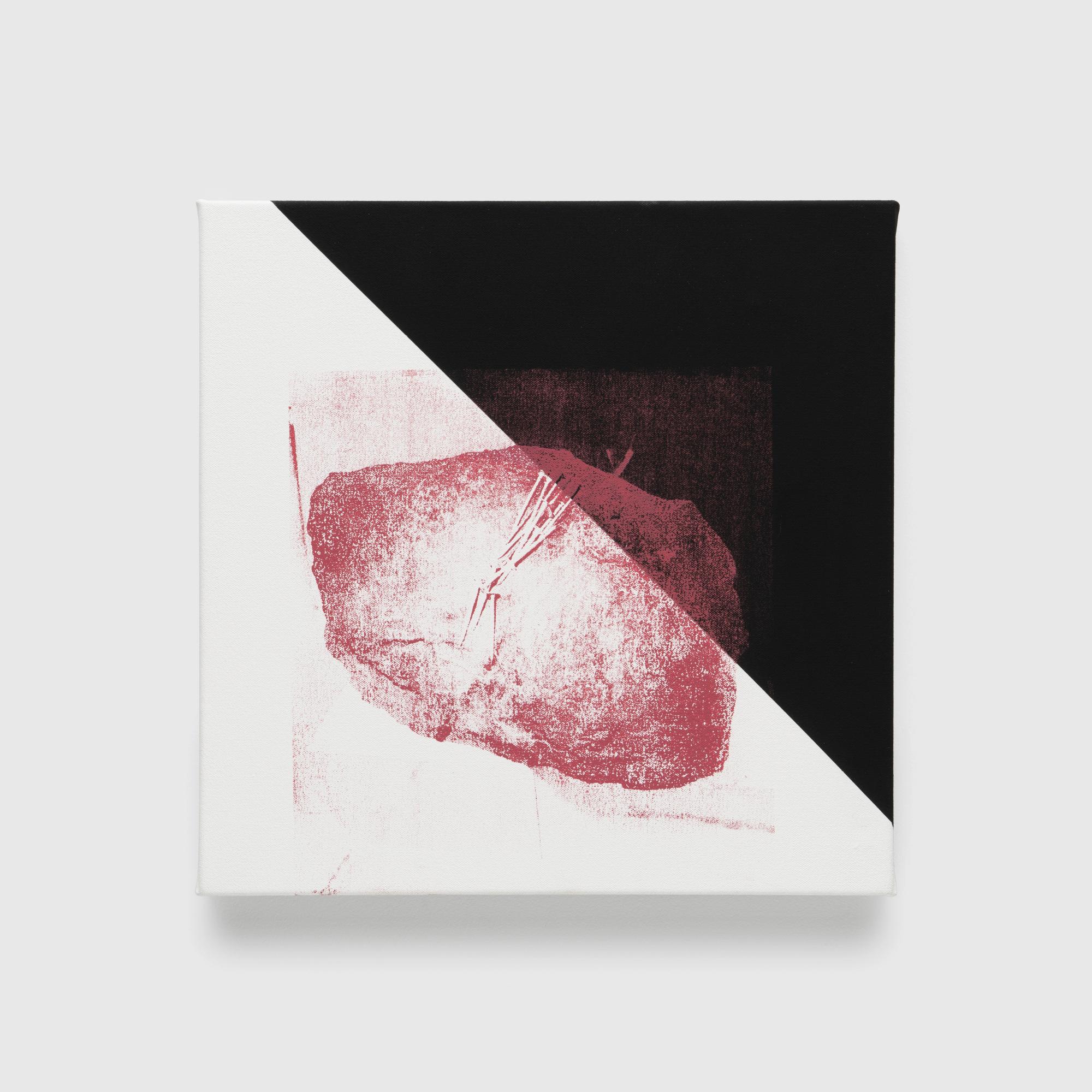
Magnetic Rock with Nails
Flashe and acrylic ink on canvas
18 x 18 x 1.5 inches
2025
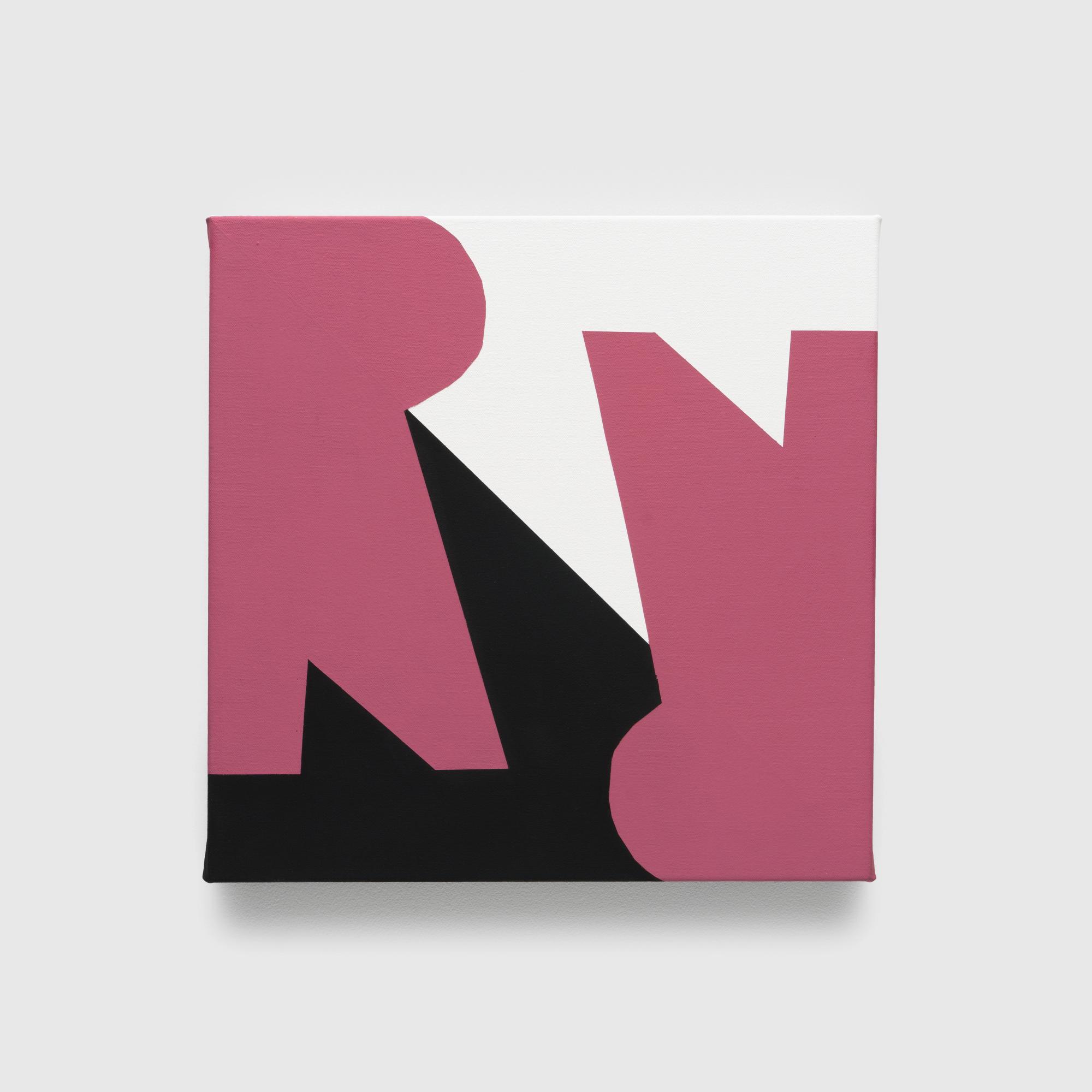
Double R Pink (Robert White)
Flashe and acrylic ink on canvas
18 x 18 x 1.5 inches
2025
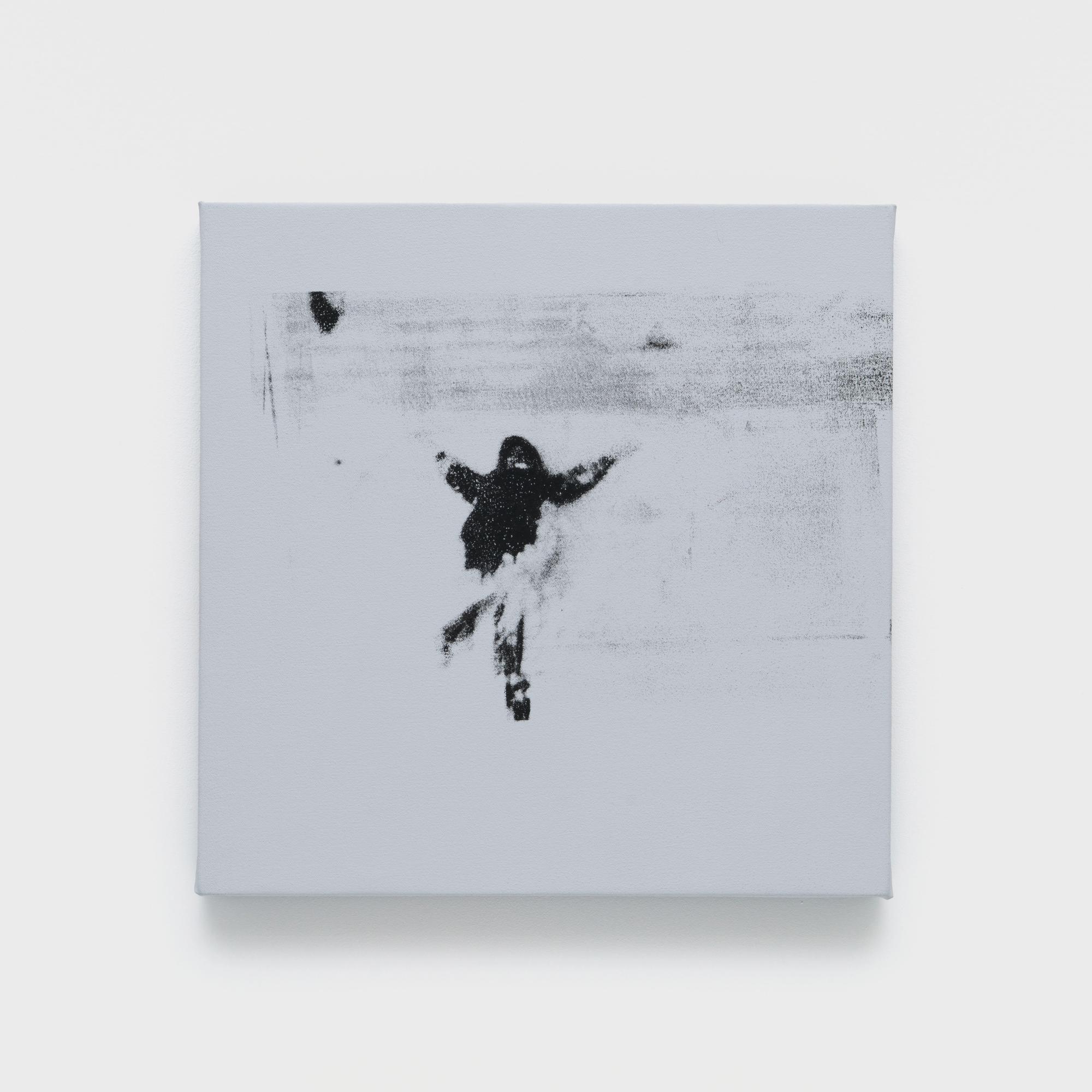
Snow Angel
Flashe and acrylic ink on canvas
18 x 18 x 1.5 inches
2025
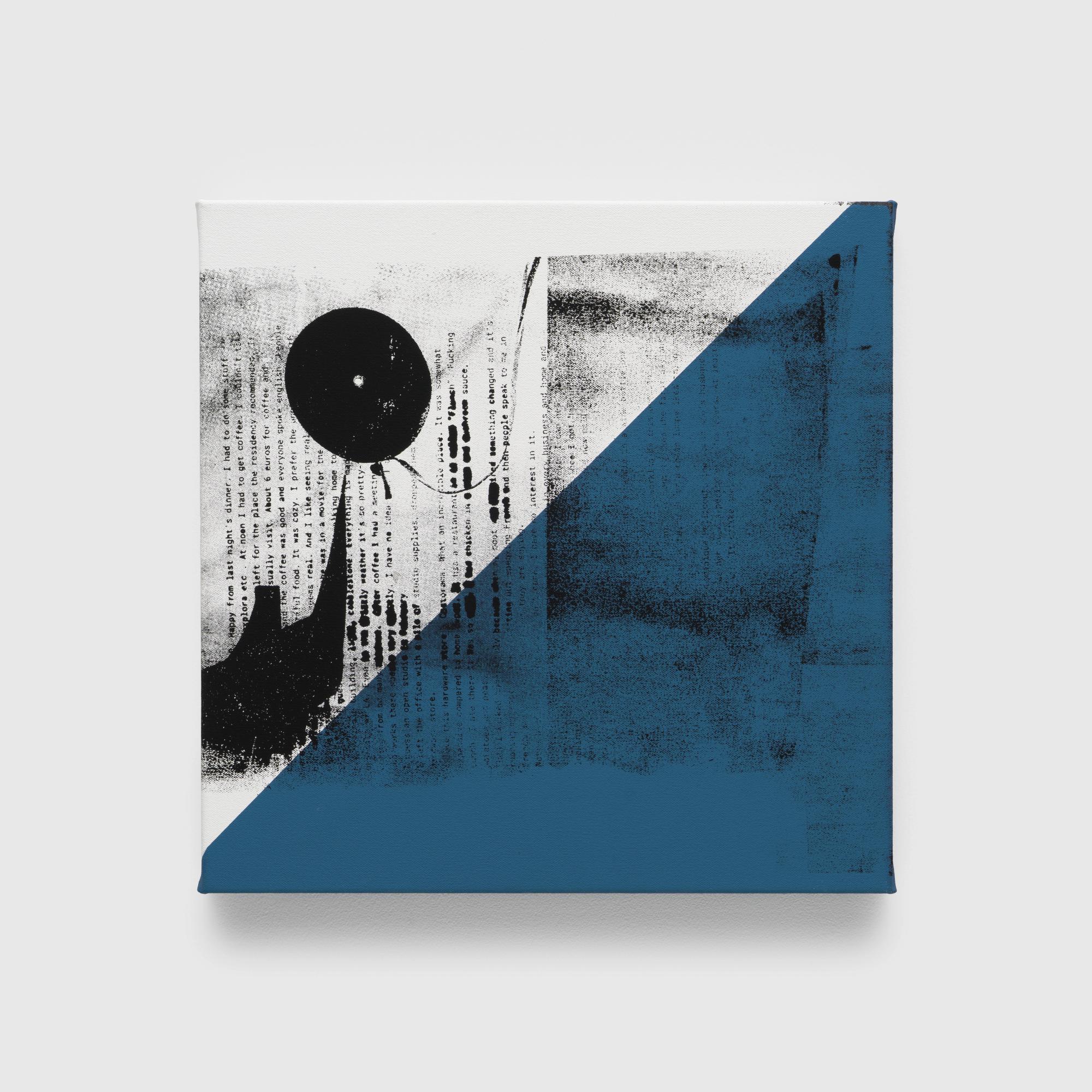
December 7
Flashe and acrylic ink on canvas
18 x 18 x 1.5 inches