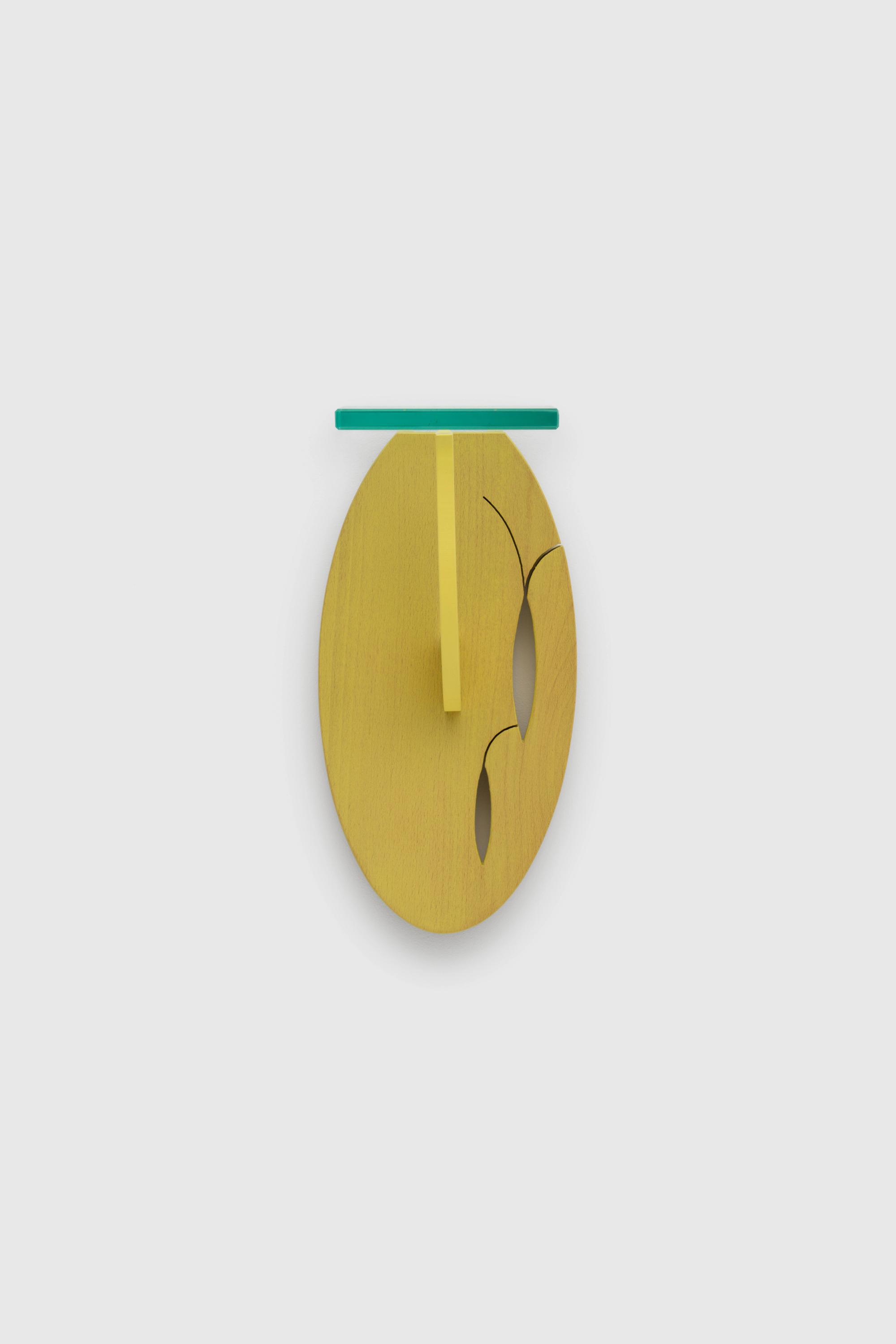
Past
Sanou Oumar, Matt Paweski
Forma di Utilità / Shape of Utility
Mar. 15–Apr. 26, 2026
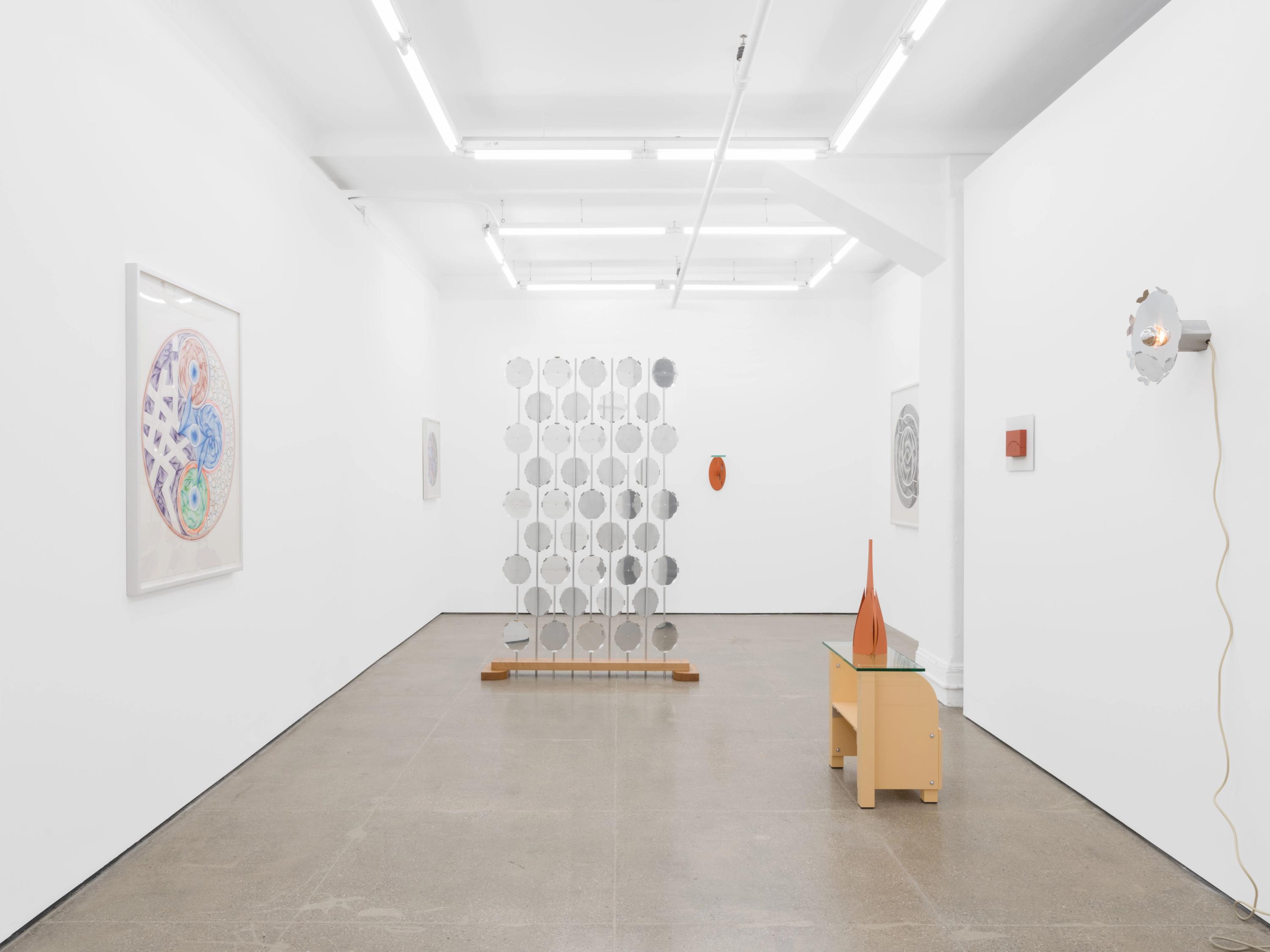
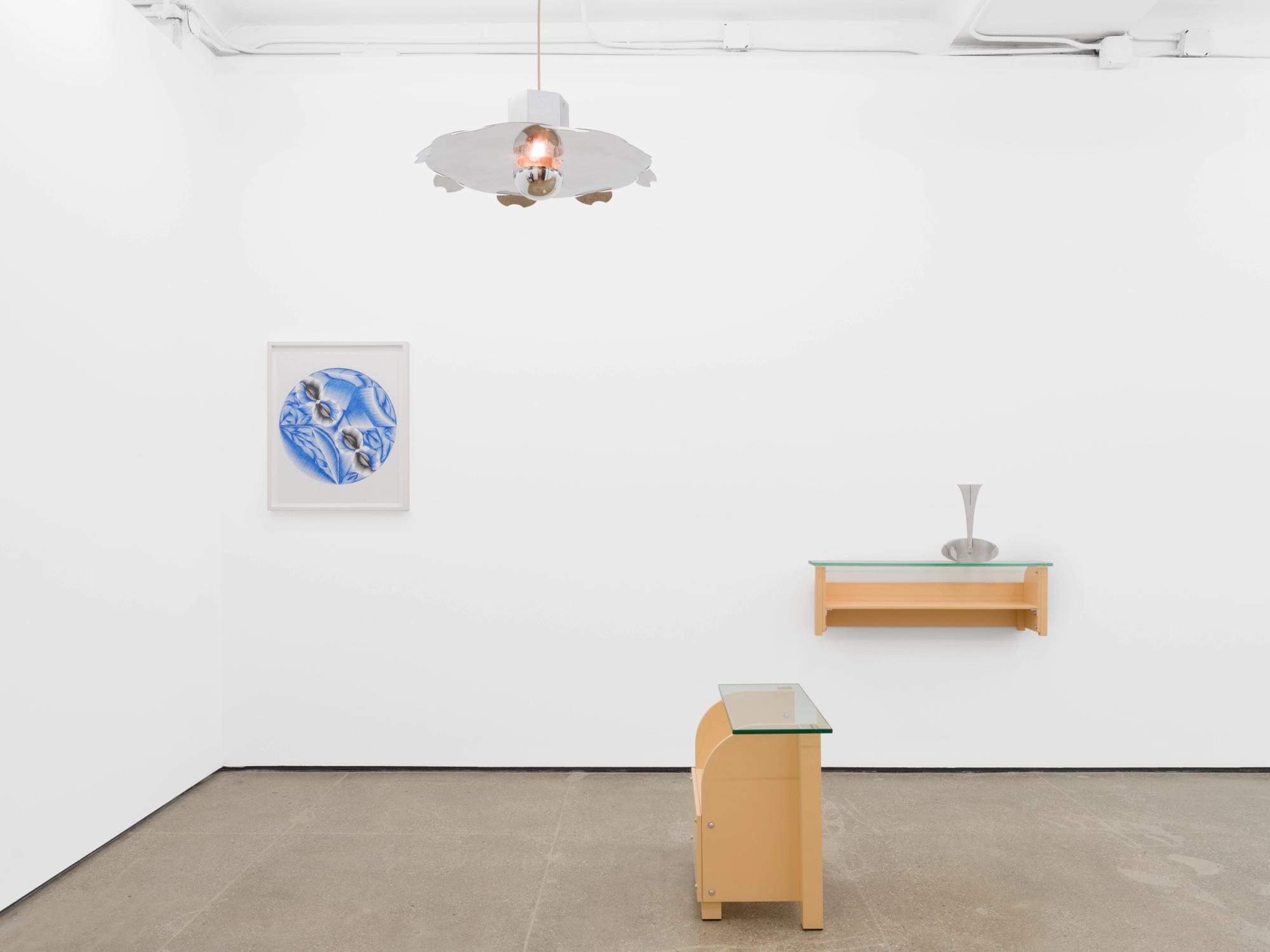
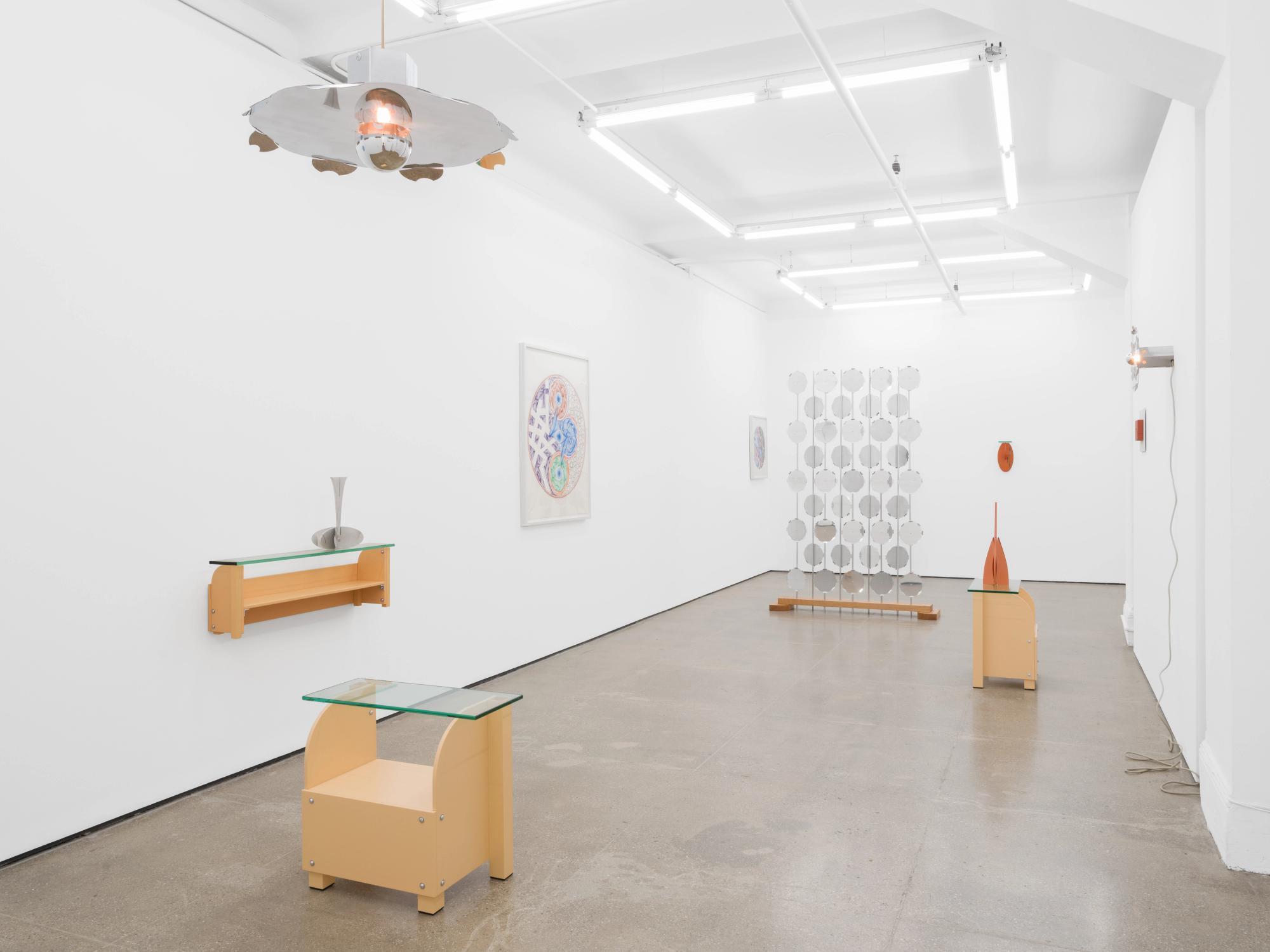
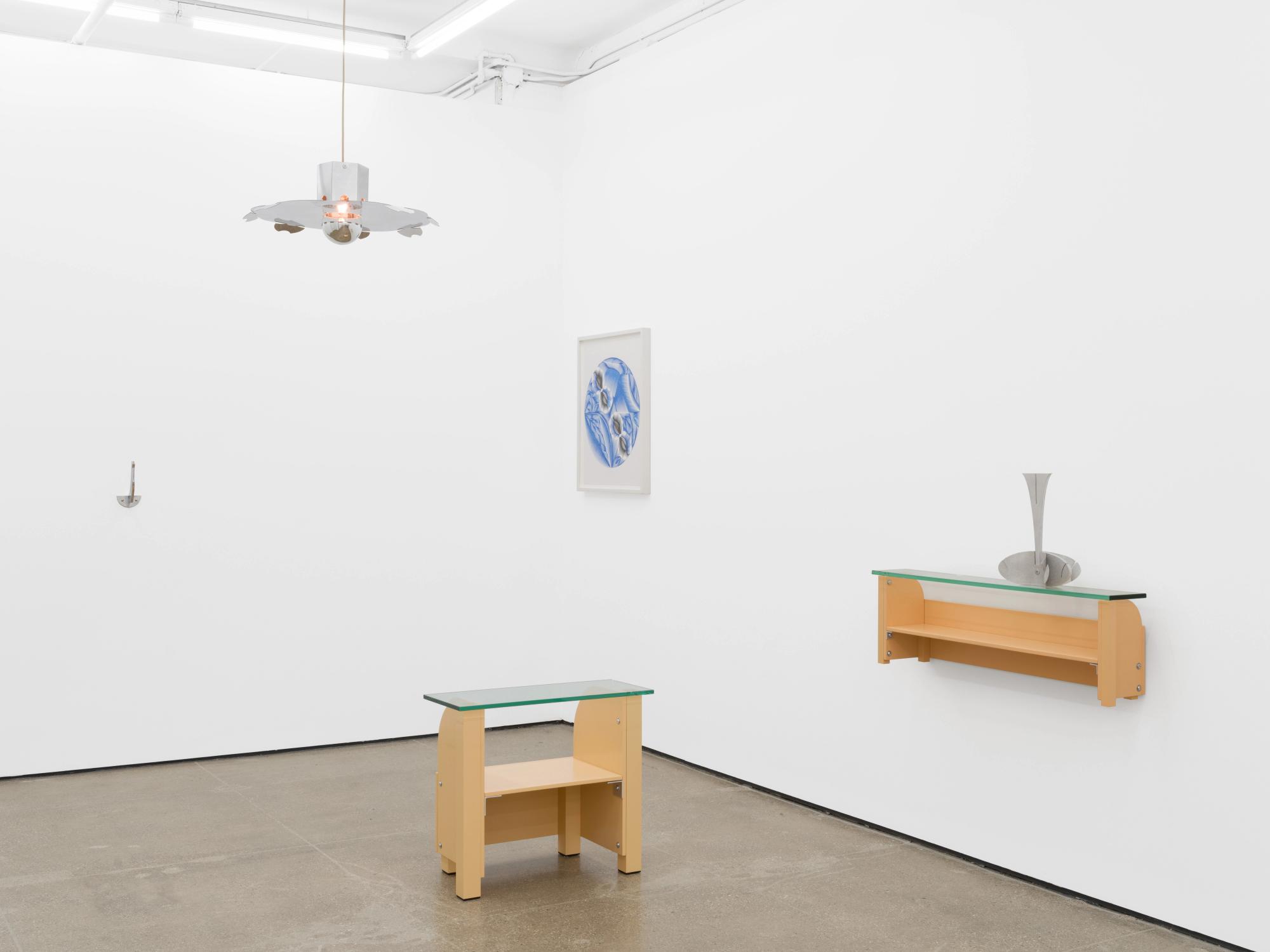
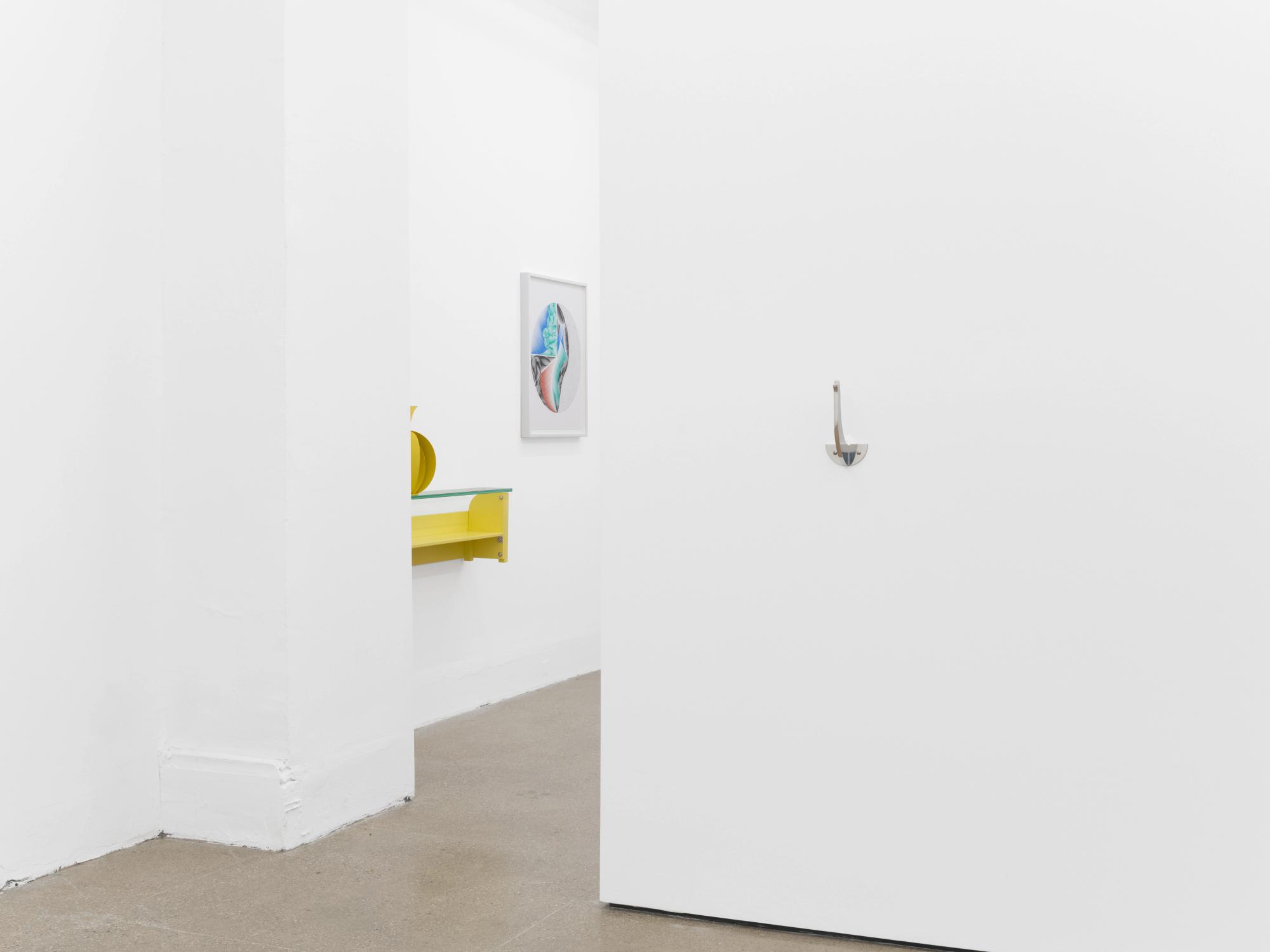
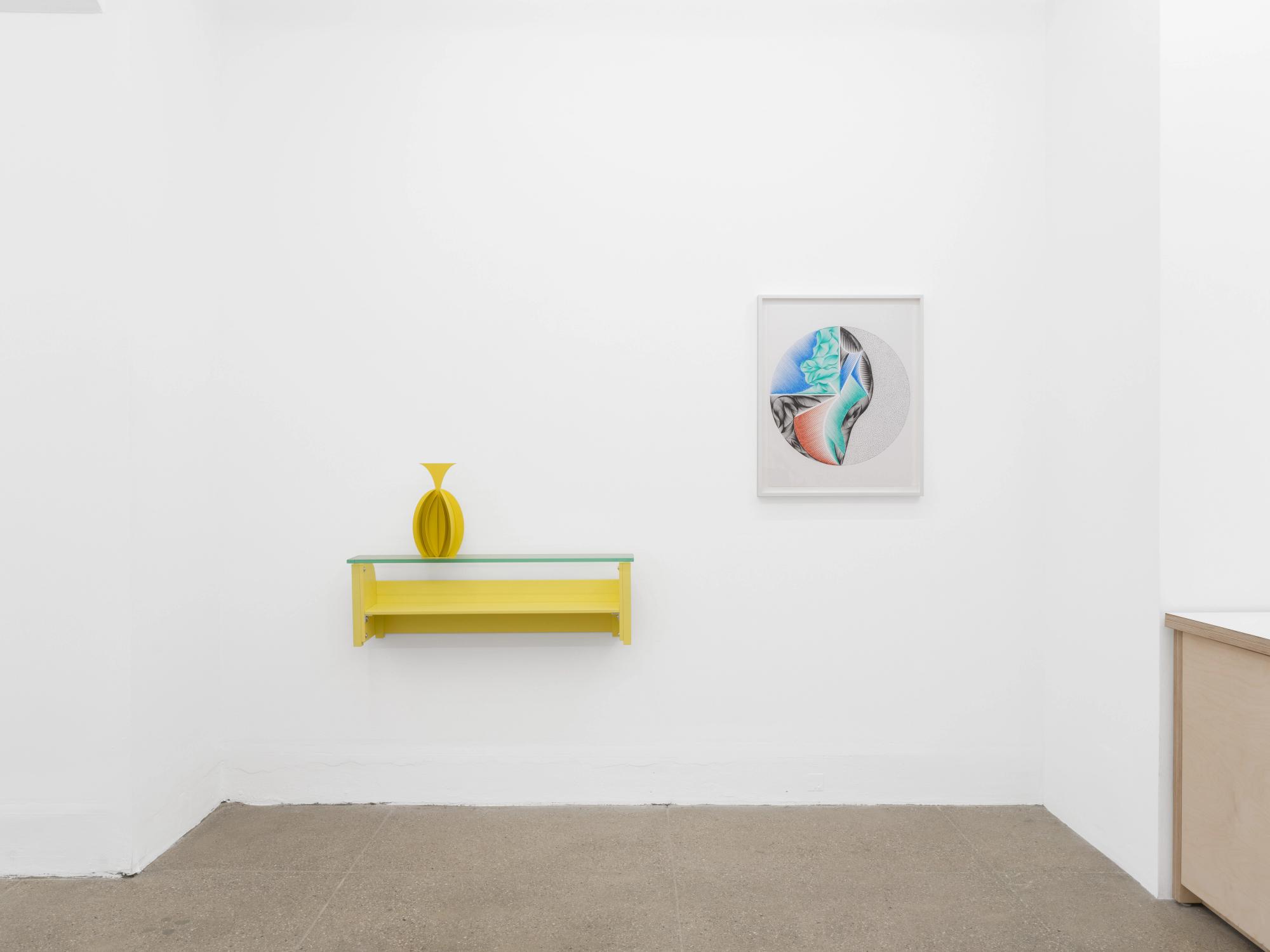
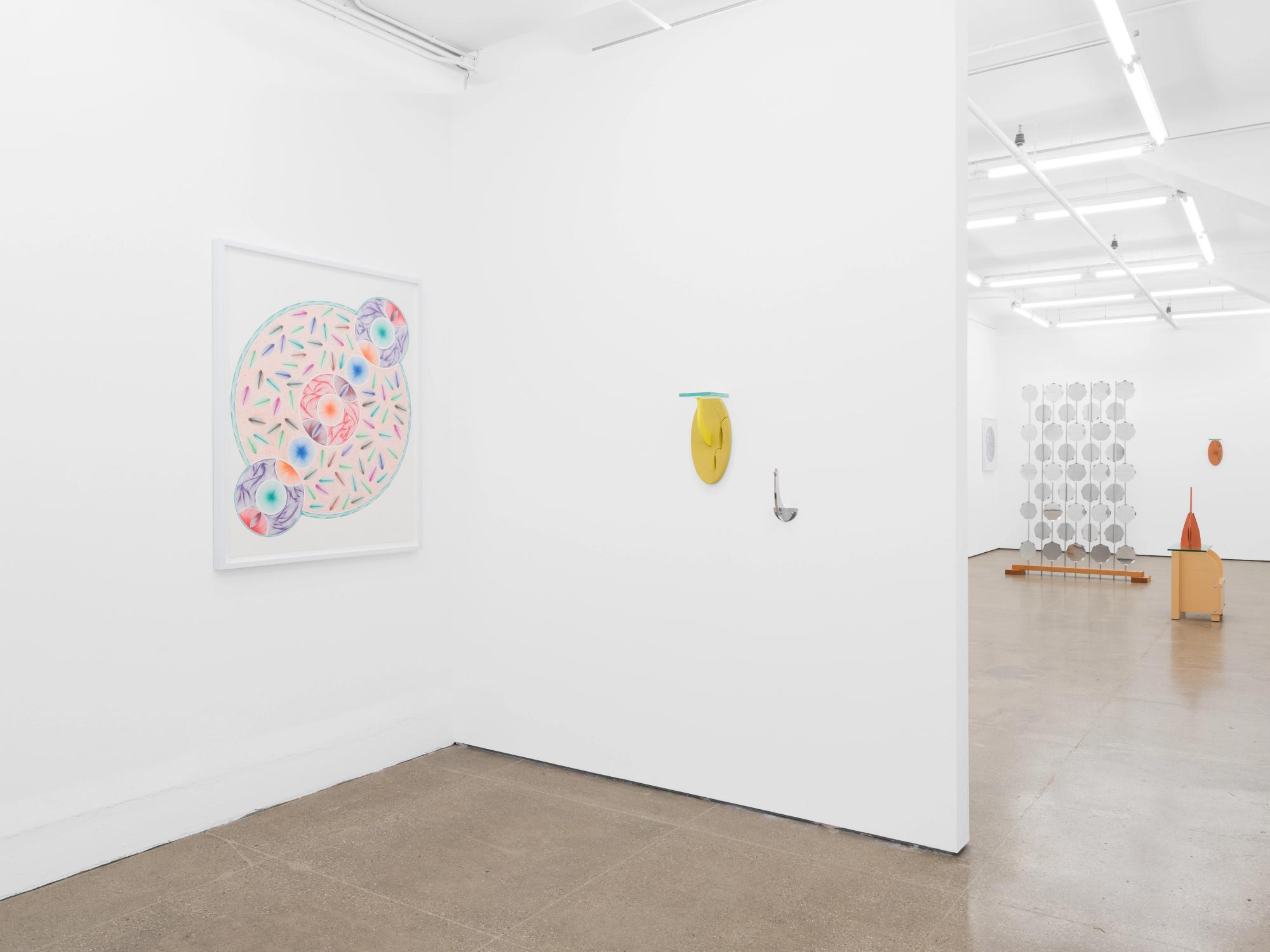
Gordon Robichaux is pleased to present Forma di Utilità / Shape of Utility, an exhibition of drawings by New York-based artist Sanou Oumar and sculptures and functional design by Los Angeles-based artist Matt Paweski. The exhibition is both artists’ third at Gordon Robichaux, and for Oumar, the first since he received asylum in the United States in 2025.
The exhibition’s title, Forma di Utilità / Shape of Utility, is inspired by the philosophy of artist and designer Giovanni Gariboldi, developed with Gio Ponti in Italy during the 1940s. Paweski explains,
I became obsessed with Giovanni Gariboldi last year—he was the director of Gio Ponti’s ceramics studio and later head of the Italian porcelain company, Ginori. He was also a fine artist in his own right. For Gariboldi and Ponti, [the concept of] Shape of Utility sought an austere, elegant, and simple place to develop from, while maintaining idiosyncratic details, patterns, and just-off decisions. This, coupled with cutting-edge techniques in industrial ceramics, led to the creation of oddly beautiful objects. I am not a ceramics person, but Gariboldi really got to a perfect object—in terms of scale, exacting color, and deep understanding of materials and how to manipulate them. His artistic sensibility, mixed with industrial production, aimed to give regular folks access to beauty and simplicity after the war, when there was a rethinking of history and a reinvigoration of the arts after such a dark period.
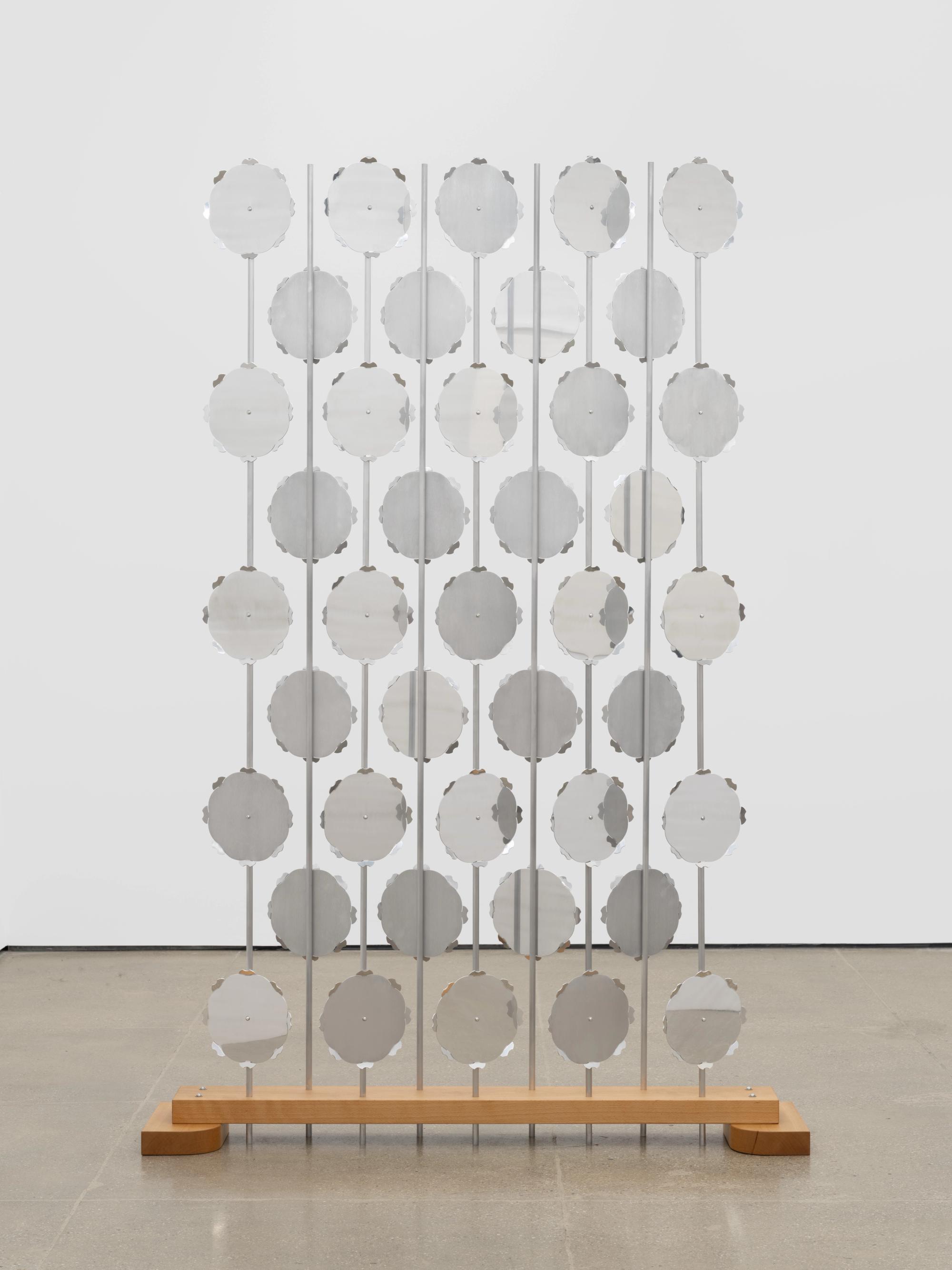
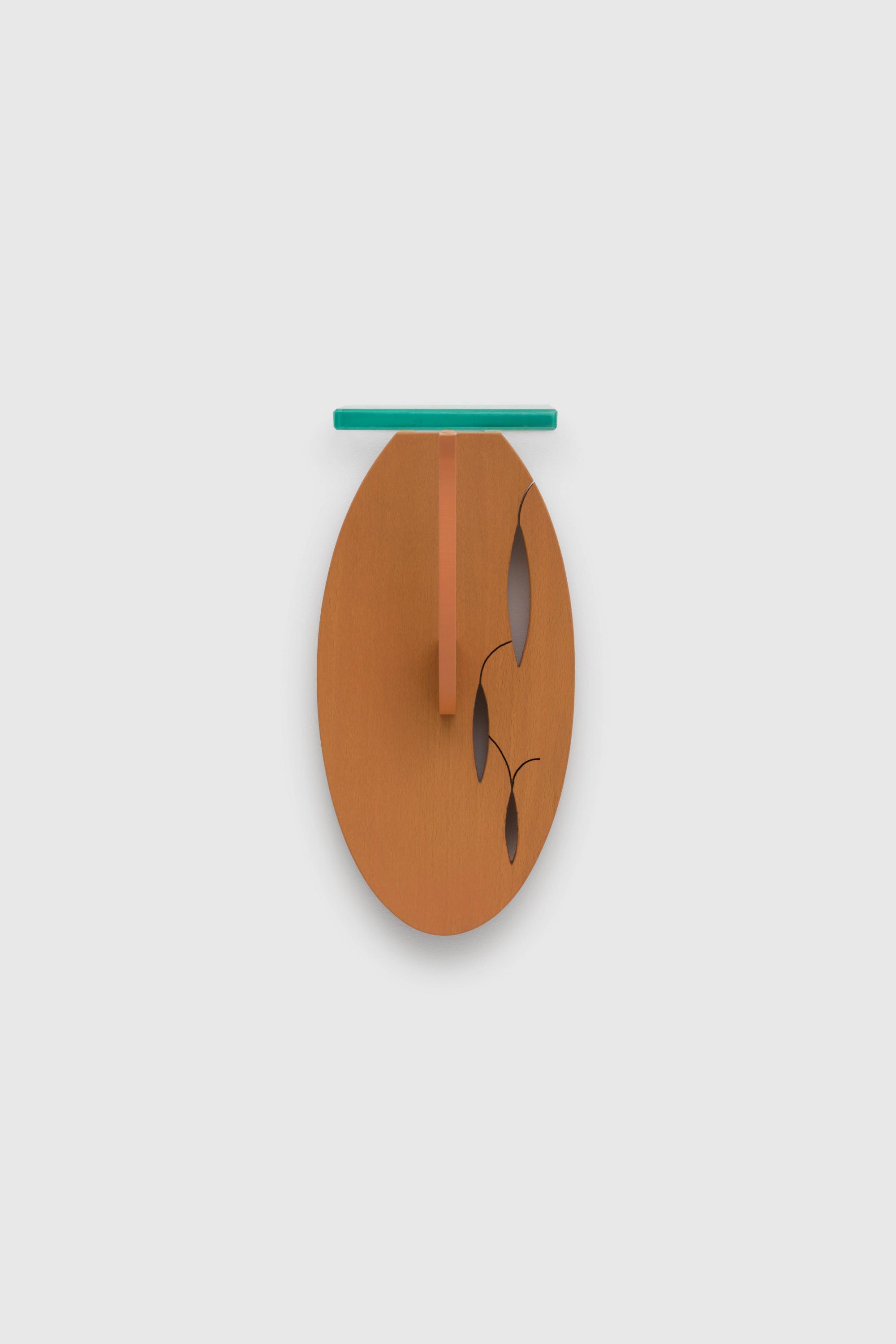
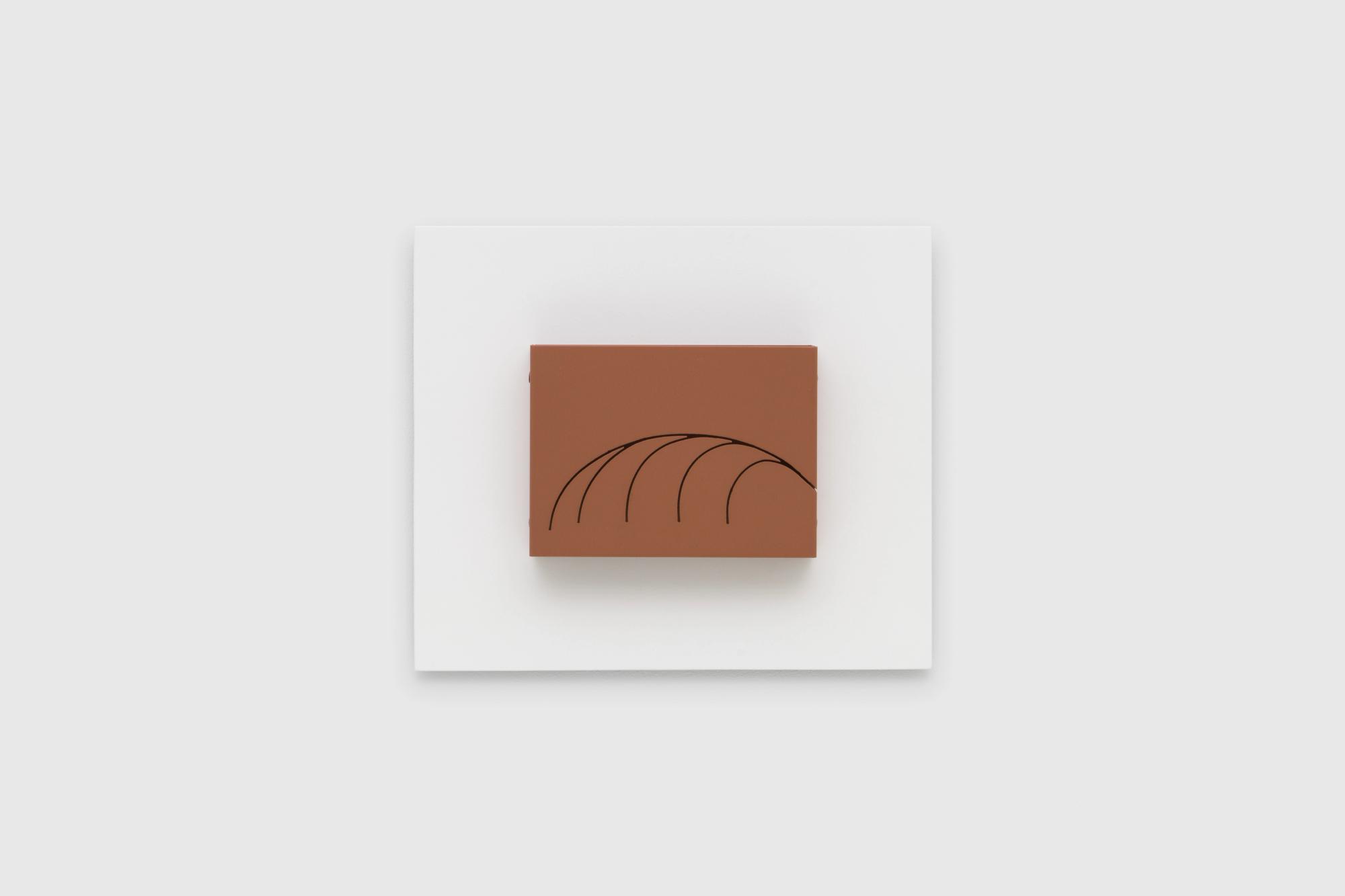
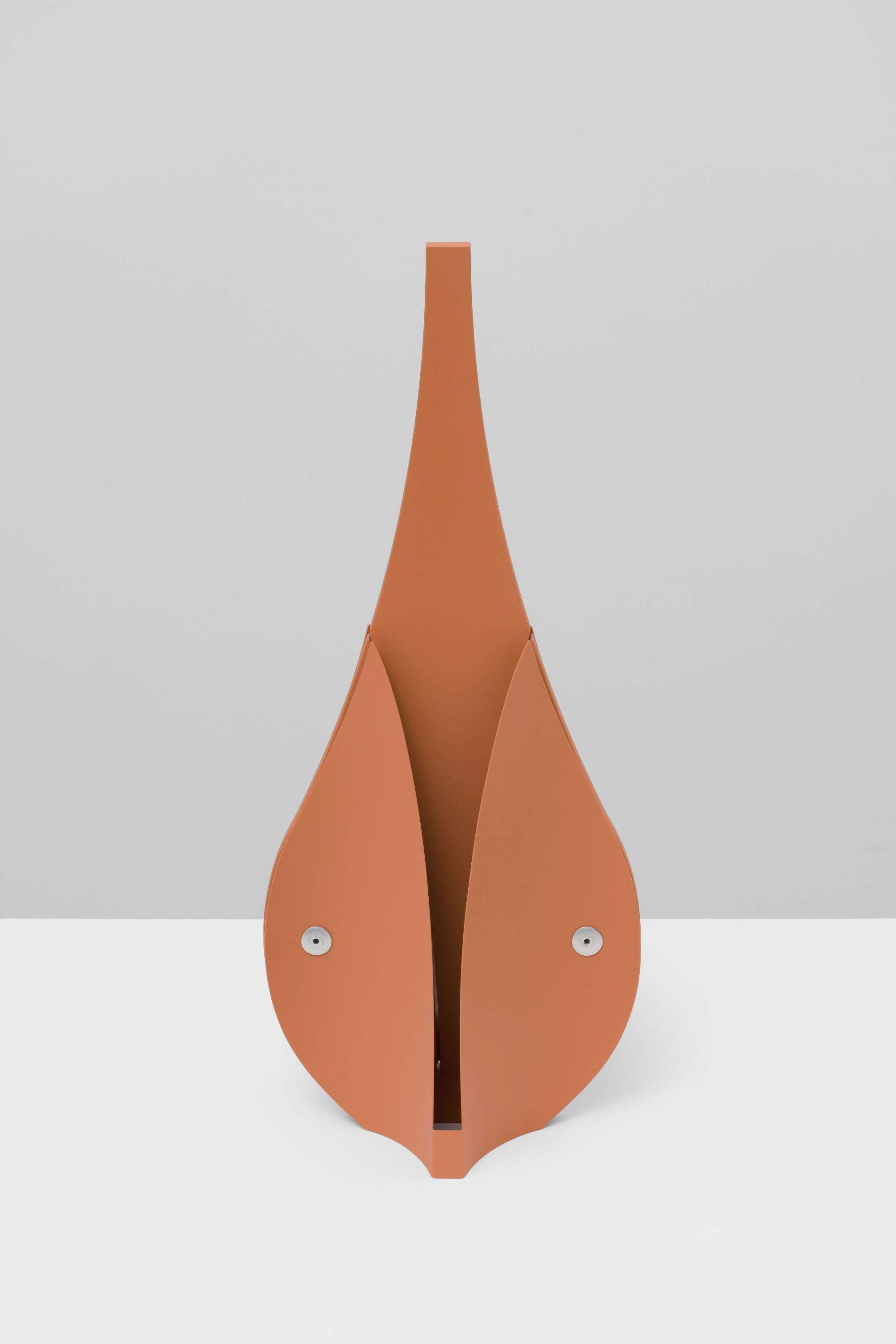
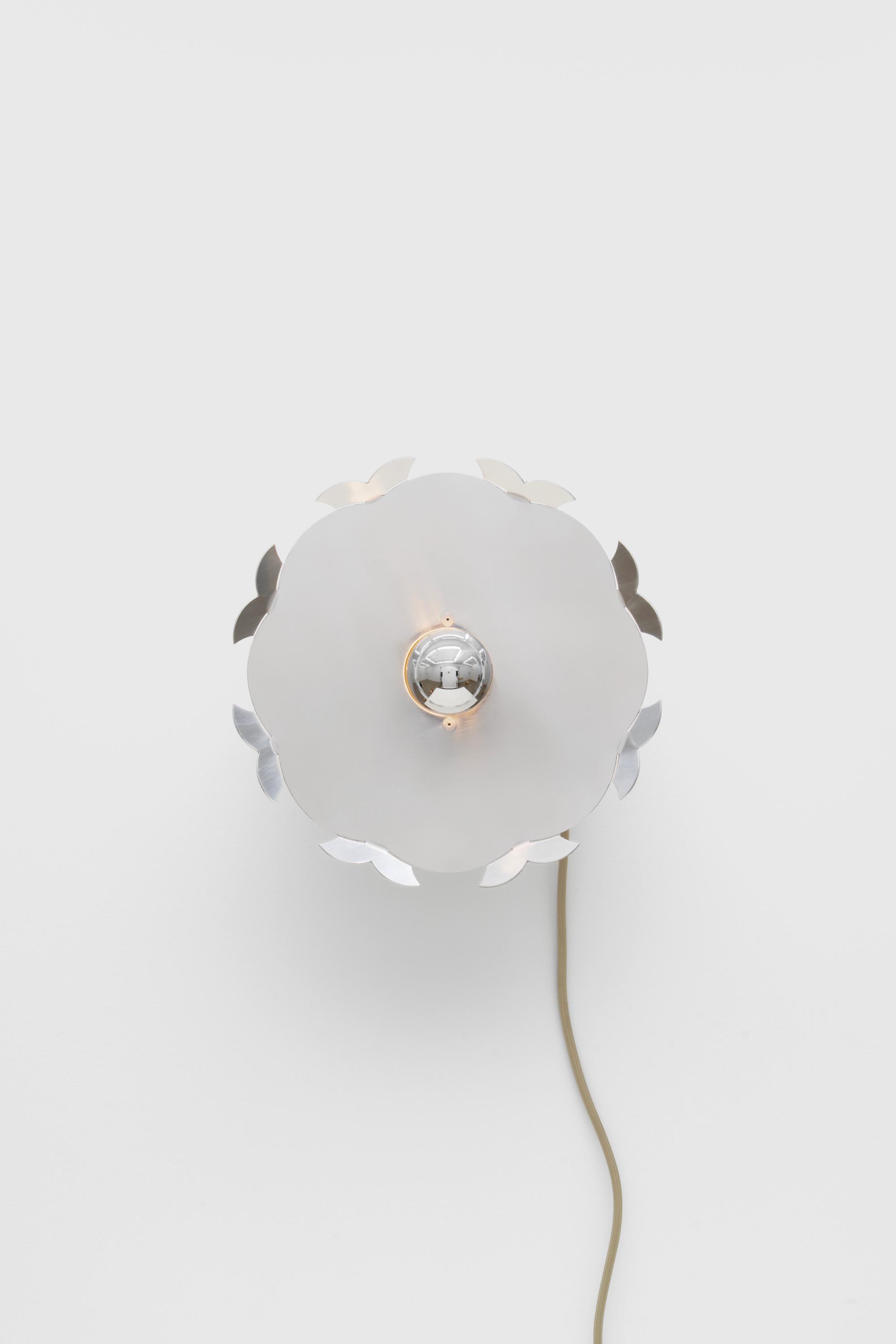
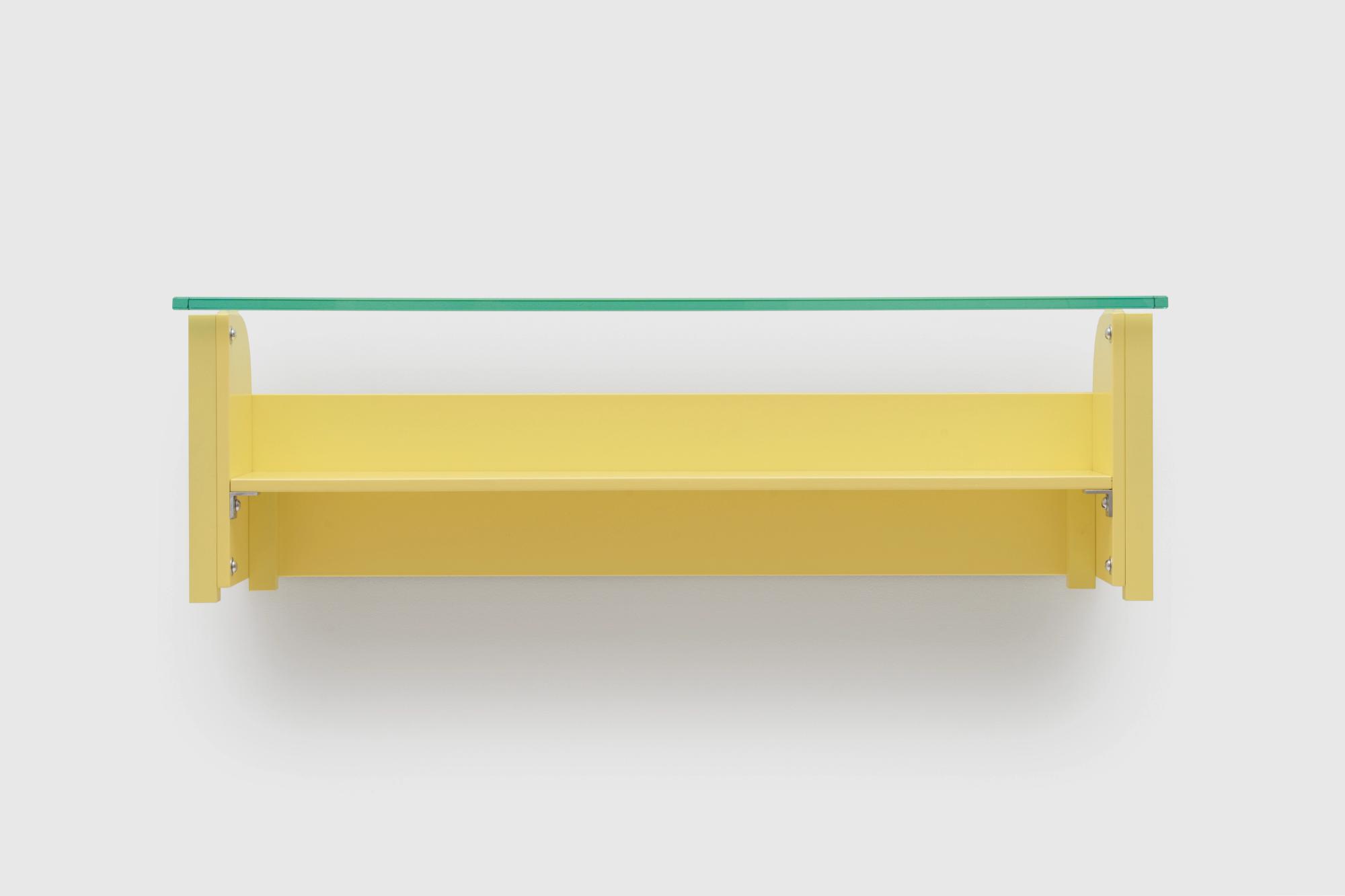
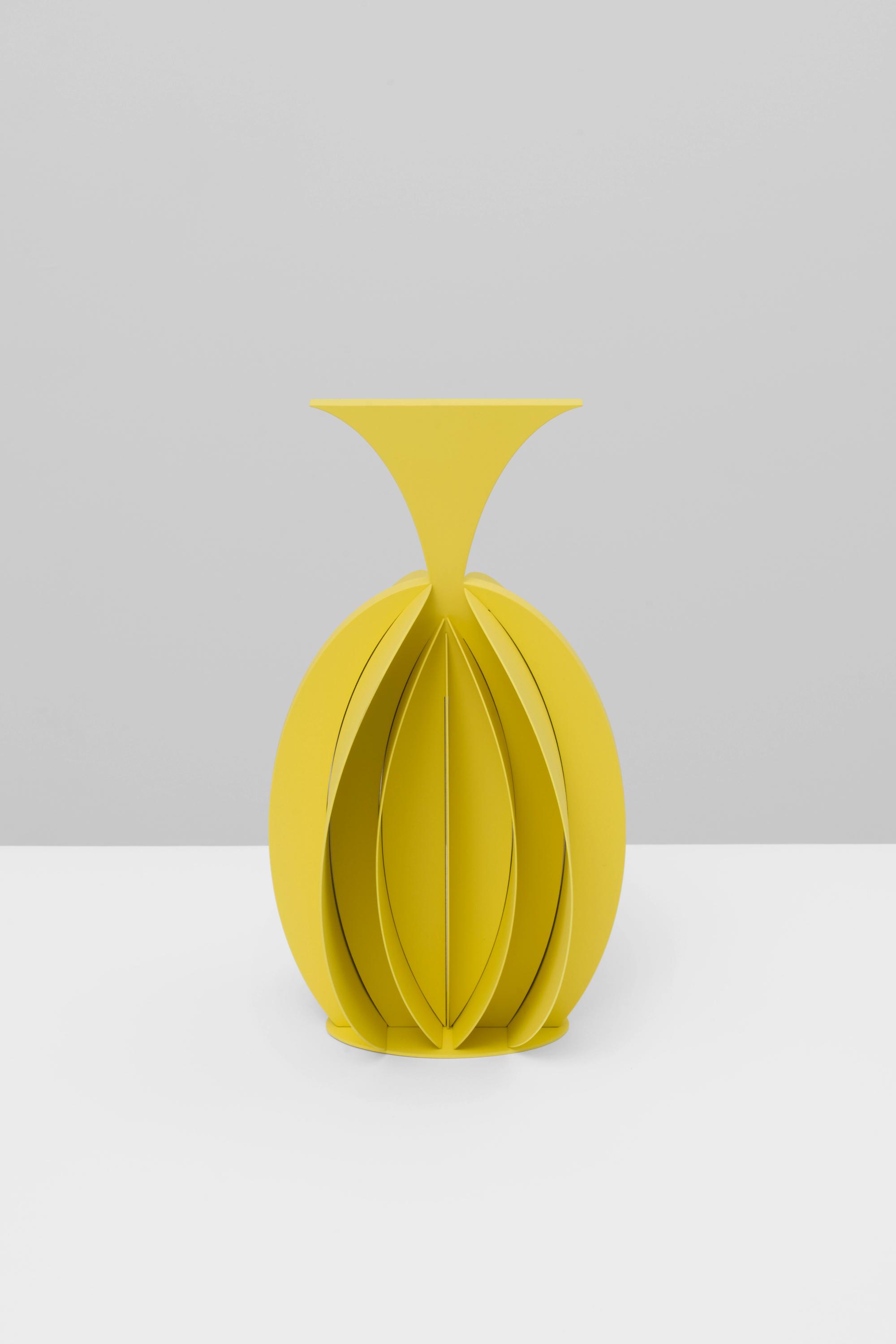
Paweski’s work evidences his deep engagement with art and design—functional and otherwise—and pits his reflexive, handmade process of drawing, cutting, bending, assembling, disassembling, painting, and riveting against industrial production and materials. Each work is created by provoking a series of mental and physical shifts, a toggling between two and three dimensions from which his forms evolve according to an intuitive logic. “The goal isn’t to try to solve an ergonomic problem,” Paweski remarks. “Points of reference and inspiration are finely distilled through the process of making so that the viewer can find many personal touchpoints but no fixed references. They’re devices for expansion, introspection, and transcendence that propose new structures, architectures, designs, and possible paths forward—new views of the world.”
For Paweski, the potential for art and design to positively transform individual and collective experience remains as radical and relevant today as it did for Gariboldi. These seemingly utopian responses to our complex social and political reality are grounded in pragmatism, simplicity, and the intimate act of creating drawings and objects by hand, a fundamental aspect of both artists’ work.
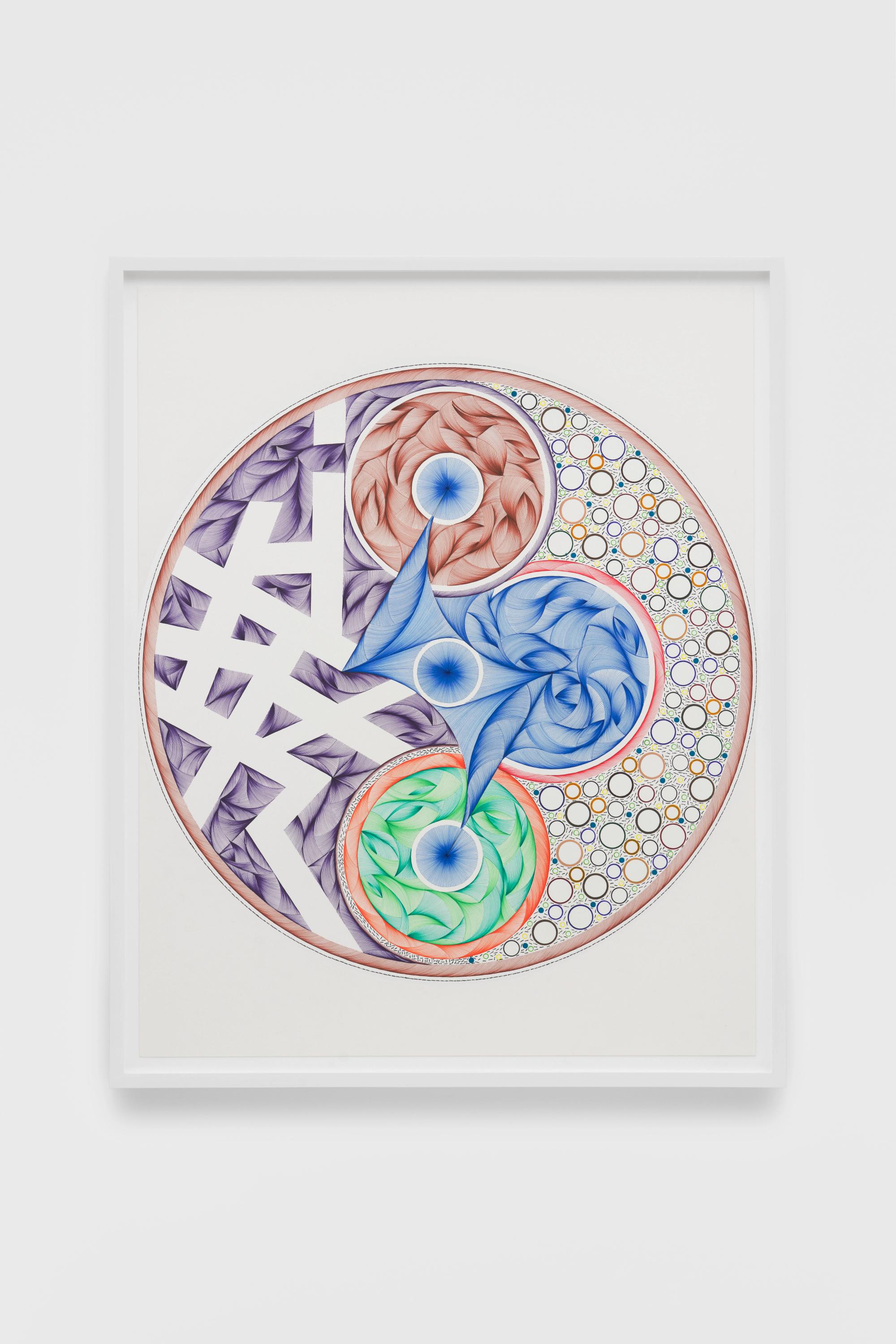
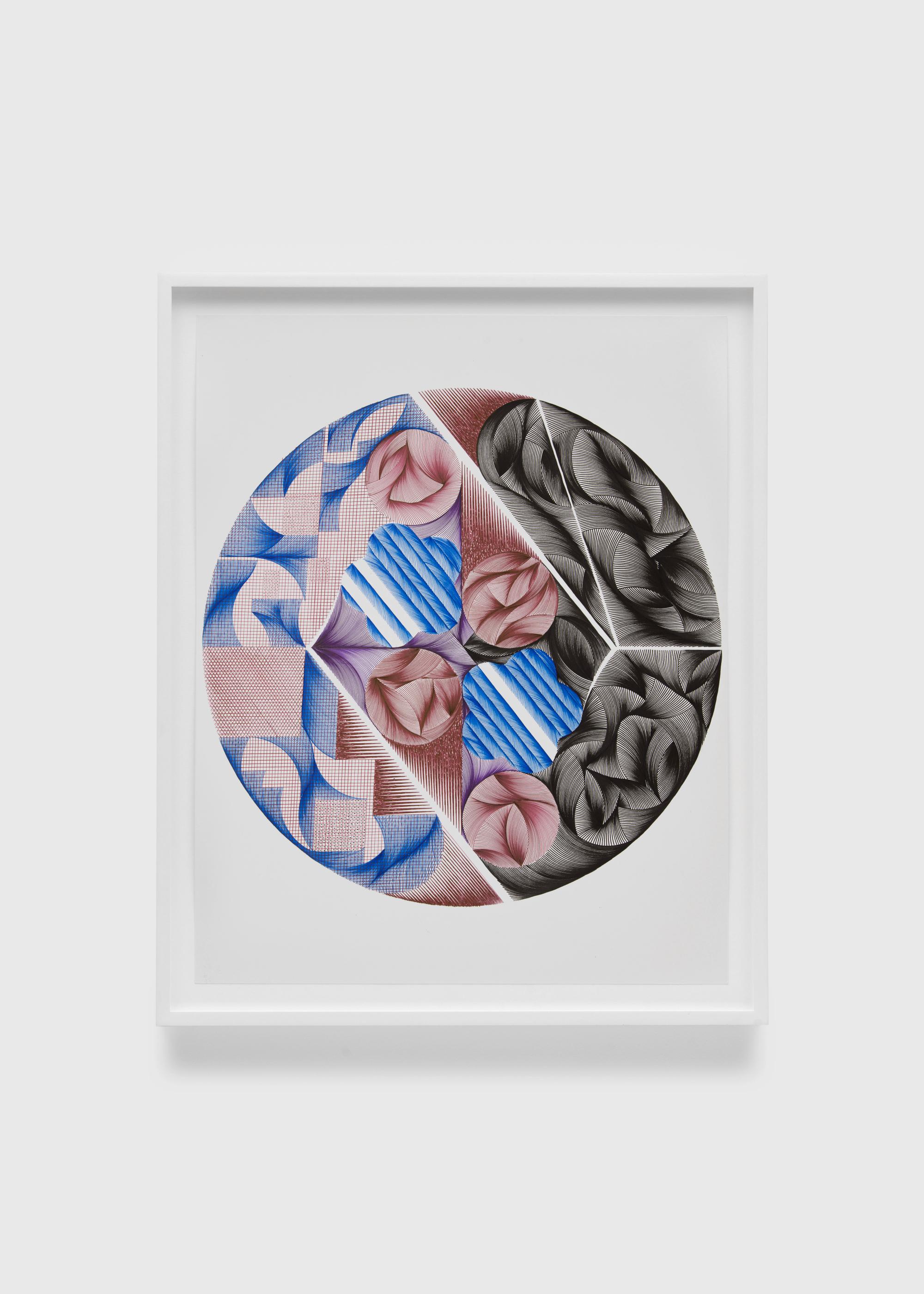
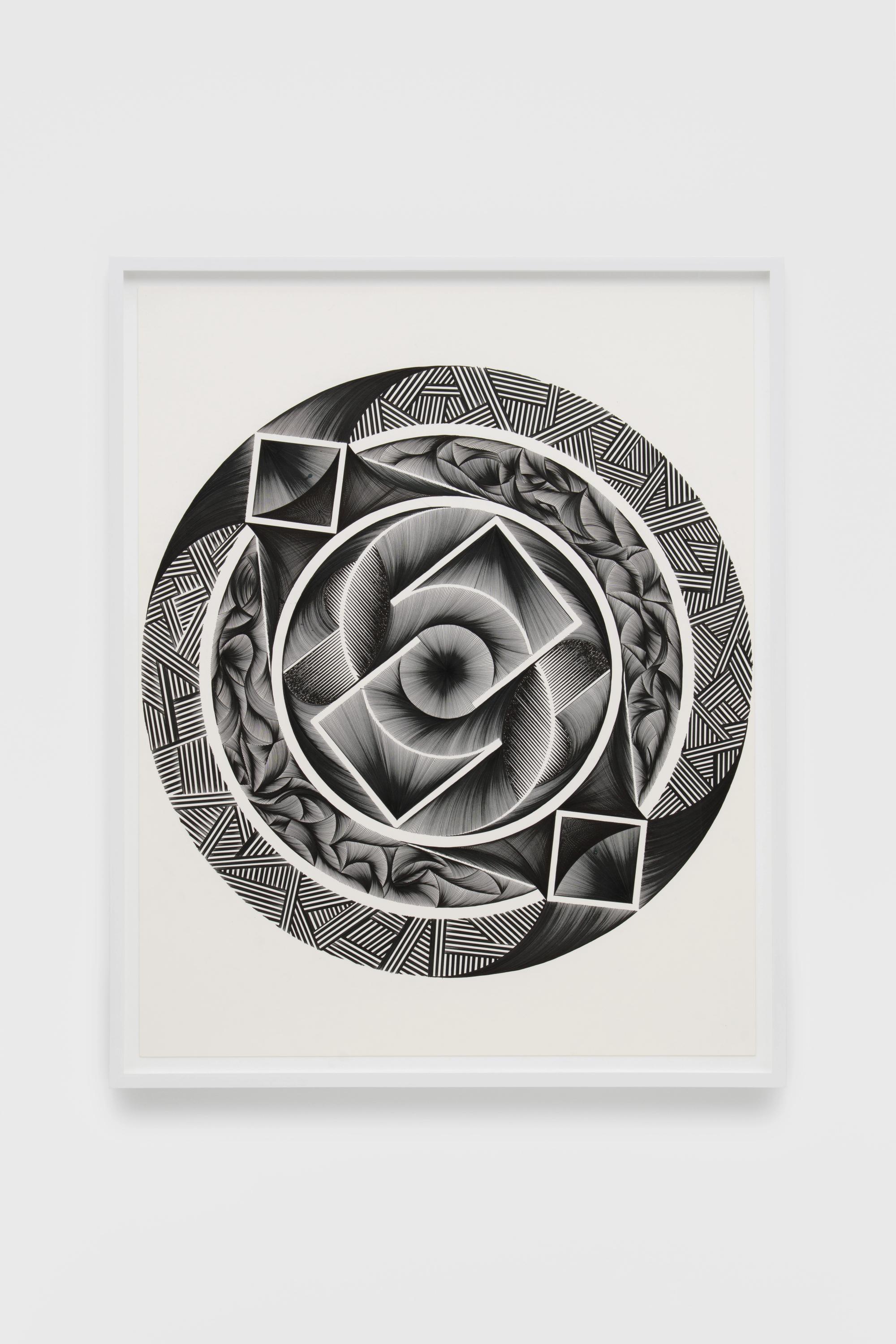
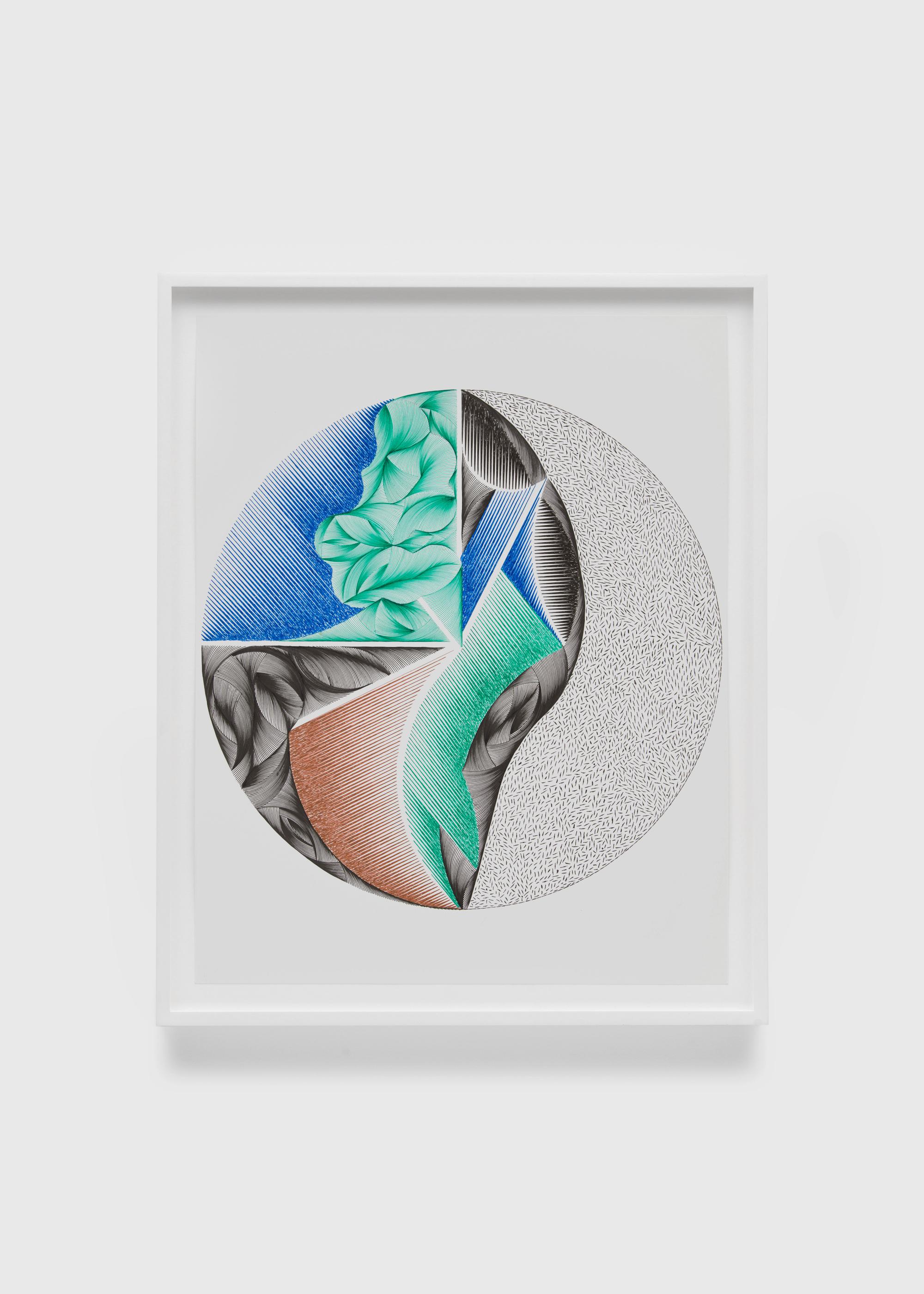
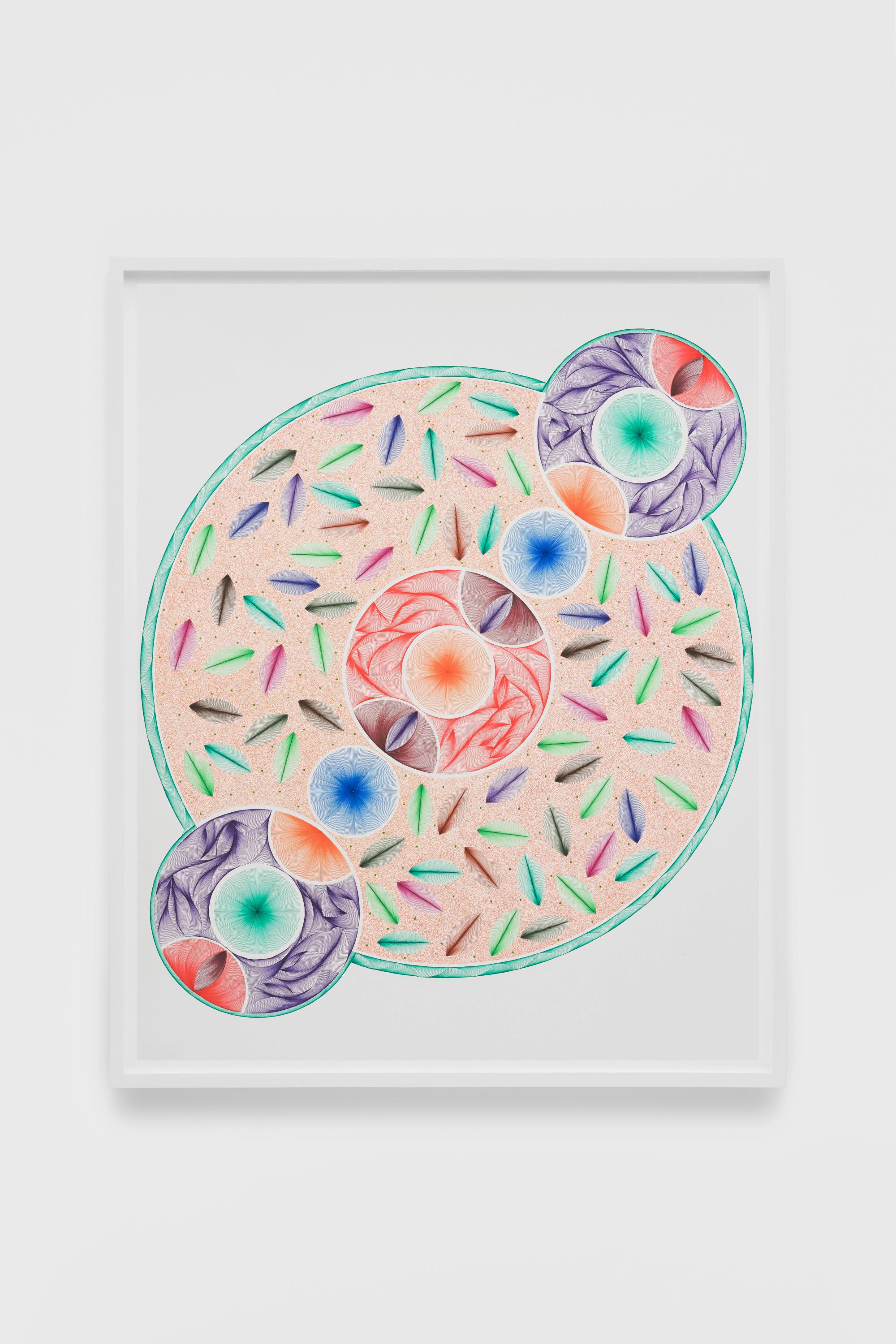
Working primarily with colored pens, paper, and paperboard, Oumar creates highly inventive drawings using his own distinct mark-making vocabulary and his seemingly infinite capacity for invention. Through his process, he creates a space for transformation and healing.
Oumar’s intricate drawings reveal his interest in the dynamic forms and structures of architecture born out of a real yet imaginative desire for home: roots, order, and infinite calm. As a young person growing up in Burkina Faso, he would contemplate the elaborate simplicity of the modern bank building in Ouagadougou: “There was nothing missing. I could see all the lines in the building: rectangles, circles, triangles, everything included, each one following its own order.” His serialized drawing practice echoes this pursuit of visual order, a process that helps him reframe and come to terms with the chaos of his past and present experience—the trauma and constraints of his childhood, and the physical and emotional displacement he experienced as an asylum seeker in the US.
Oumar’s deftly made drawings immediately call to mind Indian mandalas, complex circular designs that represent imaginary palaces to contemplate during meditation. They also evoke the work of Hilma af Klint and Emma Kunz, who used abstract geometric language to explore complex belief systems, spirituality, and mystical restorative practices. Like Kunz—the Swiss artist and healer whose diagrammatic drawings held within them the secret to health and well-being for her patients—Oumar draws to commune with other worlds and dimensions, an act that is by turns metaphysical, liberating, and restorative. “The reason I am alive is because of them.”
Install (14)
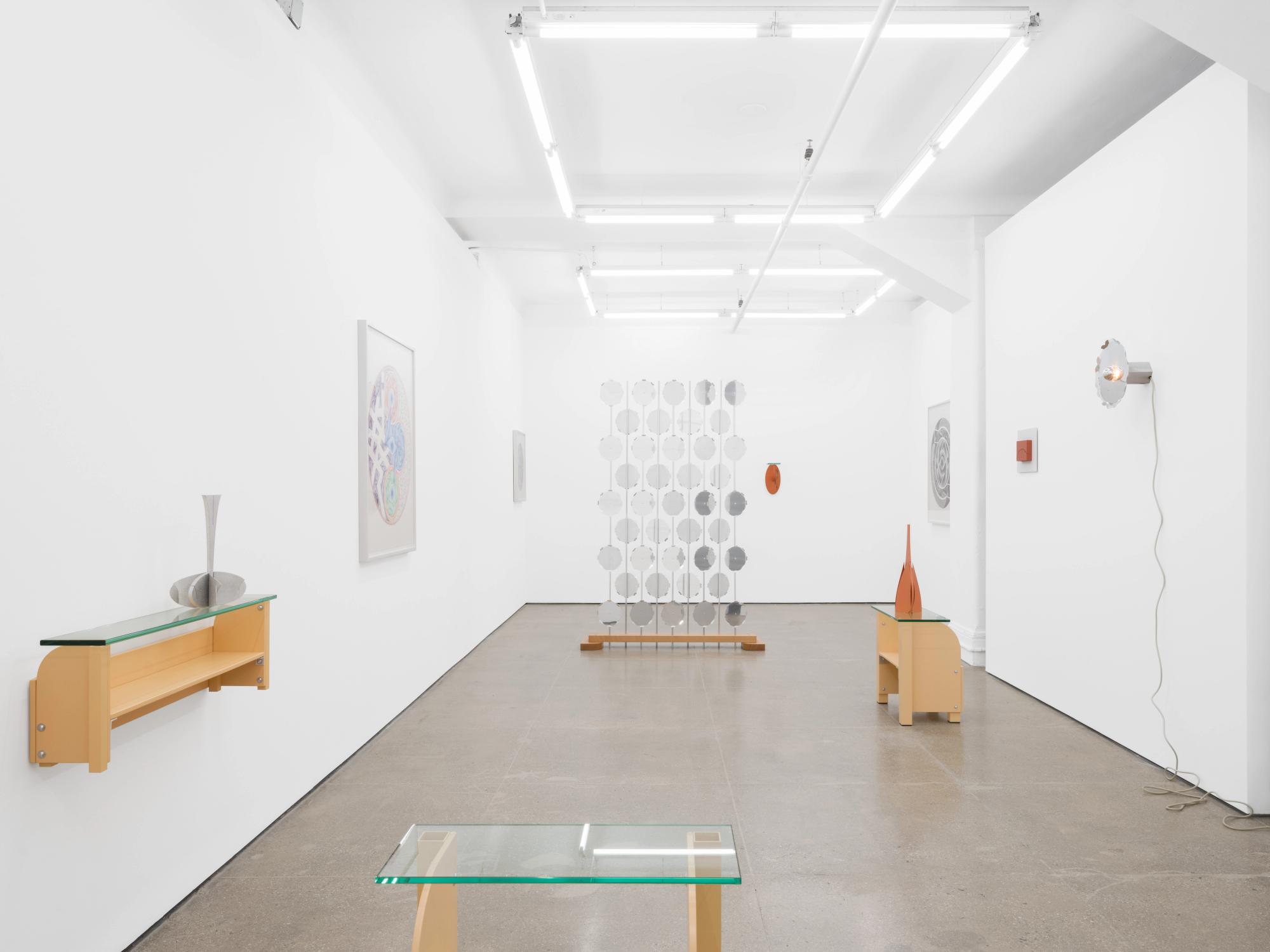
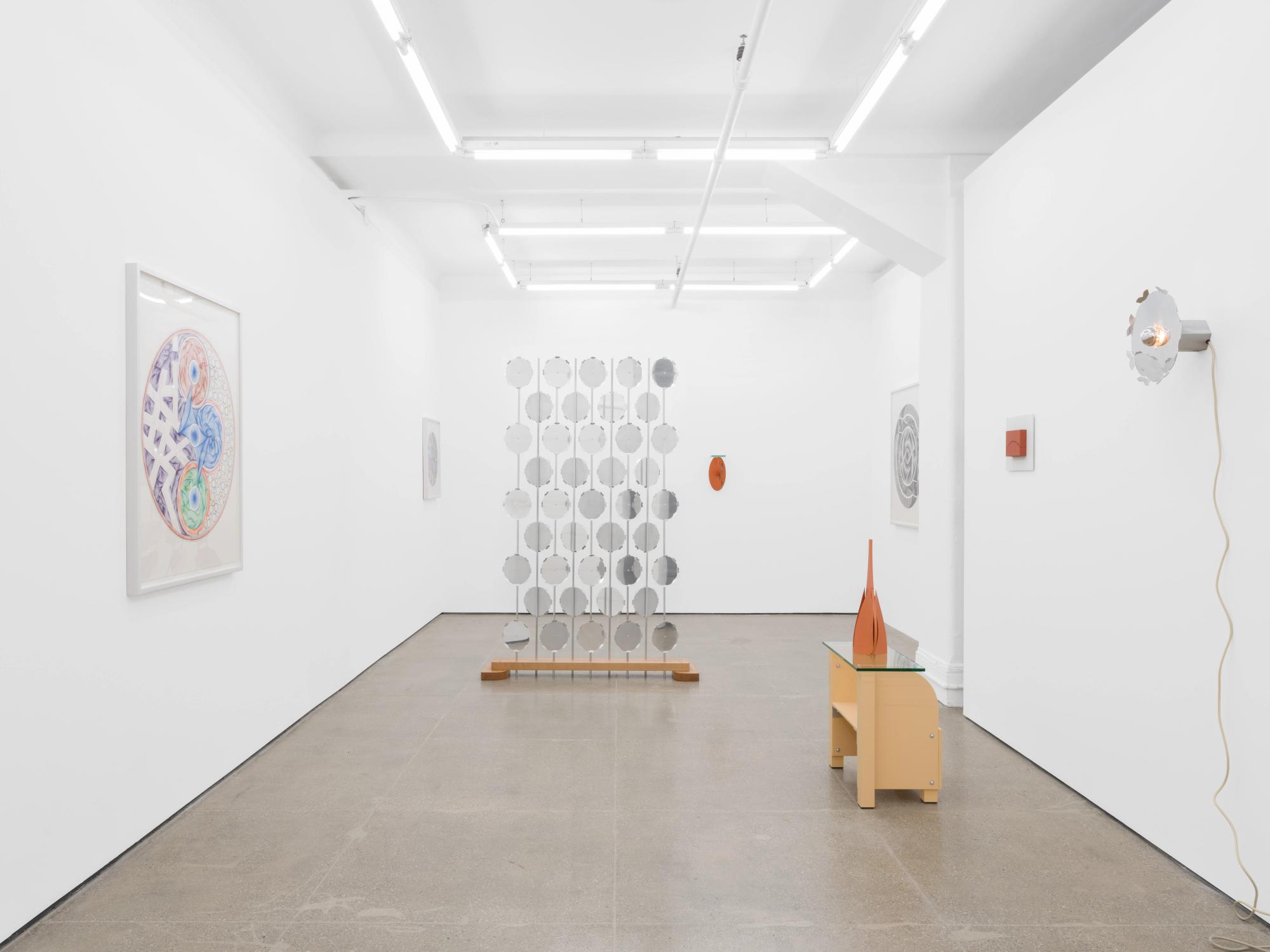
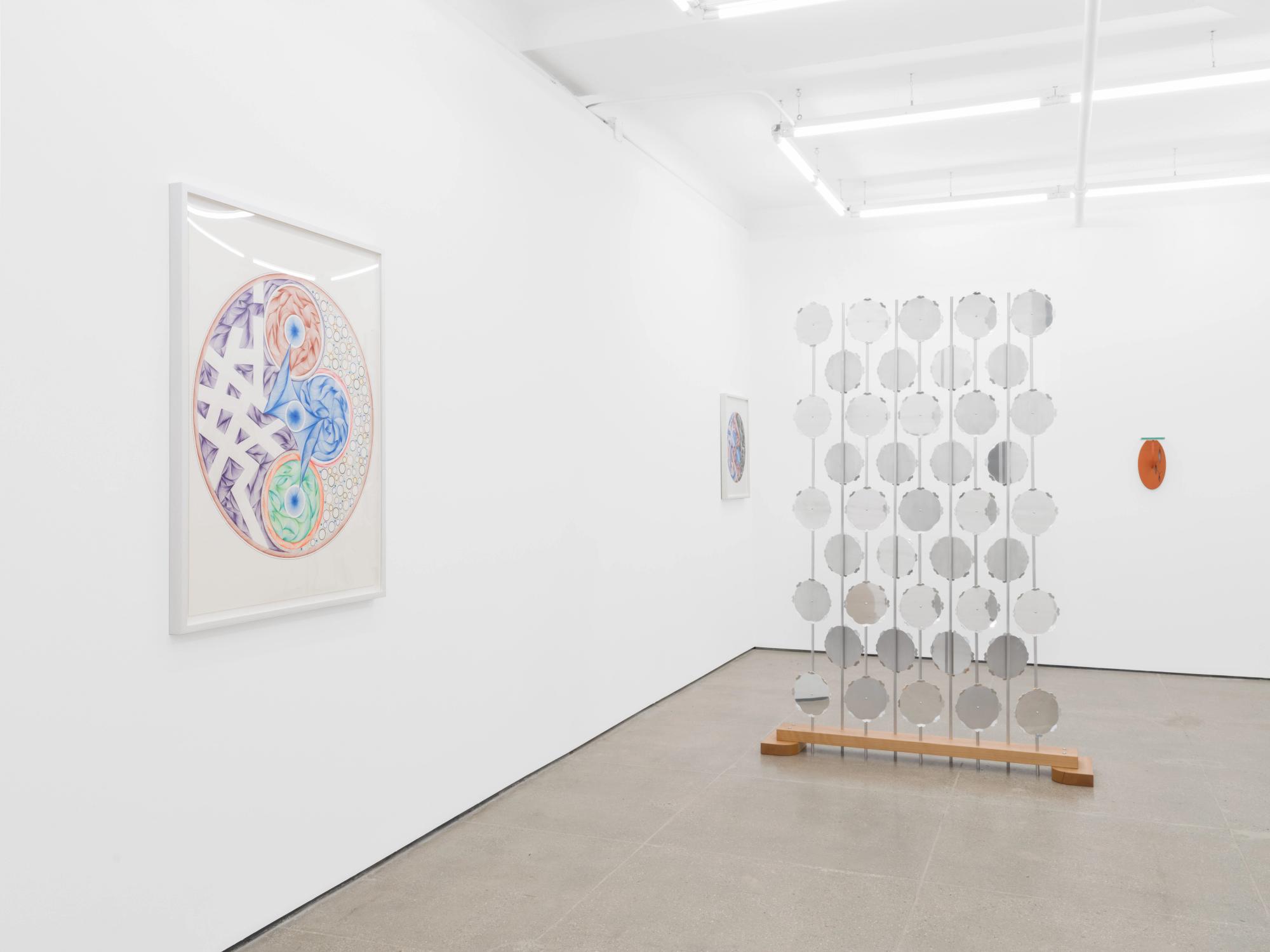
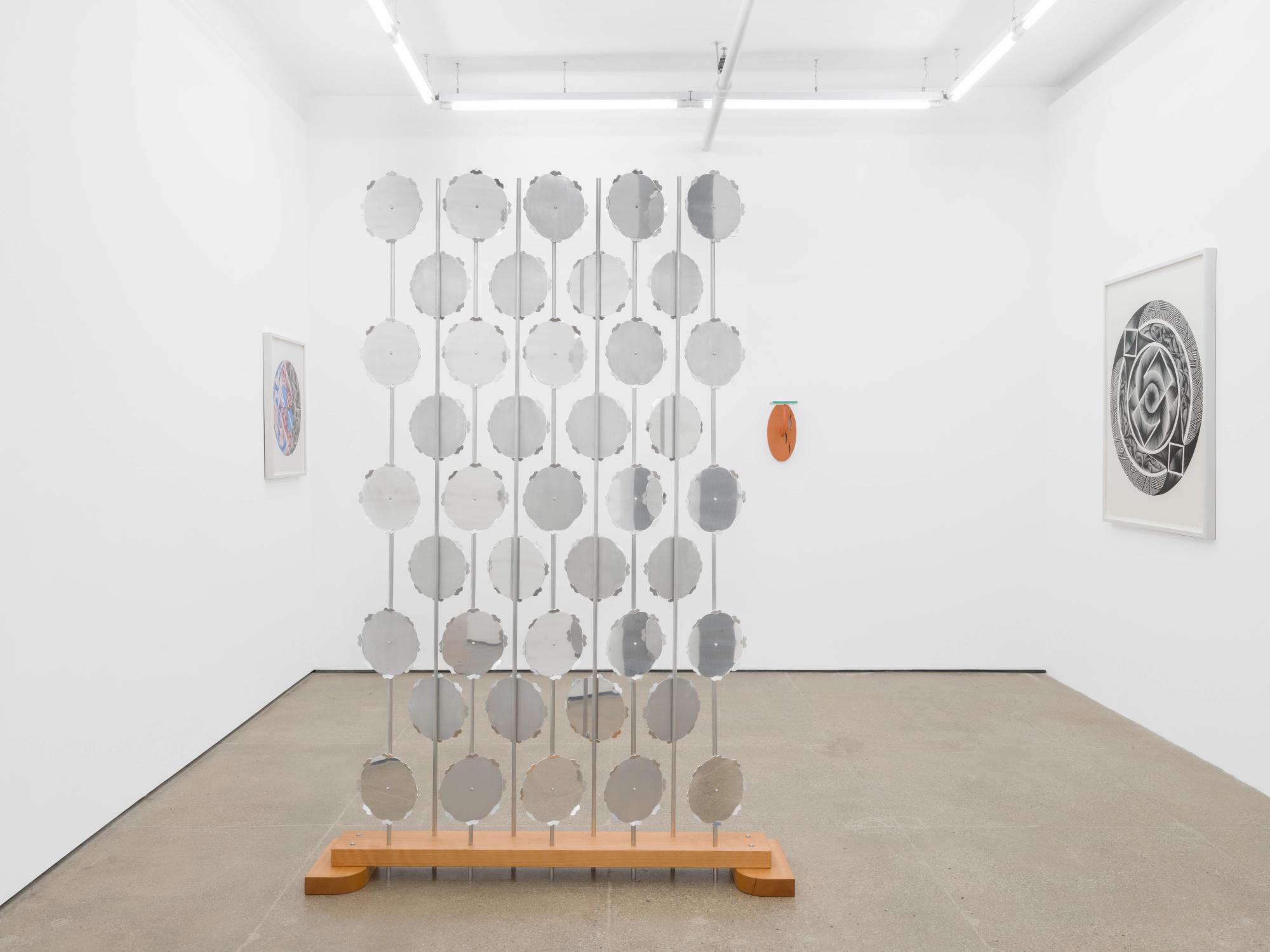
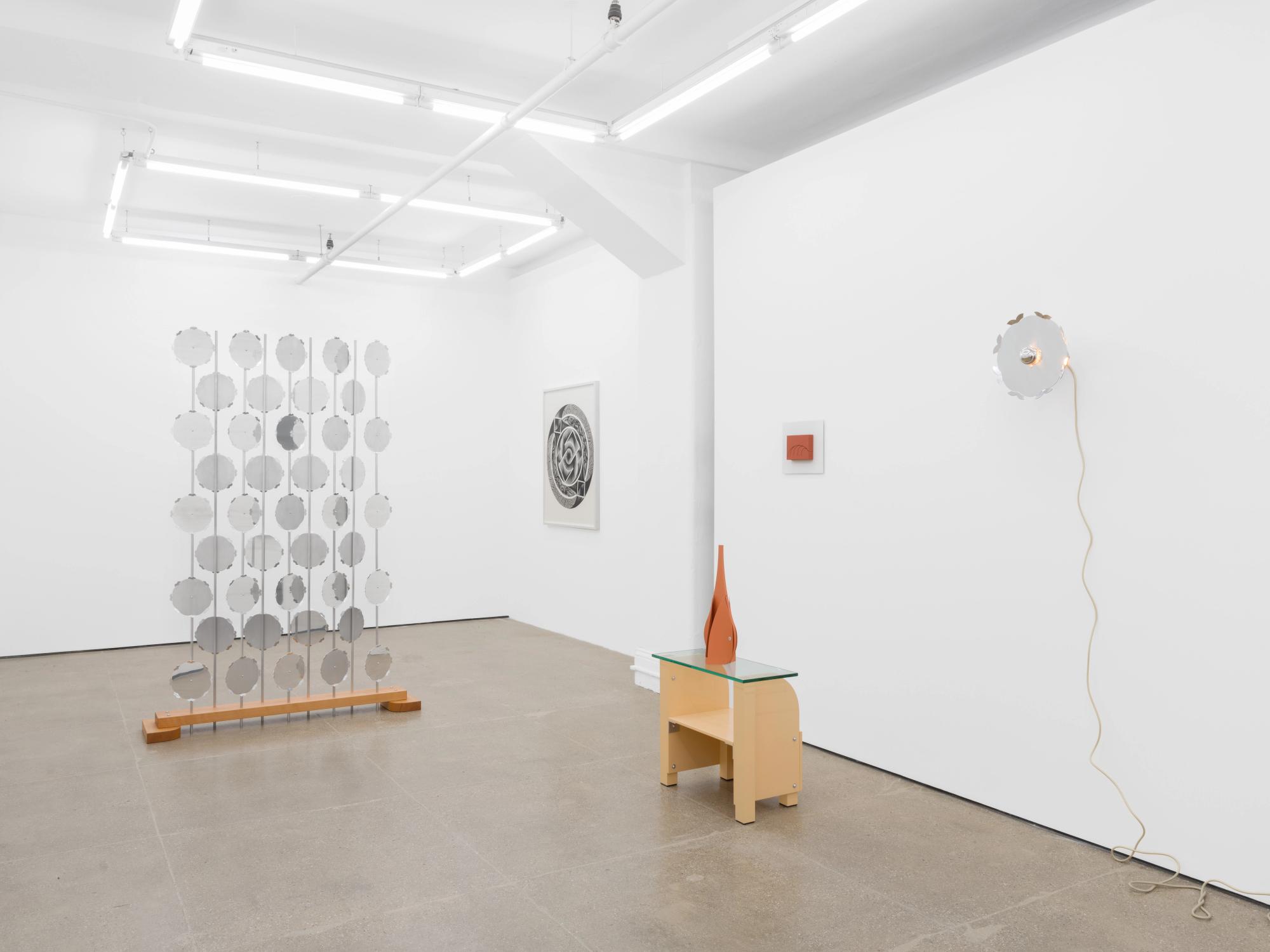
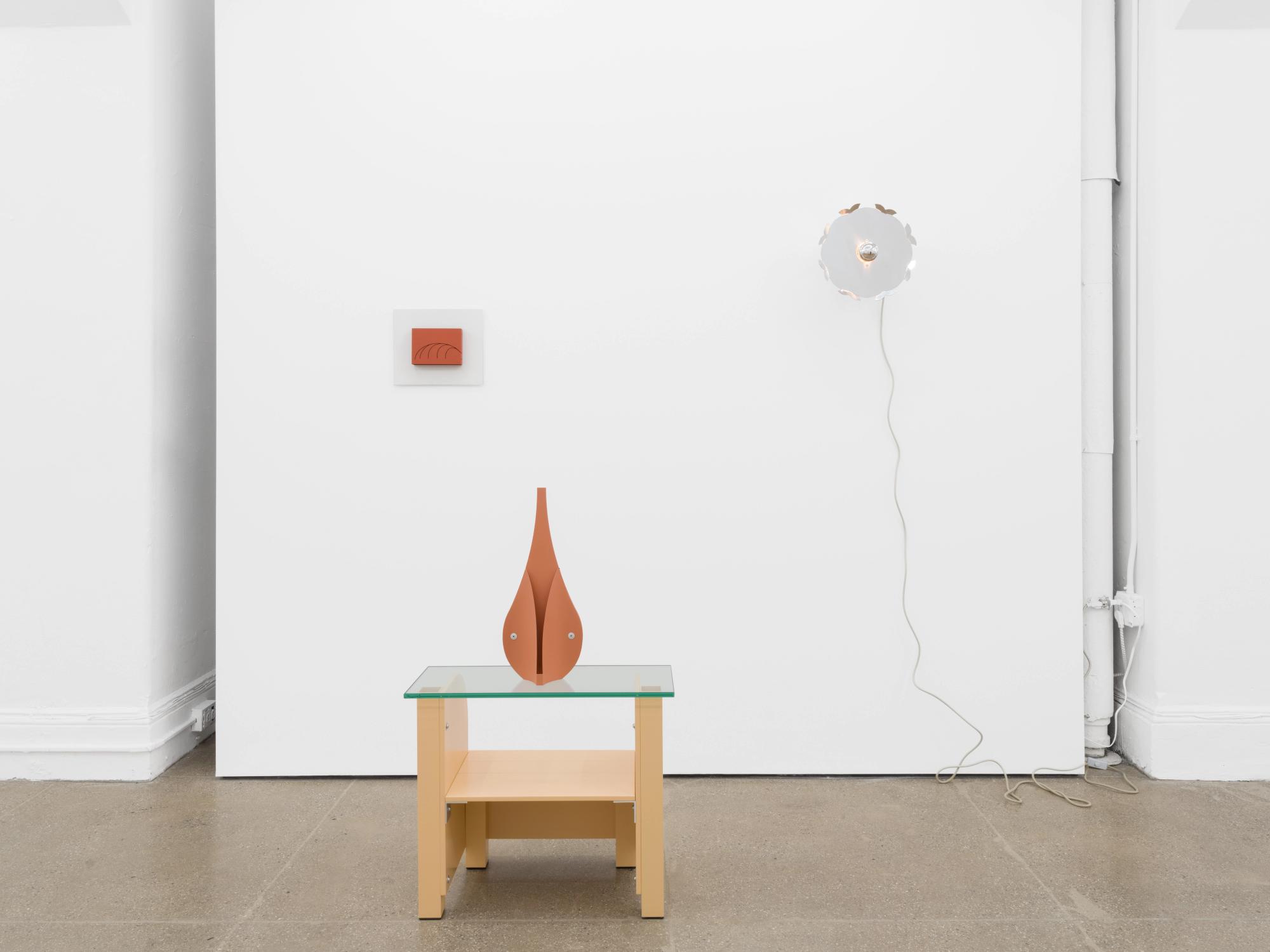
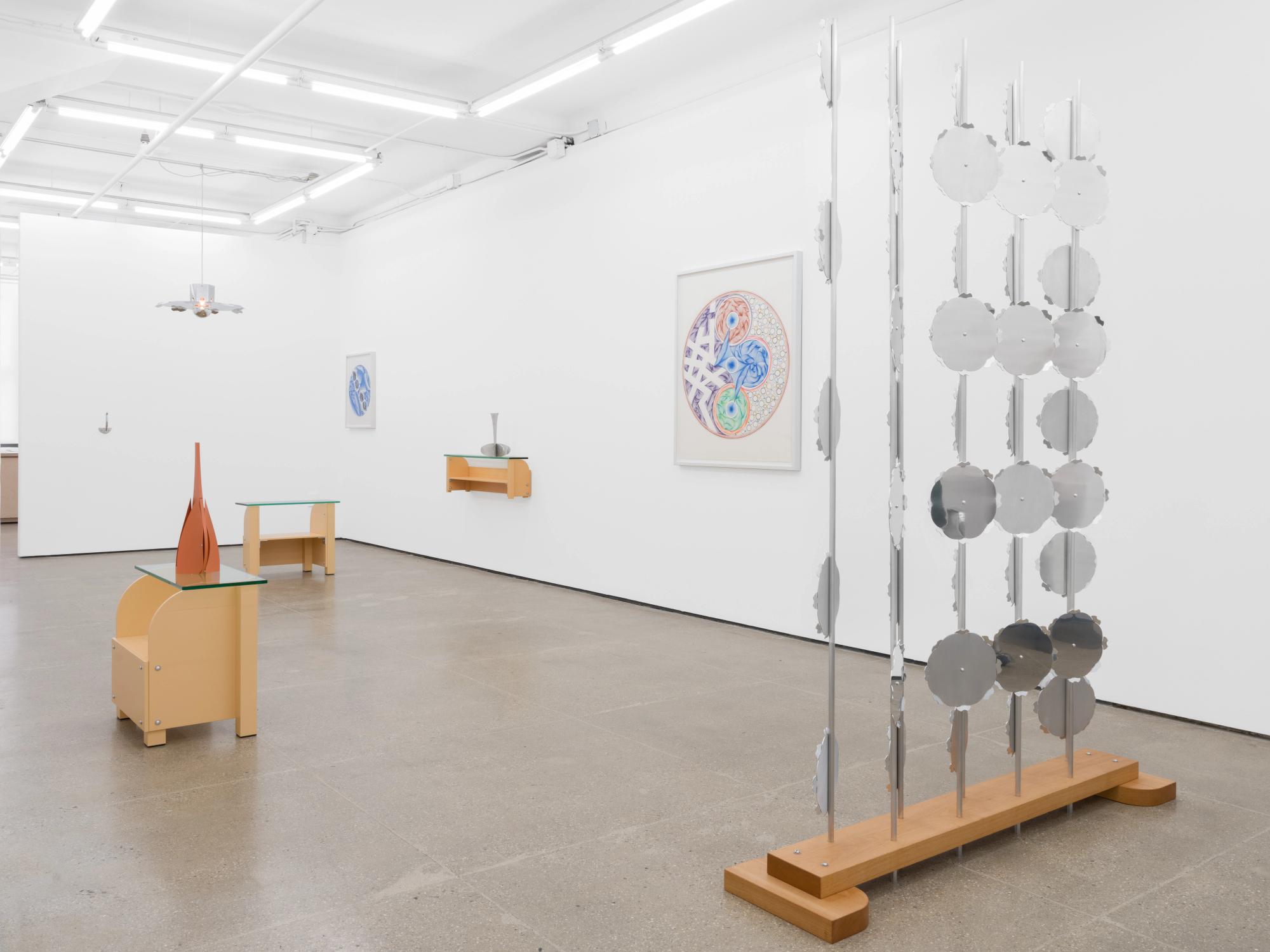
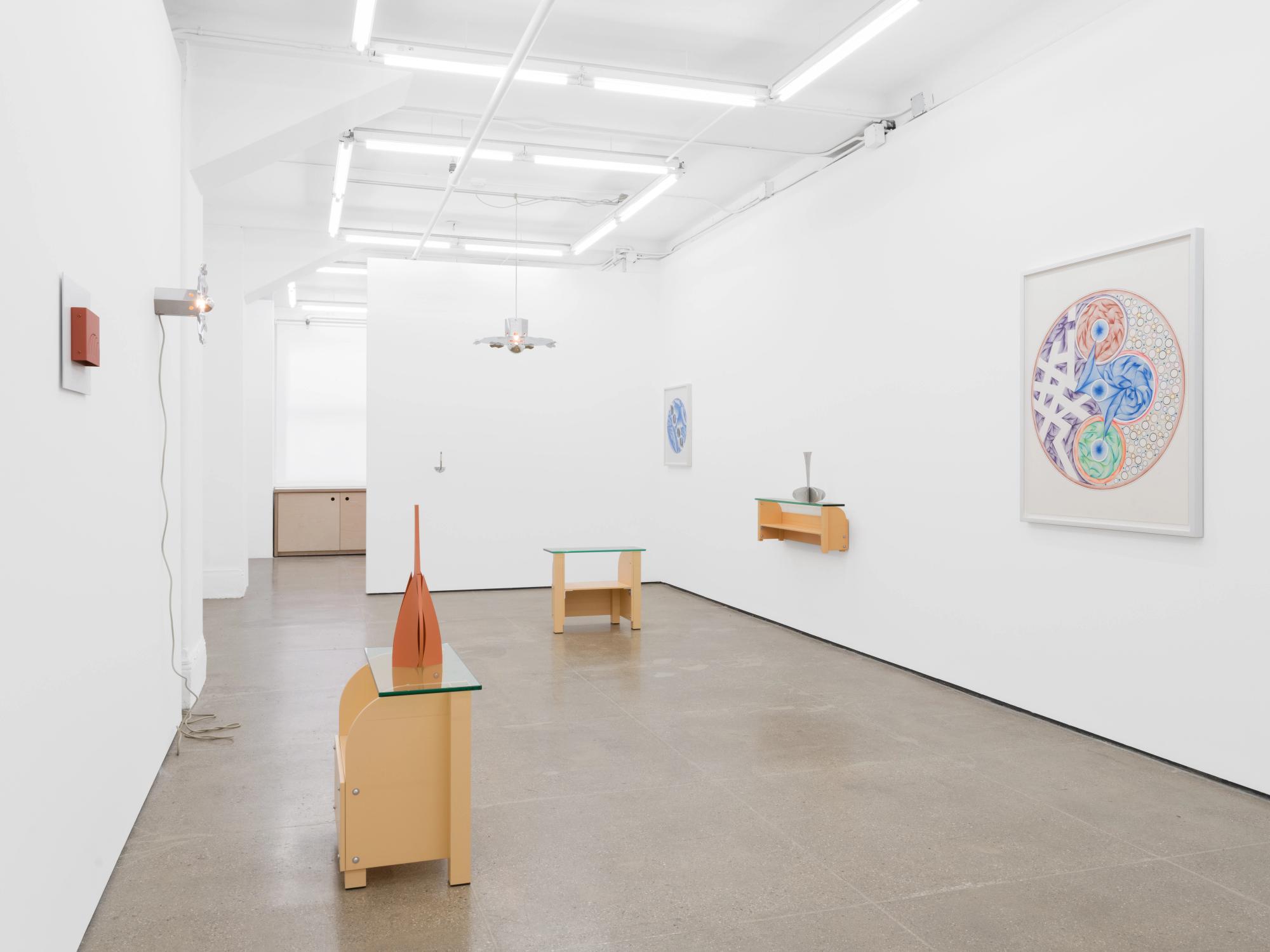
Sanou Oumar (b. 1980; Burkina Faso, West Africa) lives and works in the Bronx. He graduated from the University of Ouagadougou in 2007 with a major in English literature. In 2015, Oumar moved to the United States to seek asylum, which he received in 2025. He is represented by Gordon Robichaux in New York, where he had his first two-person exhibition (with Matt Paweski) in 2018, and Herald St in London, where he presented his first solo exhibition in 2019. In 2021, his work was the subject of solo exhibitions at Herald St in London and at Gordon Robichaux in New York, which were reviewed in The New York Times, Artforum, and Frieze.
In 2022, his work was included in Drawing in the Continuous Present at The Drawing Center, New York. Group exhibitions include the 12th Seoul Mediacity Biennale, Seoul Museum of Art; a two-person exhibition (with Elisabeth Kley) at South Willard, Los Angeles (organized by Matt Connors); The Minneapolis Institute of Art; Karma, New York; Essex Flowers, New York (organized by Melissa Brown); Parker Gallery, Los Angeles; Herald St, London; Maroncelli 12, Milan (organized by Matt Paweski and Jacopo Mazzetti); Gordon Robichaux, New York; Mormor Studio, New York (organized by the Center for Constitutional Rights); and Joost van den Bergh, London. Oumar’s work is held in the collections of The Studio Museum in Harlem, New York; the RISD Museum at the Rhode Island School of Design, Providence; and the Minneapolis Institute of Art.
A monograph dedicated to Oumar’s drawings (published by Pre-Echo Press, with an essay by Matt Paweski) was released in 2018. His work is also featured in Meaning Matter Meaning: Selections from the Studio Museum in Harlem’s Collection (Phaidon, 2025); THIS TOO IS A MAP (Seoul Museum of Art, 2023); Drawing in the Present Tense (The Drawing Center, 2022); and Vitamin D3: Today’s Best in Contemporary Drawing (Phaidon, 2021).
Matt Paweski (b. 1980; Detroit, Michigan) lives and works in Los Angeles. He received an MFA from Art Center College of Design, Pasadena, CA. Paweski is represented by Gordon Robichaux, New York, and Herald St, London.
He has presented solo exhibitions at Dunes, Portland (two-person with Carla Weeks, 2025); The Fold, Los Angeles (with Lecia Dole-Recio, 2025); Volume Gallery, Chicago (2024); the Wadsworth Atheneum Museum of Art, Hartford, CT (2023); Gordon Robichaux, New York (2026, 2021, and two-person with Sanou Oumar, 2018); Herald Street, London (2020, 2017, 2014); Octagon, Milan (2019); Park View/Paul Soto, Los Angeles (2018); Lulu, Mexico City (with Ella Kruglyanskaya, 2018); Ratio 3, San Francisco (2016); and South Willard, Los Angeles (2015, 2013, 2012).
Group exhibitions include Museo Tamayo (curated by Rodrigo Hernandez and Rodrigo Ortiz Manasterio), Mexico City (forthcoming, 2027); Goldsmiths CCA (curated by Matt Connors), London; Jacqueline Sullivan Gallery, New York; a1043, Paris; White Columns (curated by Lee Mary Manning), New York; Dunes, Portland, ME; Gordon Robichaux, New York; Queer Thoughts, New York; La MaMA Galleria (curated by Sam Gordon), New York; Bodega, New York; Harris Lieberman, New York; Wallspace, New York; Parker Gallery, Los Angeles; South Willard, Los Angeles; PHIL, Los Angeles; Cherry and Martin, Los Angeles; Thomas Duncan Gallery, Los Angeles; 356 Mission, Los Angeles; Richard Telles Fine Art, Los Angeles; Octagon, Milan; Librairie Yvon Lambert, Paris; Palais de Tokyo, Paris; and kurimanzutto, Mexico City.
His work has been reviewed and featured in numerous publications, including The New Yorker, The New York Times, apartmento, Mousse, Contemporary Art Review Los Angeles, Contemporary Art Daily, Artforum, Los Angeles Review of Books, Artnet, Dwell Magazine, Art in America, Flash Art, and New York Times T Magazine. In 2020, his first monograph, MP.19, was published by Zolo Press.
Paweski’s work is held in the collections of the Museum of Fine Arts, Houston, and the Wadsworth Atheneum Museum of Art, Hartford, CT.
Works
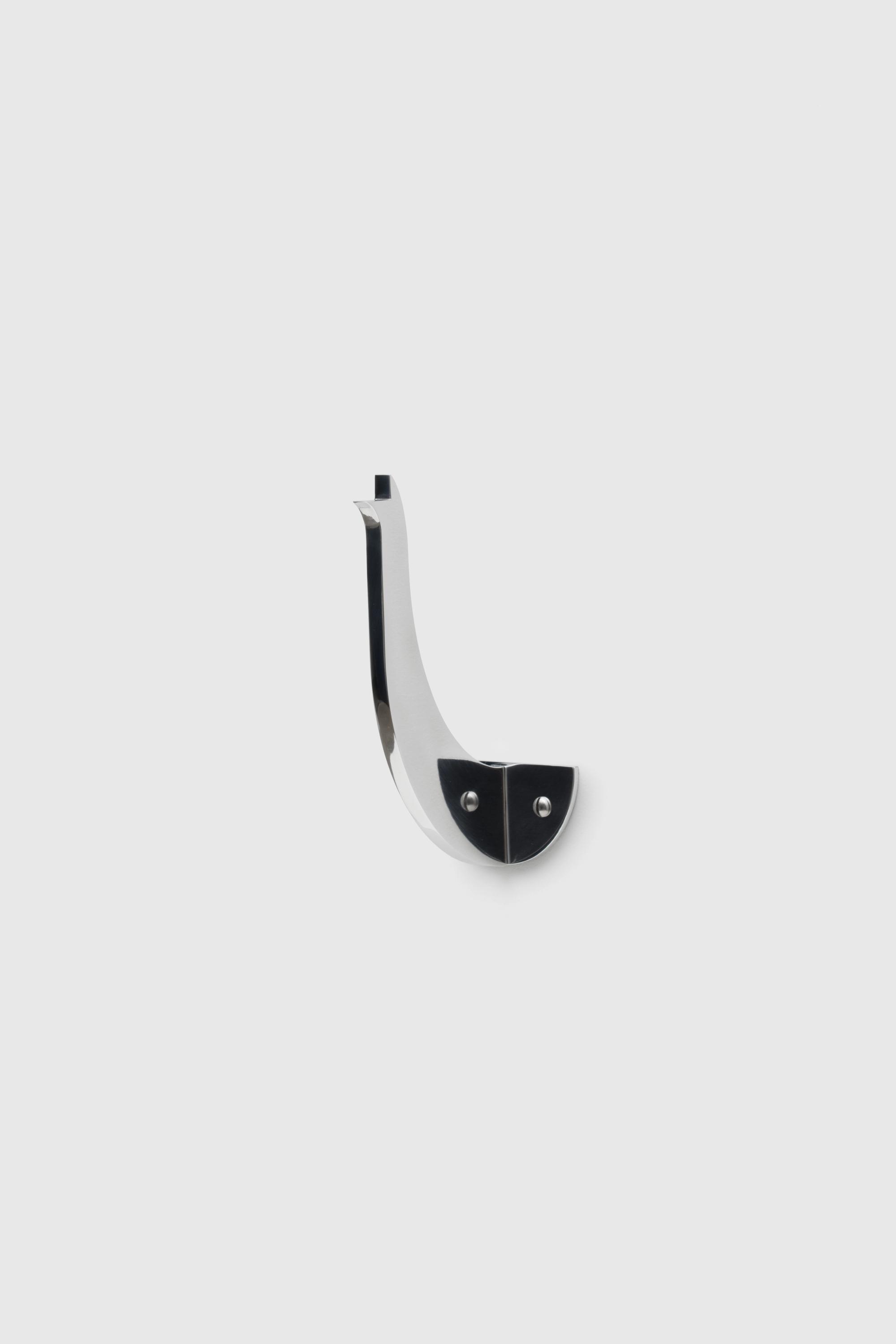
Matt Paweski, Coat Hook (Polished Trunk)
Matt Paweski, Coat Hook (Polished Trunk)
Aluminum, stainless steel screws
7 x 3 x 4 inches
2026
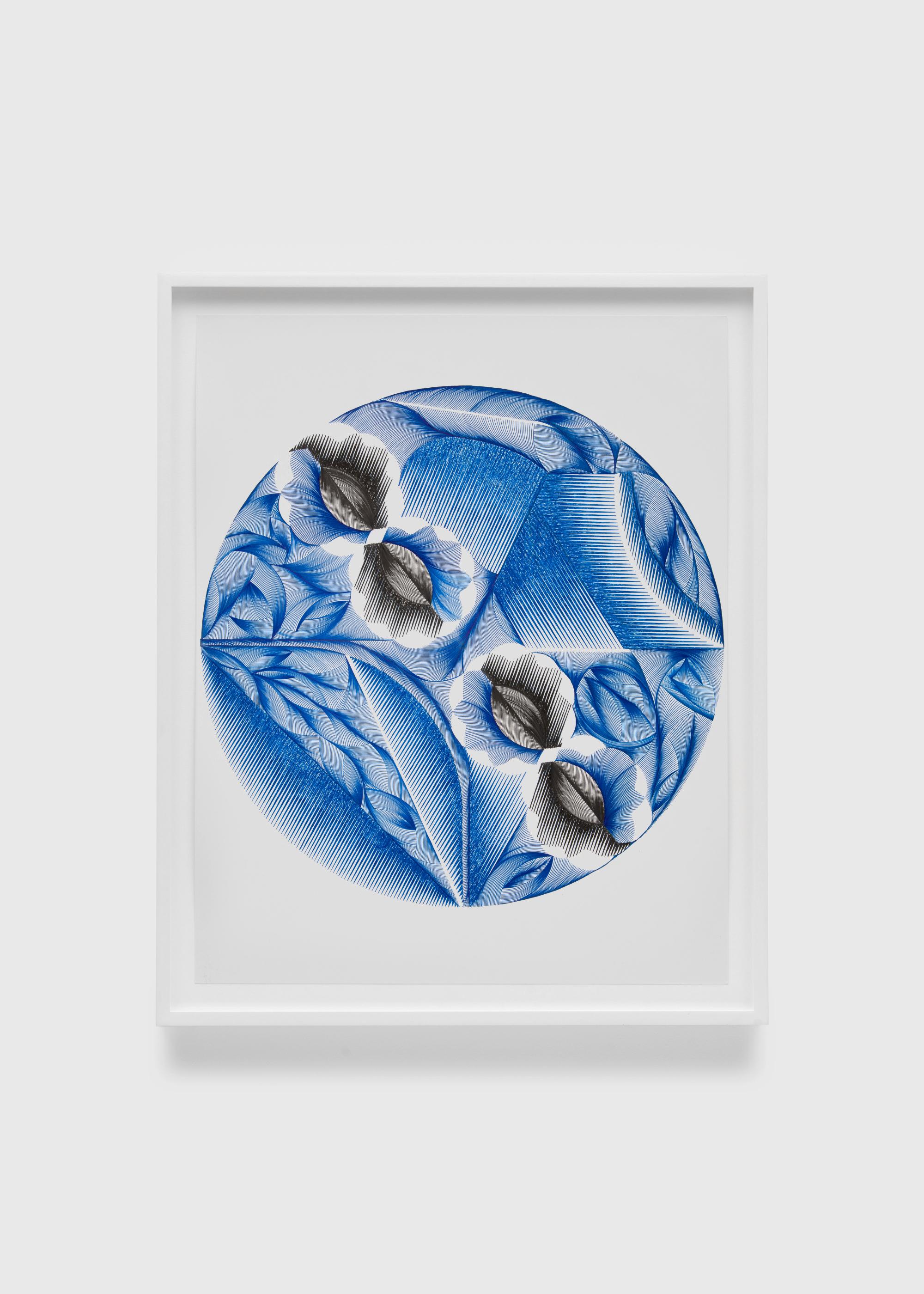
Sanou Oumar, 9/2/24
Sanou Oumar, 9/2/24
Pen on paper
24 x 19 inches
2024
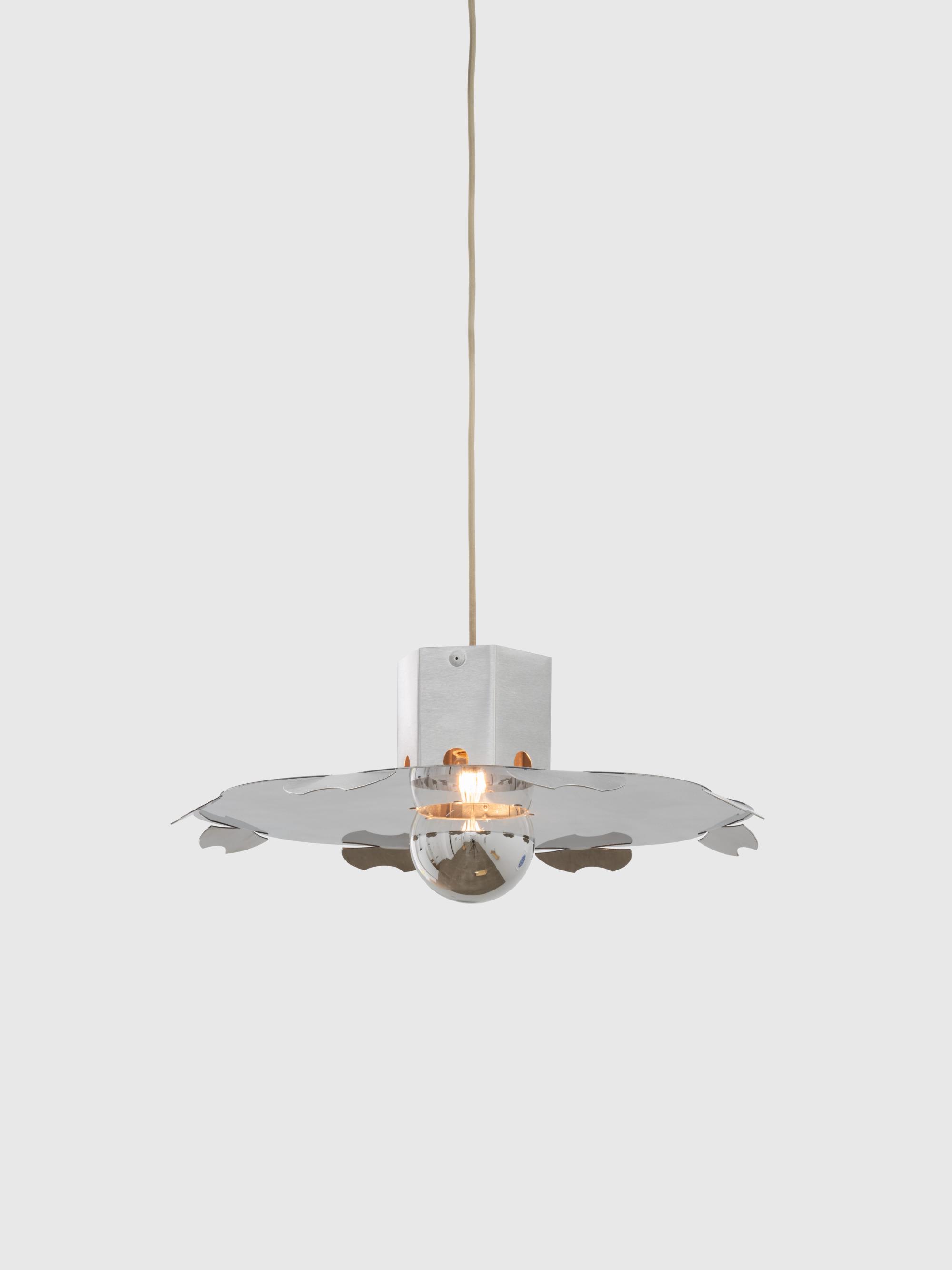
Matt Paweski, Polish Lamp (Pendant)
Matt Paweski, Polish Lamp (Pendant)
Aluminum, aluminum rivets, lamp hardware
10 x 24 x 24 inches
2026
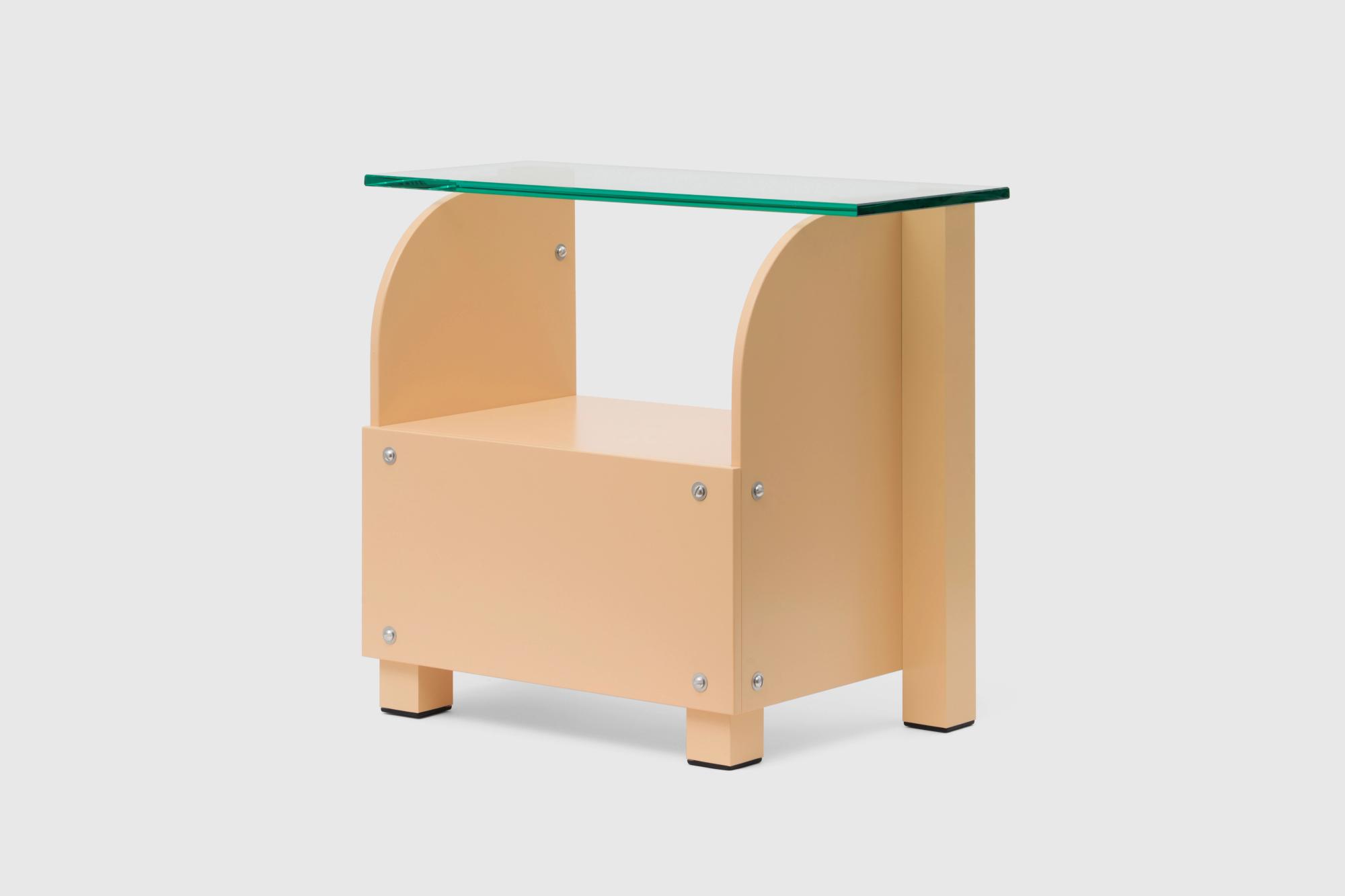
Matt Paweski, Side Table (Tan)
Matt Paweski, Side Table (Tan)
Birch plywood, aluminum, aluminum hardware, glass, enamel
20.625 x 24 x 12 inches
2026
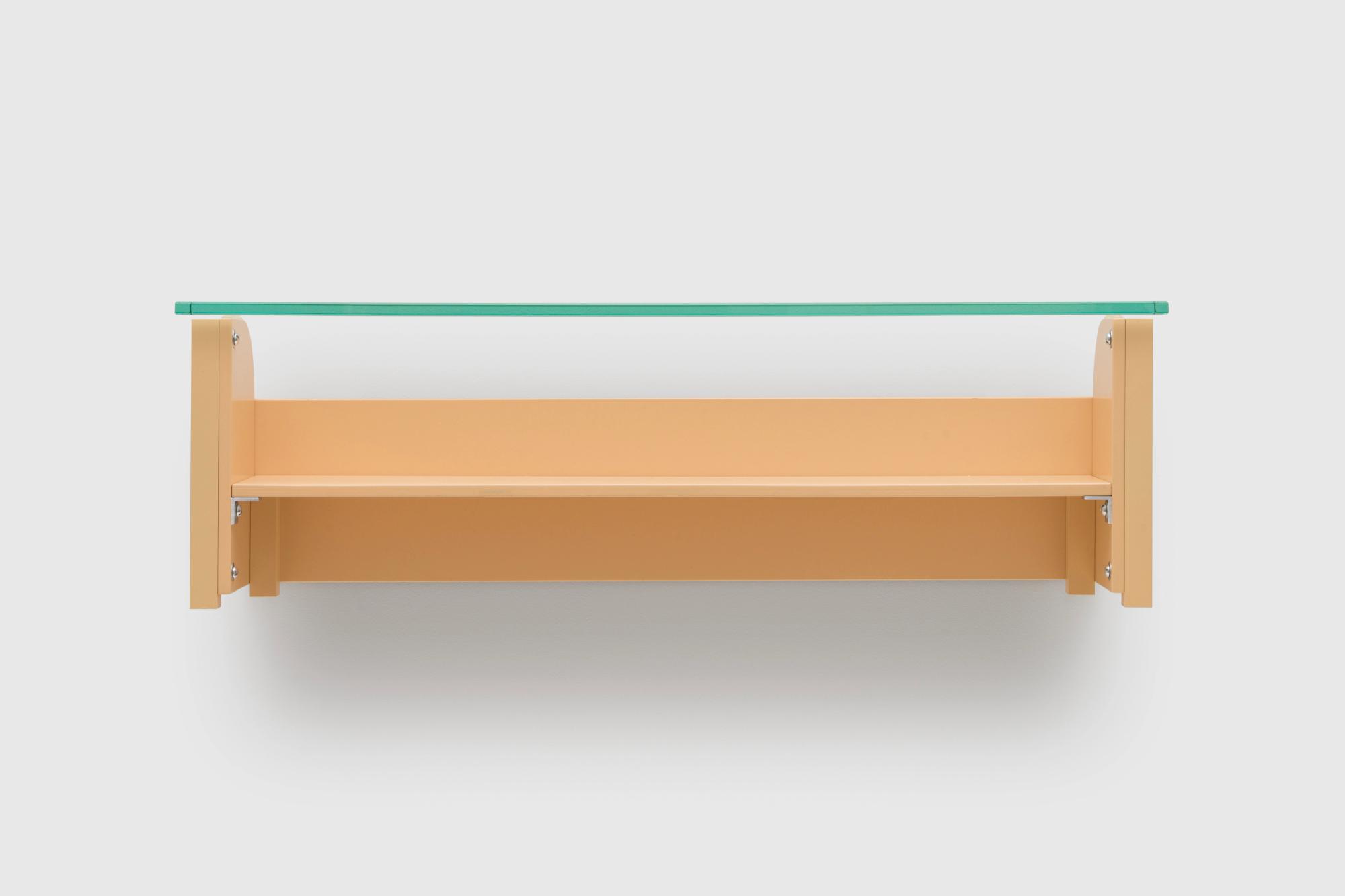
Matt Paweski, Wall Shelf (Tan)
Matt Paweski, Wall Shelf (Tan)
Birch plywood, aluminum, aluminum hardware, glass, enamel
11 x 36 x 7 inches
2026
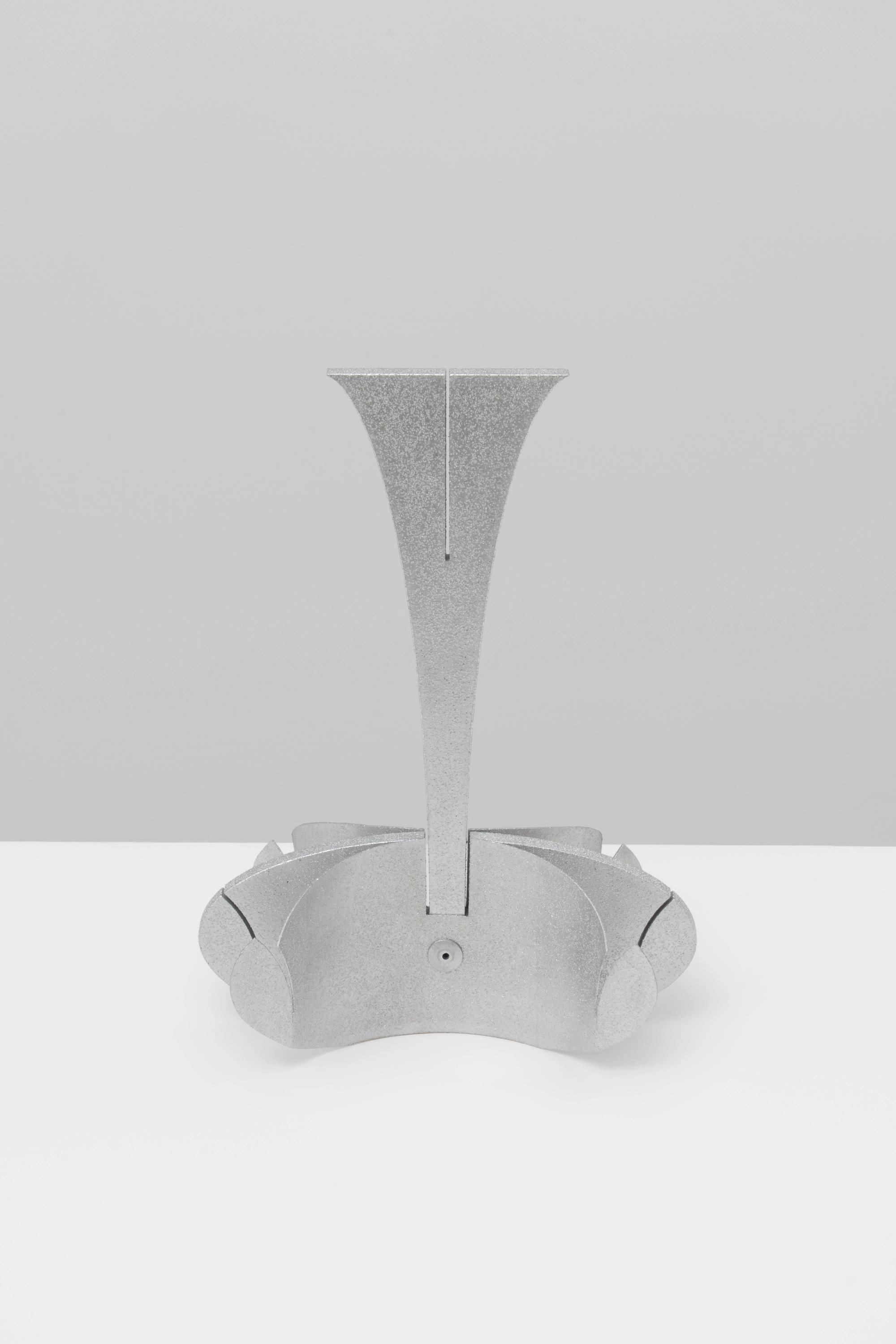
Matt Paweski, Needled Vase
Matt Paweski, Needled Vase
Aluminum, aluminum hardware
12 x 8.75 x 6 inches